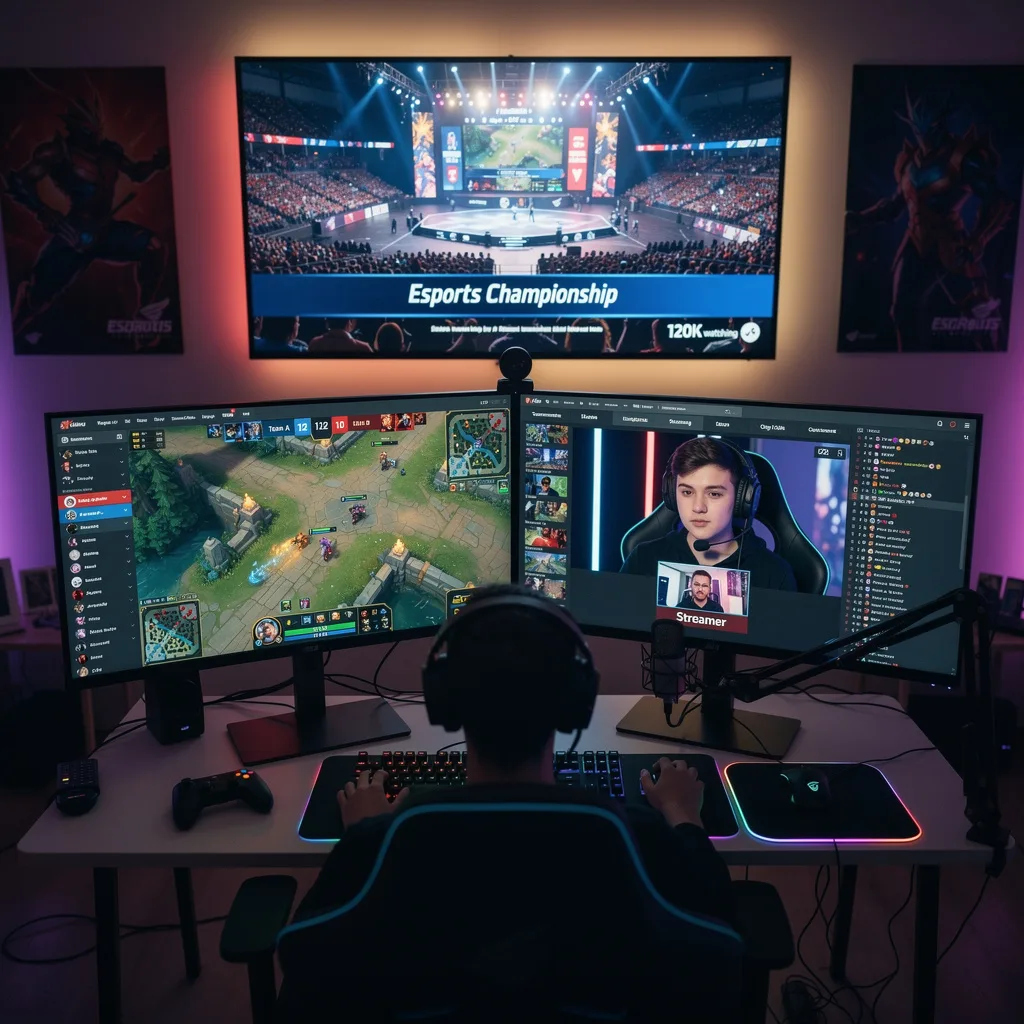
Esports has developed over the last ten years from a specialized pastime to a major worldwide entertainment sector. These days, competitive video games draw millions of viewers, bring in billions of dollars, and have tournaments with prize pools on par with those of traditional sports. While sponsors, game businesses, and professional players have all helped esports flourish, streaming platforms have had a particularly significant impact.
The way that viewers consume gaming content has been completely transformed by streaming platforms. These platforms have produced completely new forms of entertainment and community engagement by enabling gamers to broadcast gameplay live to audiences around the world. Esports has become a popular phenomena thanks to the ability to watch games in real time, engage with players, and take part in global gaming culture.
Examining how streaming platforms have transformed the gaming ecosystem, empowered players, and opened up new business options for the sector is necessary to comprehend the emergence of esports.
The Early Days of Competitive Gaming
Long before contemporary streaming networks appeared, there was competitive gaming. Esports competitions were frequently held at gaming conventions or other specialized events in the early 2000s. Although these contests had ardent supporters, their viewership was rather small.
Technology for broadcasting was likewise limited. The majority of tournaments were either taped and subsequently uploaded, or they were streamed on tiny websites. Esports found it difficult to become widely known in the absence of a dependable means of instantaneously reaching viewers throughout the world.
With the emergence of online streaming services that made it possible for anybody to watch live gaming content from anywhere in the world, the situation started to drastically shift.
The Emergence of Game Streaming Platforms
Esports underwent a sea change with the introduction of specialized streaming services. Gamers may now stream gaming in real time and communicate directly with viewers thanks to services like Twitch.
Later, big tech firms like Facebook and YouTube joined the market with their own platforms. By incorporating livestreaming into larger digital ecosystems, these platforms increased the reach of game content.
Esports events were able to concurrently reach millions of spectators thanks to streaming services. Fans could now watch competitions without physically attending tournaments. Alternatively, they might use their laptops or smartphones to follow their preferred teams and athletes.
This accessibility dramatically increased the popularity of competitive gaming.
Building Global Gaming Communities
The capacity of streaming platforms to build dynamic communities around games and participants is one of their most potent features. In contrast to traditional television broadcasts, live chat capabilities on streaming platforms enable viewers to interact with streamers and one another.
Strong bonds are formed between players and their audiences as a result of this contact. During live matches, fans can express their excitement, respond to key situations, and pose questions. Instead of being a passive activity, these interactions turn watching esports into a communal experience.
Players from all over the world can connect through shared gaming interests thanks to streaming communities. Fans can learn about new games, keep up with international competitions, and take part in conversations on tactics and gameplay methods.
As these communities grew, they helped esports develop a global fan base.
Giving Professional Players a Global Audience
Professional gamers had little chances to develop their own brands prior to the emergence of streaming services. The media's attention or the tournament's outcome played a major role in their recognition.
By enabling players to regularly broadcast their gaming, even outside of major events, streaming platforms altered this dynamic. By revealing training sessions, casual matches, and personal insights into their gaming methods, professional gamers may now cultivate devoted fan communities.
Streaming is a common strategy used by esports professionals to stay visible in between competitions. Their relationships with followers are strengthened by this ongoing interaction, which also aids in the development of their personal brands.
For many players, streaming has become an essential part of their careers.
Monetization Opportunities in the Streaming Era
Additionally, streaming networks have given esports teams, players, and content producers new ways to make money. Streaming enables creators to make money directly from their viewers, in contrast to traditional sports broadcasting, when revenue is mostly derived from television networks.
Popular monetization methods include:
✔ Viewer subscriptions that support favorite streamers
✔ Advertising revenue generated from livestream broadcasts
✔ Donations and virtual gifts from fans
✔ Sponsorship partnerships with gaming brands
These sources of income enable gamers to make money even if they don't win big competitions. Because of this, more people can now pursue gaming as a job thanks to streaming.
For esports organizations, streaming platforms provide powerful marketing channels that attract sponsors and investors.
Expanding the Reach of Esports Tournaments
Esports competitions are now much more visible because to streaming services. Millions of people watch major tournaments online these days, matching the number of spectators at traditional athletic events.
Global championships are frequently streamed to players all around the world in games like competitive multiplayer titles. Professional commentary, production crews, and ornate stage settings reminiscent of traditional sports broadcasts are all present at these events.
Esports competitions have developed into significant worldwide events thanks to livestreaming's accessibility. Fans are not restricted by geography and may follow match schedules, watch competitions live, and cheer on their favorite teams.
This global accessibility has been one of the key drivers behind esports’ rapid expansion.
The Influence of Content Creators and Streamers
Not every prominent person in esports is a professional competitor. Through amusing commentary, instructive gameplay instructions, or engaging content, several well-known gaming streamers amass sizable fan bases.
These content producers are crucial to the development of esports communities and game promotion. A certain game can draw thousands of additional viewers and players when it is aired by a well-known streamer.
As a result, streaming platforms have made it harder to distinguish between professional esports athletes and gaming entertainment. By captivating audiences and advancing game culture, both groups support the industry's expansion.
This dynamic ecosystem helps keep esports constantly evolving.
Technological Innovations Supporting Streaming
Numerous technological developments have contributed to the success of esports streaming. Millions of people can now enjoy high-quality livestreaming thanks to advancements in cloud infrastructure, internet speeds, and video compression.
Key technological developments supporting streaming include:
✔ High-speed broadband and mobile internet connectivity
✔ Cloud-based video processing systems
✔ Interactive streaming interfaces with real-time chat features
✔ Advanced video production tools for professional broadcasts
These technologies ensure that viewers can watch esports events with minimal delay and high visual quality.
As technology continues to evolve, streaming platforms will likely introduce new features that enhance the viewer experience even further.
Challenges Facing Streaming Platforms and Esports
Streaming platforms have difficulties despite their success. The stability of the ecosystem may be impacted by problems including copyright disputes, platform competition, and content moderation.
Furthermore, streamers frequently rely significantly on particular platforms for their viewership and revenue. Their visibility and earnings may be greatly impacted by modifications to platform policies or algorithms.
Other challenges include:
-
Platform competition and market fragmentation
-
Content moderation and community management
-
Intellectual property rights for streamed content
-
Revenue distribution between creators and platforms
Addressing these challenges will be important for sustaining long-term growth in the esports streaming industry.
The Future of Streaming and Esports
In the future, streaming services and esports will probably have an even closer bond. Livestreaming will continue to be the major way that fans experience competitive gaming as gaming technology advances and audiences continue to expand.
Future developments may include:
✔ Integration of virtual reality viewing experiences
✔ Interactive audience participation during tournaments
✔ Enhanced data analytics for esports broadcasts
✔ Cross-platform streaming across multiple digital services
These innovations could make esports viewing even more immersive and interactive.
Conclusion
Esports has evolved from a specialized pastime into a worldwide entertainment sector thanks in large part to streaming networks. These platforms have transformed the creation, sharing, and consumption of game content by offering accessible livestreaming, engaging communities, and new business prospects.
The ecosystem that streaming services have built benefits professional players, content producers, tournament organizers, and spectators. Esports have reached previously unthinkable audiences thanks to the opportunity to observe, engage with, and take part in game culture.
Streaming platforms will continue to be essential to esports' ongoing expansion and widespread appeal as technology develops and digital entertainment changes.




Leave a Reply