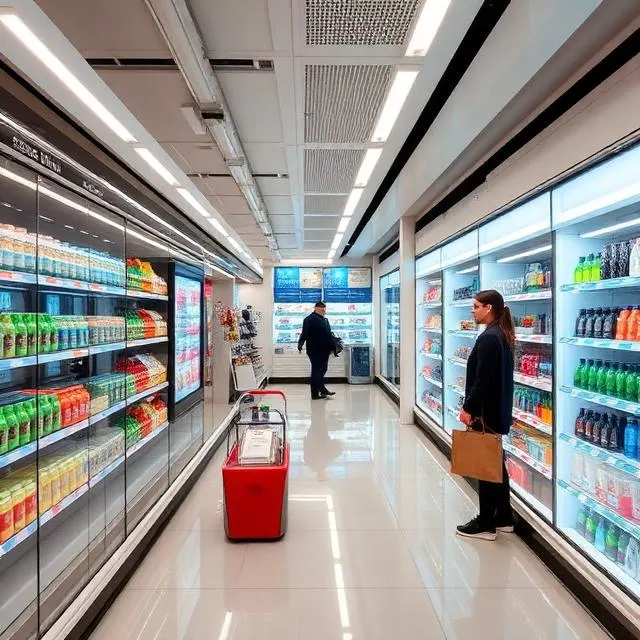
Over the past ten years, the retail sector has seen tremendous technology developments. Conventional shopping, in which consumers had to manually pay for their items and wait in lengthy checkout lines, is progressively changing into a more streamlined and effective experience. One of the most significant developments in contemporary retail is the emergence of automated shopping and cashierless establishments. These stores, which are powered by artificial intelligence (AI), computer vision, machine learning, sensors, and the Internet of Things (IoT), are revolutionizing the way consumers shop by cutting down on wait times and speeding up the shopping process.
Today's consumers demand speed, ease, and customized experiences. In order to stay competitive, physical retail businesses are implementing cutting-edge technologies as online shopping continues to impact consumer expectations. The goal of cashierless stores is to create an efficient and pleasurable shopping experience by fusing the ease of internet purchase with the instant availability of physical retail.
What Are Cashierless Stores?
Retail establishments known as cashierless stores allow patrons to enter, choose items from the shelves, and go without going through a conventional checkout counter. Advanced technologies automatically identify which things clients pick up and charge their chosen payment method when they leave the store, eliminating the need to physically scan every item.
To precisely track consumer behavior, these retailers use a mix of cameras, shelf sensors, weight sensors, mobile apps, and artificial intelligence. Customers don't need to engage with a cashier after they finish their shopping because the technology creates a digital receipt.
This frictionless process significantly reduces waiting times while improving overall customer satisfaction.
Artificial Intelligence Powers Automated Shopping
Cashierless retail solutions heavily rely on artificial intelligence. In order to identify products, identify buying habits, and maintain precise virtual shopping carts, AI systems examine data gathered from cameras and sensors.
The system can discriminate between various products and recognize when clients take items off or place them back on shelves thanks to computer vision technology. By learning from millions of retail interactions, machine learning continuously increases accuracy.
Automated businesses are anticipated to become even more dependable as AI develops, managing increasingly complicated buying scenarios with little assistance from humans.
Faster Shopping Experiences
Speed is one of the main benefits of cashierless stores. During peak shopping hours, traditional checkout lines frequently fill up, frustrating consumers and creating further staffing issues for shops.
Waiting in line is eliminated with automated shopping. When they are done shopping, customers just enter the store, select the items they require, and depart. The payment is handled automatically in the background.
This convenience is particularly valuable for people purchasing only a few items or shopping during busy workdays when saving time is a priority.
Improved Customer Convenience
Convenience is just as important to modern customers as product quality. By eliminating pointless procedures and letting customers concentrate solely on product selection, cashierless businesses streamline the shopping experience.
Mobile applications that provide shopping history, digital receipts, tailored promotions, and loyalty incentives are integrated with many automated stores. In order to make purchasing more individualized, some systems even offer product recommendations based on past purchases.
This connected experience helps retailers build stronger relationships with customers while improving satisfaction and encouraging repeat visits.
Better Inventory Management
Automation benefits retailers as much as customers. Intelligent inventory systems monitor stock levels continuously, allowing stores to detect when products are running low.
AI-powered solutions offer real-time product availability information rather than depending entirely on manual inventory checks. Retail managers can increase operational efficiency, decrease out-of-stock scenarios, and swiftly replenish shelves.
Some major benefits of cashierless stores include:
✔ Faster shopping without waiting in checkout lines.
✔ Contactless payment for greater convenience.
✔ Improved inventory tracking using AI and smart sensors.
✔ Personalized shopping experiences through digital technology.
✔ Better operational efficiency for retailers.
These advantages demonstrate why many retailers are investing heavily in automated shopping technologies.
Enhanced Accuracy Through Computer Vision
One of the key technologies underlying cashierless retail is computer vision. Artificial intelligence and high-resolution cameras track how customers walk throughout the store while recognizing particular items.
Computer vision, in contrast to conventional barcode scanning, is able to identify products even when consumers move them between shelves or handle many things at once.
Continuous improvements in image recognition are making automated checkout systems more accurate, reducing billing errors and improving customer confidence.
Supporting Contactless Shopping
In recent years, there has been a notable increase in the demand for contactless services. Payment options that provide more ease and less personal contact are becoming more and more popular among consumers.
By enabling customers to finish transactions without exchanging currency, managing payment terminals, or waiting for receipts, cashierless establishments promote this trend. Digital payment systems automatically capture purchase information while processing transactions in a safe manner.
Contactless shopping also helps retailers improve customer flow during busy periods and reduce congestion inside stores.
Challenges Facing Automated Retail
Despite all of its benefits, cashierless shopping still has a number of drawbacks. Due to the high cost of installing sophisticated camera systems, sensors, networking hardware, and AI software, smaller retailers find it challenging to quickly adopt the technology.
An other crucial factor is privacy. Consumers could be worried about cameras keeping an eye on everything they do in the store. Retailers must adhere to relevant privacy laws, put in place robust data protection procedures, and be open about data collecting.
Additionally, technical precision is still crucial. To keep customers' trust, systems must accurately identify products and stop billing errors. Over time, machine learning and ongoing software advancements assist in resolving these issues.
Employment and Changing Job Roles
The effect of cashierless establishments on employment is one prevalent worry. Automation brings new opportunities in technology management, customer service, cybersecurity, equipment maintenance, software development, and data analysis, even though it may eliminate the need for traditional cashier jobs in some establishments.
Instead of processing transactions by hand, retail staff may concentrate more on helping customers, maintaining automated systems, managing inventory, and enhancing shop operations.
Technology often changes job responsibilities rather than eliminating the need for human workers entirely.
The Future of Connected Retail
Automated shopping will go beyond cashierless checkout in the future. By examining consumer preferences and making product recommendations based on past purchases, artificial intelligence will probably offer highly customized shopping experiences.
Smart shelves could automatically display customized promotions, while digital shopping assistants may guide customers through stores using augmented reality or voice interaction.
From product manufacturing to ultimate delivery, retail efficiency will be further enhanced by autonomous delivery robots, smart warehouses, predictive inventory systems, and AI-powered demand forecasting.
Automated shopping systems will get faster, more responsive, and more dependable as 5G connection, cloud computing, and edge computing continue to advance.
A More Sustainable Shopping Experience
Sustainability may benefit from automation as well. By precisely forecasting demand and reducing overstock, more intelligent inventory management lowers product waste. Based on store occupancy, energy-efficient technologies can optimize climate control, refrigeration, and lighting.
While AI-driven logistics increases transportation efficiency by streamlining delivery routes and warehousing operations, digital receipts cut down on paper usage.
These improvements support environmentally responsible retail practices while reducing operating costs.
Conclusion
The next significant advancement in retail technology is represented by automated shopping and cashierless businesses. Retailers are developing faster, more convenient, and more individualized shopping experiences by integrating contactless payment systems, computer vision, artificial intelligence, and Internet of Things devices. While businesses get useful information, better inventory management, and increased operational efficiency, customers benefit from shorter wait times, easy payments, and increased convenience.
Even though there are still issues with privacy, implementation costs, and technological correctness, ongoing innovation is making automated retail more useful and affordable. Cashierless stores will probably become a commonplace aspect of daily life as AI and connected technologies develop further, changing how people purchase and establishing new benchmarks for the retail industry.



Leave a Reply