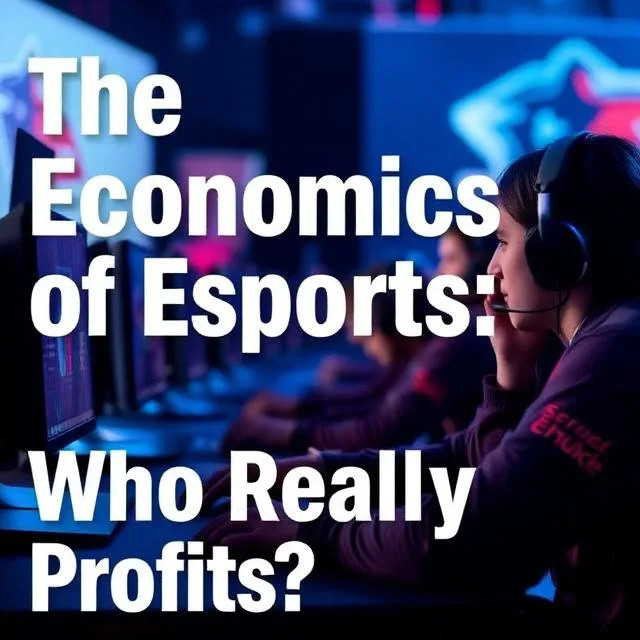
Esports has grown from a specialized subculture to a billion-dollar worldwide entertainment sector in the last ten years. These days, competitive gaming competitions fill stadiums, draw millions of online spectators, and have prize pools comparable to those of conventional sporting events. Among gamers, games like League of Legends, Dota 2, and Counter-Strike 2 have become household names.
However, there is a basic question hidden behind the grandiose presentations and huge prize announcements: who really makes money from esports? Trophies may be lifted by players, but the esport financial ecology is complicated and uneven. Some stakeholders struggle to remain viable or operate on low margins, while others receive significant returns. Knowing the economics of esports makes it clear where the true profit and power are.
The Revenue Streams Powering Esports
Esports makes money via a number of main channels. A large amount of total revenue comes from advertising and sponsorships. Companies collaborate with teams, competitions, and individual athletes to reach a youthful, tech-savvy audience.
The importance of broadcast rights is also increasing. Recognizing esports as premium content, streaming services vie for the exclusive rights to big competitions. Sales of live event tickets, merchandising, and competition-related digital in-game purchases increase revenue sources.
Game publishers frequently make significant financial contributions, either by organizing tournaments or by endorsing independent leagues.
Yet the distribution of this revenue is far from equal.
Game Publishers: The True Power Brokers
In contrast to traditional sports, where leagues function independently of equipment manufacturers, game publishers own and govern esports titles. The intellectual property rights of the games itself are held by organizations like Activision Blizzard, Riot Games, and Valve Corporation.
Publishers have exceptional power because of their ownership. They decide on team participation, league regulations, tournament formats, and revenue-generating tactics. They frequently receive a substantial portion of esports money since they are in charge of the product.
For example, publishers may earn money from:
✔ In-game cosmetic sales tied to tournaments
✔ Media rights agreements
✔ Franchise slot fees paid by teams
✔ Licensing and sponsorship deals
In many ecosystems, publishers are the most consistent and stable beneficiaries of esports growth.
Teams and Organizations: High Risk, High Visibility
Professional esports teams sign elite players and obtain sponsorships, giving them an opulent appearance. Profitability is not a given, though. Teams make significant investments in marketing, travel, training facilities, coaching personnel, and player pay.
Franchise-based leagues often require multi-million-dollar buy-ins. While these structures provide revenue-sharing mechanisms, many organizations still report financial losses.
Sponsorships, item sales, streaming content, and tournament prizes are all ways that teams make money. However, prize money hardly pays for operating expenses. Rather, companies are frequently sustained by long-term brand development and investor support.
The economics resemble venture-backed startups more than traditional sports clubs.
Players: Fame Without Financial Stability
Through sponsorships, streaming contracts, and tournament awards, elite esports players can make significant sums of money. Prize pools have surpassed tens of millions of dollars in competitions such as The International for Dota 2.
These headline numbers, however, conceal a more comprehensive reality. Few players make great salaries. Due to performance pressure and changing game metas, the majority of competitors have short career spans and minimal incomes.
Contracts also differ greatly in terms of protection and structure. Esports player representation is still growing, in contrast to well-established sports leagues with powerful unions.
While star players may profit significantly, the majority operate in a highly competitive and uncertain environment.
Streaming Platforms and Media Companies
Esports thrives in the digital ecosystem. Streaming platforms such as Twitch and YouTube host tournaments and individual player broadcasts.
These platforms use advertising, subscriptions, and premium partnerships to make money off of viewers. Advertisers looking to reach younger audiences are drawn to esports content because it consistently increases engagement.
Media rights agreements further strengthen platform profitability. Exclusive streaming deals can bring significant traffic and brand recognition.
In many cases, digital platforms capture steady revenue regardless of tournament outcomes, making them relatively stable beneficiaries in the ecosystem.
Sponsors and Advertisers
Esports is viewed by international marketers as a means to reach consumers who are digital natives. Teams and competitions are sponsored by businesses in the technology, energy drink, automotive, and financial services sectors.
Esports provide sponsors with quantifiable engagement data and focused advertising options. Influencer partnerships and integrated digital campaigns are examples of partnerships that frequently go beyond jersey logos.
While sponsors invest heavily, they do so with clear return-on-investment expectations. Successful sponsorships can drive product sales and brand loyalty among dedicated fan bases.
Sponsors profit indirectly through marketing effectiveness rather than direct esports revenue.
Tournament Organizers and Event Operators
Organizations that organize esports competitions are essential to the ecosystem. They oversee the production, transmission, sponsorship, and logistics of events.
While some tournaments are run by publishers, others are run by independent organizers. Sales of tickets, media rights, and sponsorships generate income.
However, production costs can be substantial. High-quality broadcasts require advanced technology, large crews, and venue rentals.
Profitability depends heavily on sponsorship deals and audience size. Smaller organizers often struggle to compete with publisher-backed events.
Investors and Venture Capital
Esports has attracted significant venture capital investment. High-profile investors have poured funds into teams, technology platforms, and tournament infrastructure.
Although initial expectations predicted rapid expansion, profitability timelines have taken longer than expected. Some investors look for long-term profits through media integration and audience growth.
The challenge lies in transforming viewer engagement into sustainable revenue models.
Esports economics are still evolving, and not all investors see immediate returns.
Comparing Esports to Traditional Sports
Traditional sports leagues like the National Basketball Association benefit from decades of stable revenue structures, collective bargaining agreements, and broadcast contracts.
In contrast, esports operates within publisher-controlled ecosystems and rapidly changing digital platforms.
Revenue sharing among stakeholders is constrained by the lack of autonomous governing entities. In contrast to traditional sports, publishers maintain central authority, resulting in a distinct power dynamic.
This structural difference explains why publishers often profit more consistently than teams or players.
The Profitability Gap
The central question remains: who really profits?
Using their control over intellectual property, game publishers are at the top of the economic pyramid. Through partnerships and advertising, sponsors and streaming platforms consistently make money.
Teams and players, while highly visible, face greater financial volatility. Success stories exist, but the broader ecosystem reveals uneven income distribution.
Esports revenue growth continues, yet sustainable profitability remains concentrated among infrastructure owners rather than frontline competitors.
The Future of Esports Economics
New models of monetization can appear as the industry develops. Global franchising models, subscription-based fan interaction, blockchain integration, and digital collectibles might all change how revenue is distributed.
Regulatory frameworks and player associations may also influence financial fairness.
Stakeholder incentives must be balanced for esports to be sustainable over the long run. The competitive ecology may deteriorate if teams and players are not financially viable.
At the same time, technological innovation and global connectivity continue to expand esports audiences.
Conclusion
The economics of esports reveal a dynamic but uneven landscape. While the industry generates billions in revenue, profits are not evenly distributed.
By utilizing ownership and infrastructural advantages, game publishers and digital platforms generate the most reliable returns. Players and teams frequently work on tight budgets, depending on long-term expansion plans and sponsorships.
Esports is still a quickly developing industry. Innovation, good governance, and fair taxation systems that benefit all stakeholders will be essential to its economic future.




Leave a Reply