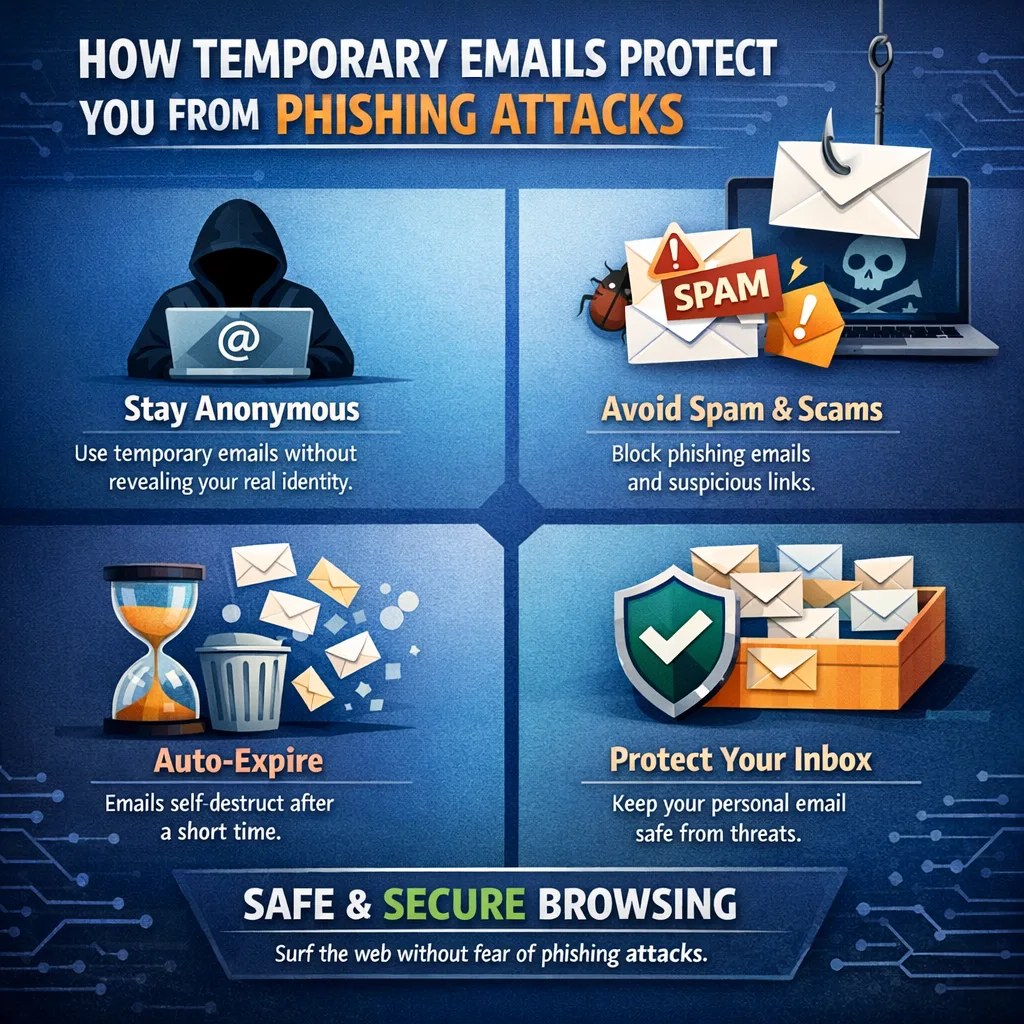
In the current digital era, email is still one of the most popular means of communication. Email links almost every part of our modern life, from social media and banking alerts to online buying receipts and business correspondence. Regretfully, it is among the most popular points of entry for cybercriminals. Phishing attempts, which target people and businesses with misleading messages intended to steal critical information, are still on the rise worldwide.
As online threats get more complex, users are looking for more intelligent ways to safeguard their privacy. The usage of temporary email services is one increasingly common remedy. Burner or disposable emails, sometimes referred to as temporary emails, are a straightforward yet effective defense against unwanted online exposure and phishing attempts.
Understanding Phishing Attacks
Phishing is a type of cyberattack in which attackers pose as trustworthy companies in an attempt to fool victims into disclosing personal information. These emails frequently seem to originate from reputable organizations like banks, delivery services, social media sites, or governmental organizations.
A phishing email may ask you to:
✔ Click on a malicious link
✔ Download a harmful attachment
✔ Enter login credentials on a fake website
✔ Provide credit card or banking information
These assaults depend on fear and urgency. In order to pressure users into acting immediately without first confirming their legitimacy, messages frequently warn of account termination, suspicious activity, or missing deliveries.
Phishing still works because it takes use of human psychology rather than technological flaws, even with growing knowledge.
What Is a Temporary Email?
A short-term, disposable email account that you can use for a little period of time is called a temporary email. Temporary emails don't require personal information, passwords, or registration like regular email accounts do. Usually, they are created instantly and automatically expire after a predetermined amount of time.
When registering for websites, downloading materials, or participating in online trials, users frequently rely on temporary emails. These addresses offer anonymity and lower exposure because they are not connected to your main inbox.
Temporary emails act as a protective barrier between your real email address and potentially risky online platforms.
How Temporary Emails Reduce Phishing Risks
Temporary emails help protect users from phishing attacks in several important ways.
They restrict exposure, to start. Your primary email address is more likely to be leaked or sold through data breaches if you use it on several different websites. Email lists are frequently obtained by cybercriminals from hacked databases. Phishing attempts may target your email address once it is made public.
Your actual inbox is concealed when you use a temporary email for non-essential registrations. The temporary address expires fast and cannot be used again, even if it is hacked.
Second, spam is decreased via transient emails. Phishing attempts frequently pose as subscription alerts or promotional offers. Unwanted emails are kept from getting to your primary account by using disposable emails.
Key protective benefits include:
✔ Shielding your primary email from unknown websites
✔ Preventing long-term spam accumulation
✔ Reducing exposure in case of data breaches
✔ Limiting the lifespan of vulnerable email addresses
This layered protection significantly lowers your digital footprint.
Protection During Online Registrations
Phishing attacks frequently start with online registrations. Before allowing users to access material or services, many websites need email verification. It's possible that some of these platforms don't follow strict security procedures.
When you use your personal email address for every registration, you create multiple data points that can be exploited. If one platform suffers a breach, attackers may attempt credential-stuffing attacks on other services.
By separating registrations, temporary emails lower this risk. A temporary email address that an attacker manages to obtain cannot be connected to your actual login information. Cybercriminals find it more difficult to create a profile around you because of this distinction.
Minimizing Social Engineering Threats
More sophisticated social engineering assaults frequently develop from phishing. To create persuasive messages that are suited to their targets, criminals compile personal information from a variety of sources.
For instance, attackers might create customized phishing emails that seem authentic if they are aware of your name, purchasing preferences, or regularly used services. This strategy raises the probability of success.
The information that attackers can obtain is limited when ephemeral emails are used. Disposable emails avoid the accumulation of long-term data traces because they are not linked to your identity.
Reducing publicly accessible contact information is a key strategy in preventing targeted attacks.
A Layer of Defense, Not a Complete Solution
While temporary emails provide valuable protection, they should not be viewed as a standalone solution. Cybersecurity requires multiple layers of defense.
Users should also:
✔ Enable two-factor authentication on important accounts
✔ Verify sender email addresses carefully
✔ Avoid clicking suspicious links
✔ Keep devices updated with security patches
Temporary emails work best when combined with safe browsing habits and awareness of common phishing tactics.
Temporary Emails and Data Breach Prevention
Data breaches have become frequent headlines. Large companies, small businesses, and even government agencies have experienced leaks exposing millions of email addresses.
Multiple breaches involving your primary email address could lead attackers to believe you repeat passwords or rely on recurring login patterns. This makes account compromise more likely.
Exposure can be reduced by using your genuine email address solely for necessary services like banking, employment, or personal correspondence. Temporary emails help manage one-time downloads and less important registrations.
This strategy limits the potential damage caused by external breaches.
The Psychological Advantage
Peace of mind is an underappreciated advantage of temporary emails. When your primary inbox is continuously overflowing with shady emails, it gets more difficult to discern between genuine correspondence and fraud. Users may eventually lose their sensitivity and unintentionally interact with phishing content.
A buffer zone is created by temporary emails. Unfamiliar communications and risky sign-ups are diverted from your primary account. This division lessens mental strain and enhances your capacity to recognize real dangers..
A cleaner inbox promotes better security awareness.
The Growing Importance in 2026 and Beyond
As digital interactions expand, so does the sophistication of phishing attacks. AI-generated phishing emails are becoming more convincing. Attackers can now craft grammatically perfect, personalized messages at scale.
In this environment, minimizing exposure is essential. Temporary email services are becoming increasingly popular because they offer a simple and immediate defense mechanism.
As concerns about online privacy grow worldwide, more users are realizing how crucial it is to manage their digital identities. Disposable emails provide people control over where and when their actual contact details are shared.
Conclusion
In the digital age, phishing attempts continue to be one of the most common risks. To steal private information, they take advantage of human error, hurry, and trust. People need to take proactive security precautions as cybercriminals' strategies become more sophisticated.
A temporary email is a good first line of defense. Disposable email accounts aid in thwarting phishing efforts by limiting exposure during data breaches, decreasing spam, and protecting your primary mailbox from unknown websites.
Temporary emails are an accessible and useful tool for improving online safety, even though they are not a comprehensive cybersecurity solution. Small preventative measures can have a big impact in a world where digital threats are always changing.




Leave a Reply