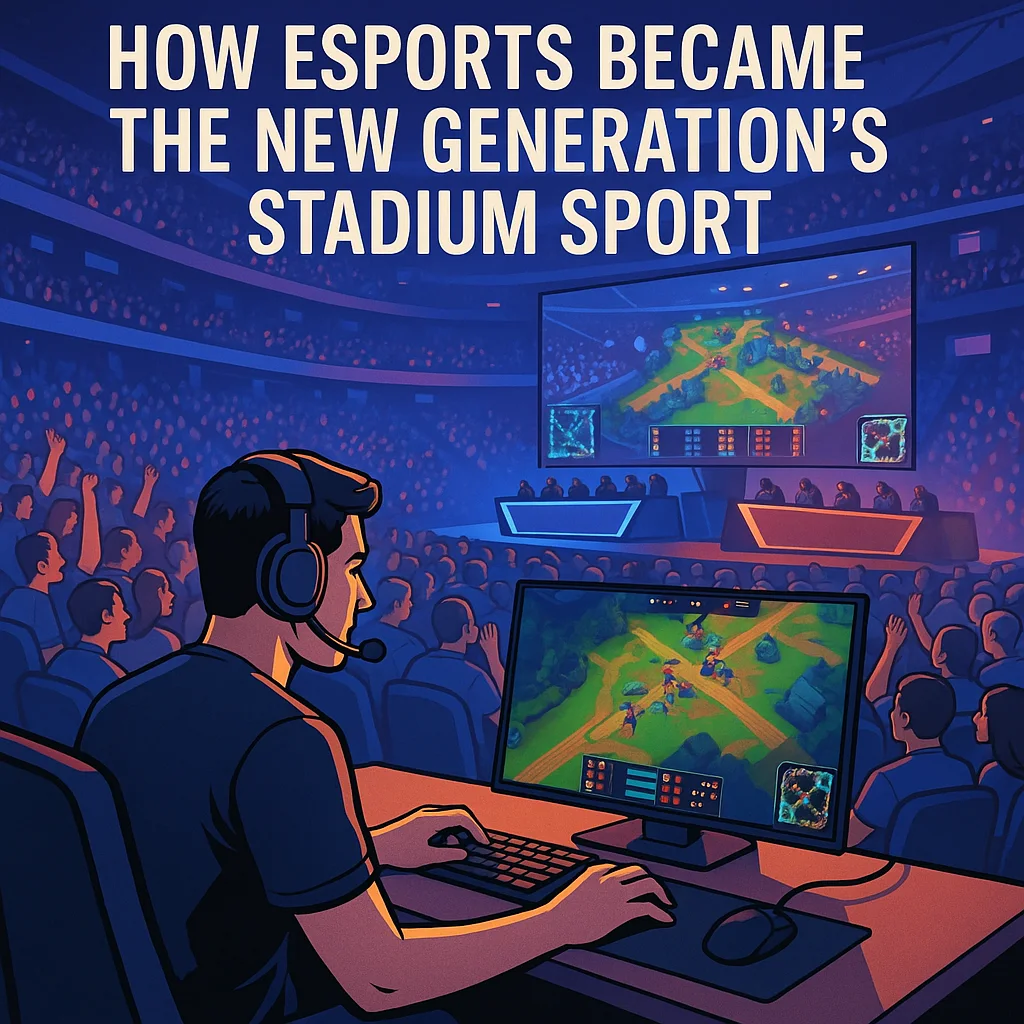
Tens of thousands of fans congregating in a stadium to watch players play video games would have appeared ridiculous ten years ago. However, esports—competitive gaming on a worldwide scale—has grown to be a multibillion-dollar phenomenon that rivals traditional sports in terms of scope, fervor, and cultural impact.
Esports has solidified itself as the stadium sport of the younger generation, from the League of Legends World Championship packing stadiums like Madison Square Garden to millions of people watching online for The International (Dota 2) or Fortnite World Cup.
It's not only about the games; it's also about the community, the technology, and the new heroism that comes from screens instead of fields.
1. From Arcades to Arenas: The Origins of Competitive Gaming
Unbeknownst to many, esports have far older roots. The first-ever video game competition was held at Stanford University in 1972 and featured the game Spacewar! The winner was a year's subscription to Rolling Stone.
Organized competitive gaming began in the 1980s when thousands of players attended arcade tournaments like the Space Invaders Championship. LAN parties and the popularity of PC games like Doom, Quake, and StarCraft, which became cultural icons in South Korea, marked a turning point in the 1990s.
Online gaming leagues were made possible by the expansion of broadband internet in the 2000s. Millions of people were now watching what started in living rooms and basements.
The esports ecosystem had what it needed—an audience, accessibility, and excitement—by the time streaming services like Twitch debuted in 2011.
2. The Rise of Global Esports: When Games Became Spectator Sports
Esports are unique not only because of the games but also because of the spectatorship. Drama, competition, and storytelling are key components in esports, much like in traditional sports.
Players become well-known figures. Teams acquire a global fan base. Championships become cultural gatherings.
Tournaments like:
-
The International (Dota 2) – With prize pools of more than $40 million,
-
League of Legends World Championship – attracting a larger audience than the NBA Finals, and
-
Fortnite World Cup – In 2019, a sixteen-year-old gamer earned $3 million.
hhave solidified esports' status as a popular form of entertainment.
However, esports are not limited by geography like traditional sports are. It is just as easy for an Indian fan to cheer on a team in Europe as it is for one in Seoul or Los Angeles. The audience is the entire world, and the playing field is digital.
3. Why the New Generation Chose Screens Over Stadiums
Esports may seem perplexing to older generations because you can play yourself instead of watching others. However, it makes perfect sense to digital natives.
Here’s why:
-
Interactivity: Fans may interact with streamers in real time, converse throughout games, and even pick up strategies from their heroes, unlike passive TV sports.
-
Accessibility: Anyone with a PC or console can aspire to be an expert. There are no costly clubs to join or physical obstacles.
-
Representation: Because everyone may participate, regardless of origin, gender, or physical ability, esports embraces diversity.
-
Digital Culture: Social hubs where entertainment, community, and content creation come together include platforms like Twitch and YouTube Gaming.
Esports is more than just a sport for Gen Z and millennials; it's a way of life and an expression of their digital identity in a world that is becoming more and more virtual.
4. The Role of Technology: Streaming, Cloud Gaming, and 5G
Esports would not be what they are now without contemporary technology. Everything was altered by streaming.
Gaming has become a spectator-friendly media with to platforms like Twitch, YouTube Gaming, and Kick. In real time, viewers could follow their favorite players, watch competitions, and take part in discussions.
Cloud gaming and 5G connectivity, the next wave of innovation, are expected to further advance esports. Hardware restrictions are vanishing thanks to cloud-based systems like Xbox Cloud Gaming and NVIDIA GeForce Now.
Professional-level competition will soon only need a strong internet connection rather than a gaming PC. More players, more supporters, and a genuinely worldwide playing field result from this.
5. The Business of Esports: From Hobby to Industry
Esports is now a major industry rather than a niche. The esports market is expected to develop rapidly over the next ten years, with a 2024 valuation of over $2 billion.
Revenue comes from multiple streams:
-
Sponsorships and Advertising – Companies that make significant investments in esports awareness include Red Bull, Intel, and Nike.
-
Media Rights and Streaming Deals – Exclusive tournaments are aired by platforms for millions of dollars.
-
Merchandising and Fan Experiences – Similar to soccer teams, teams like Fnatic and Team Liquid establish fan groups and sell branded merchandise.
-
Prize Pools – Driven by sponsorships and crowdsourcing, tournament prizes compete with those of traditional sports.
In addition to athletes and spectators, the ecosystem also consists of coaches, analysts, event planners, broadcasters, and even psychologists. Universities now offer degrees and scholarships in competitive gaming as esports has established a full professional infrastructure.
6. The Stadium Spectacle: When Virtual Meets Physical
Esports' resemblance to—and frequent superiority over—traditional stadium sports may be its most remarkable development.
With holographic displays, augmented reality performances, and epic production values, events like the League of Legends Worlds Finals turn venues into immersive digital theaters.
Over 40 million fans watched a virtual K-pop concert during Riot Games' inaugural ceremony in 2023. The distinction between entertainment and sports is becoming increasingly hazy.
Esports stadiums are now being built worldwide, such as:
-
Esports Stadium Arlington (Texas, USA)
-
Gwangju eSports Arena (South Korea)
-
HyperX Esports Arena (Las Vegas)
These locations represent the evolution of gaming from bedrooms to large-scale cultural gatherings with boisterous audiences, commercial booths, and even a sense of patriotism.
7. The Human Element: Players, Teams, and Emotional Investment
Esports is fundamentally about people. The same feelings found in traditional sports—competition, teamwork, resilience, and passion—lie behind every mouse click and controller combination.
Leading gamers like TenZ (Valorant), s1mple (CS:GO), and Faker (League of Legends) have become global icons. Like sports legends, fans follow their careers, evaluating tactics, rejoicing in wins, and lamenting losses.
To deal with the extreme mental strain, these athletes train for hours every day, adhere to rigorous physical regimens, and consult with psychologists. The discipline is genuine. The effort is genuine. Additionally, there are more financial and emotional stakes than ever before.
Younger fans see these players as powerful digital heroes in a world where talent, not physical prowess, is valued.
8. The Cultural Shift: Esports as Mainstream Entertainment
What was once "just gaming" has evolved into a crucial aspect of contemporary culture.
Fans of streaming superstars outnumber those of cinema stars. Fashion partnerships, brand alliances, and musicians participate in esports competitions. Even high-end labels like Gucci and Louis Vuitton have created unique collections with esports themes.
Education and job paths are also being impacted by esports. Collegiate leagues are being held by universities, and businesses support STEM-based gaming initiatives to draw in talent.
The distinction between "fan" and "player" is becoming increasingly hazy. Every home has the potential to become a mini-arena of entertainment as millions of people casually watch games.
9. The Challenges: Burnout, Regulation, and Sustainability
For all its success, esports faces serious challenges.
-
Player Burnout: Young athletes suffer from the rigorous training regimens and frequent travel; some of them resign in their early 20s.
-
Regulation Issues: The regulation of esports is still complicated due to international competitions, varied regulations, and age limitations.
-
Cheating and Integrity: Credibility is threatened by doping scandals, match-fixing, and hacking.
-
Sponsorship Dependence: Instead of direct fan monetization, sponsor arrangements account for a sizable portion of esports earnings.
Whether esports develop into a stable, sustainable ecosystem or a bubble that bursts under pressure will depend on how these concerns are resolved.
10. The Future: The Evolution of the Digital Arena
In the future, esports will probably combine entertainment, technology, and audience involvement like never before.
Fans may be able to participate directly in the action with augmented reality (AR) and virtual reality (VR). AI-powered analysis could revolutionize player training. Additionally, the metaverse has the potential to completely change the way we participate in competitions by making them more customized, immersive, and interactive.
The International Olympic Committee (IOC) has already started talks and experimental tournaments that acknowledge digital competition, suggesting that esports could even become an Olympic event.
Beyond inventiveness, however, is a more profound reality: esports is transforming interpersonal relationships. It's transforming digital spaces into emotional theaters, screens into communities, and competitiveness into teamwork.
Conclusion: The Stadiums of the Future Are Digital
Esports is a generational transition rather than a fad. The excitement of a close game, the clamor of a virtual crowd, and the tales of underdog triumphs arouse the same feelings in millions of people worldwide as traditional sports.
It's evidence that people's passion for competition is universal. The spirit of play persists whether it's a ball on a field or a cursor on a computer.
One thing is evident as stadiums fill with spectators cheering for headshots rather than touchdowns: the new era of sports is arrived, and it's played with keyboards rather than cleats.




Leave a Reply