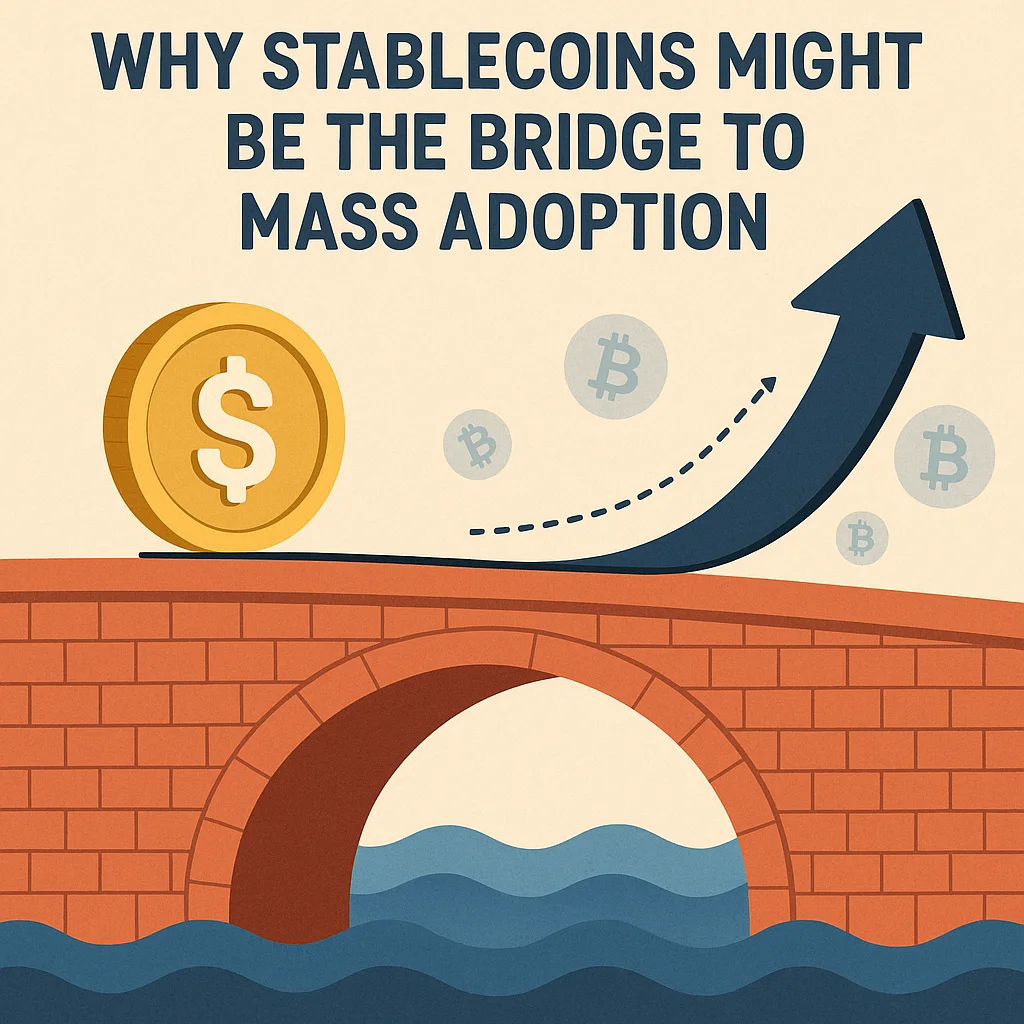
Introduction: The Missing Link Between Crypto and the Real World
The goal of cryptocurrencies has been evident for more than ten years: a decentralized, international financial system that empowers individuals, eliminates middlemen, and transforms the way value is transferred.
However, widespread acceptance is still elusive despite billions in trading volume and rising public awareness. Bitcoin is erratic. Ethereum fees are very erratic. Cryptocurrency is still viewed by many common users as speculative rather than useful.
Stablecoins are digital currencies that are intended to keep their value constant and are typically linked to fiat currencies like the US dollar or the euro.
Their modest ascent might be the key to making cryptocurrency accessible to everyone, everywhere, even if they are neither spectacular nor revolutionary in appearance.
This is the tale of how stablecoins evolved to serve as a link between the wild world of cryptocurrency and the regular economy, and why they may be the final component needed for widespread acceptance.
1. What Exactly Are Stablecoins?
A stablecoin is a blockchain-based digital token that seeks to preserve a steady value, usually by being linked to a reserve asset like:
-
Fiat currencies (e.g., USD, EUR, INR)
-
Commodities (e.g., gold)
-
Other cryptocurrencies (in algorithmic models)
Stablecoins are distinct because of this stability. A stablecoin like USDC (USD Coin) or USDT (Tether) stays around $1, providing certainty in an erratic market, whereas Bitcoin can fluctuate 10% in a single day.
They come in several forms:
-
Fiat-collateralized stablecoins: Backed by real currency reserves held in banks. (e.g., USDC, USDT)
-
Crypto-collateralized stablecoins: Backed by other crypto assets locked in smart contracts. (e.g., DAI by MakerDAO)
-
Algorithmic stablecoins: Use algorithms and supply adjustments to maintain value (though this model has faced failures like TerraUSD).
Stablecoins, to put it briefly, combine the advantages of both fiat money's price stability and cryptocurrency's efficiency and global reach.
2. The Need for Stability in Crypto
The biggest barrier to mainstream crypto use isn’t technology — it’s volatility.
A currency is not suitable for daily use when its value can change by double digits in a single day. If Bitcoin's purchasing power fluctuates every day, you can't use it to price rent, groceries, or salaries.
Stablecoins solve this problem. They:
-
Provide a stable medium of exchange for payments and savings.
-
Enable traders to move funds quickly without converting to fiat.
-
Offer DeFi users a stable base for lending, borrowing, and yield farming.
In essence, stablecoins transform cryptocurrencies from speculative assets into practical financial instruments by establishing financial stability in a volatile digital environment.
3. Why Stablecoins Are the On-Ramp to Mass Adoption
Stablecoins are more than simply cryptocurrency tools; they serve as a link between blockchain innovation and the conventional financial sector.
Here’s how they’re driving mainstream adoption:
a. Easier Entry for New Users
Purchasing Bitcoin might be daunting for novices. On the other hand, stablecoins are straightforward and have a known value. One US dollar is equivalent to one USDC.
Entry barriers are lowered by this psychological ease. Individuals can transact, save, and move money digitally without worrying about price fluctuations, eliminating the need for speculation.
b. Seamless Cross-Border Payments
Traditional remittance systems like Western Union can take days and charge up to 10% in fees.
Cross-border transactions can be completed in a matter of minutes at a significantly lower cost when using stablecoins. Without a bank or middleman, a worker in the Philippines can instantaneously transmit stablecoins to family in India.
That’s not just innovation; it’s financial empowerment.
c. Integration with DeFi and Web3
As the foundation for lending, yield farming, and liquidity pools, stablecoins power the DeFi (Decentralized Finance) ecosystem.
Because the majority of DeFi protocols are based on stablecoins, users may borrow money or earn interest without worrying about cryptocurrency volatility.
Similarly, stablecoins provide a stable currency for digital economies like Web3 gaming, NFTs, and metaverse platforms.
d. Business Adoption
For merchants and companies, stablecoins enable global payments without volatility risk.
USDC and PYUSD (PayPal USD) connection is already being tested by platforms such as Shopify, Stripe, and PayPal. Bypassing banks and middlemen, businesses may now take digital payments that settle instantly.
e. A Hedge Against Inflation
Stablecoins are now a lifeline in nations like Argentina, Nigeria, and Venezuela who are experiencing hyperinflation. Local currencies are not as reliable for storing value as USDT or USDC.
In this sense, stablecoins are not just digital money — they’re a global economic equalizer.
4. The Numbers Don’t Lie: Stablecoin Growth Is Explosive
The stablecoin market capitalization increased from less than $5 billion in 2019 to more over $160 billion in 2025, according to statistics from CoinMetrics and The Block.
Daily transaction volumes regularly exceed $100 billion, rivaling Visa’s payment network.
The market is dominated by Tether (USDT) and USDC, but more recent competitors like FDUSD, PYUSD, and TrueUSD are making headway.
This rapid expansion makes it abundantly evident that the world prefers digital currency over erratic cryptocurrency.
Stablecoins are becoming the “crypto dollars” for a global, digital economy.
5. The Real Use Cases Driving Stablecoin Demand
Stablecoins are already being used far beyond crypto trading. Here are some real-world applications:
a. Global Remittances
Employees working overseas can rapidly send stablecoins home, avoiding the expensive fees and hold-ups associated with conventional remittance systems.
b. E-Commerce and Freelancing
In order to avoid delayed banking systems, stablecoins are increasingly being used to pay freelancers in emerging nations through sites like Bitwage or Deel.
c. DeFi & Savings
DeFi platforms let users deposit stablecoins and earn yields — often higher than bank interest rates.
d. Treasury Management
Stablecoins are being investigated by businesses like MicroStrategy and even non-governmental organizations to manage international currency flows and provide funds for disaster relief.
e. Micropayments and Subscriptions
Stablecoins are ideal for content producers, streaming services, and digital economies because they allow microtransactions that are too expensive with credit cards.
These practical, daily-life integrations are what will make crypto truly mainstream.
6. Regulatory Challenges: The Double-Edged Sword
Stablecoins are controversial because they lie at the nexus of two worlds: crypto freedom and fiat regulation.
Governments are wary because stablecoins:
-
Resemble digital versions of national currencies.
-
Could bypass capital controls and weaken central bank influence.
-
Create risks if issuers don’t maintain proper reserves.
The 2022 collapse of TerraUSD (UST) brought to light the potential consequences of a lack of transparency.
In response, regulators worldwide are tightening scrutiny:
-
The U.S. is pushing for stablecoin legislation with strict reserve requirements.
-
The EU’s MiCA framework mandates licensing and audits for issuers.
-
Asian markets, such as Singapore and Japan, are developing fair policies that foster innovation while maintaining confidence.
These regulations are required to provide accountability and transparency in a system that billions of people will depend on, not to stifle innovation.
7. Central Bank Digital Currencies (CBDCs) vs. Stablecoins
While both are digital currencies, CBDCs and stablecoins differ fundamentally.
While CBDCs represent the state-directed version of money, stablecoins reflect the evolution of money driven by the market.
Stablecoins could serve as a freedom-preserving substitute for government-controlled systems while also paving the way for CBDCs by demonstrating the viability of digital money.
8. The Road Ahead: Toward a Global Stablecoin Economy
Bitcoin maximalists and speculative traders won't be at the forefront of the next wave of cryptocurrency acceptance. Everyday consumers who desire quick, inexpensive, and international financial tools will be its main drivers.
Here’s what the next decade might look like:
-
Mainstream Payments: Stablecoins integrated into credit card networks and online checkout systems.
-
Bank-Blockchain Partnerships: Traditional banks offering stablecoin custody and lending services.
-
Cross-Chain Interoperability: Stablecoins are easily transferred across several blockchains by users (Ethereum, Solana, Polygon, etc.).
-
Regulated Stablecoin Markets: Clear rules encouraging institutional adoption.
-
Integration with AI and IoT: From supply chains to self-driving cars, smart contracts automatically conduct real-time transactions with stablecoins.
Stablecoins have the potential to subtly take over as the digital world's standard money.
9. The Human Side of the Story
At its heart, the rise of stablecoins is not just about technology — it’s about access.
It’s about a student in Kenya receiving international payments instantly.
A freelancer in Brazil saving in a stable currency amid inflation.
A small business in India paying global partners in seconds.
Stablecoins help to level the financial playing field for billions of people by transforming cryptocurrency from a speculative asset class into a useful tool for daily life.
Conclusion: Stability Is the Gateway to Adoption
Financial freedom was promised by the cryptocurrency industry for many years, but it was difficult to achieve on a large scale. That is being altered by stablecoins.
They make digital money real—useful, reliable, and accessible—by fusing the efficiency of blockchain technology with the confidence of fiat.
They serve as a bridge that connects the old and new worlds of finance rather than taking the place of cryptocurrencies.




Leave a Reply