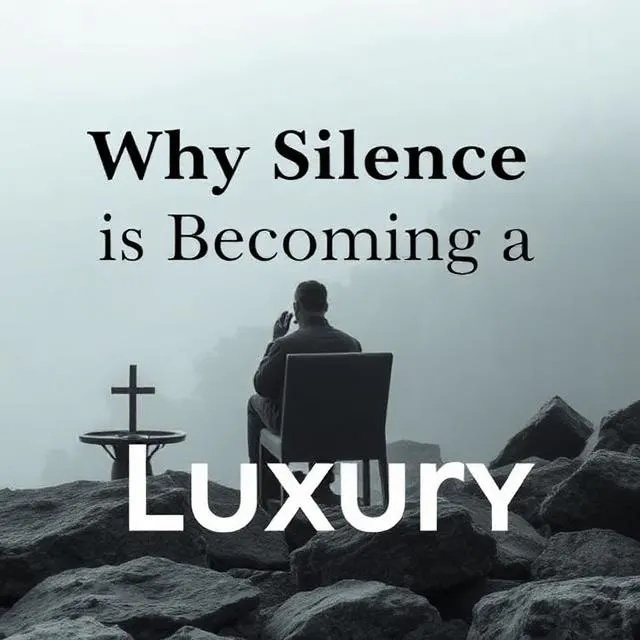
In the past, silence was a normal aspect of life. Moments of silence in between discussions, long walks without headphones, and evenings without screens were commonplace. Nowadays, quiet is uncommon, practically unheard of. Notifications, traffic, discussions, media, and information are all part of the modern world's perpetual buzz. Silence is no longer the standard in this setting. It is become a luxury.
There is more to this change than just noise. Deeper shifts in how people live, work, think, and relate to themselves are reflected in it. It now takes work, purpose, and occasionally privilege to remain silent. Knowing why silence is vanishing reveals how attention, emotion, and wellbeing are shaped by modern living.
The Constant Presence of Sound and Information
The foundation of contemporary society is productivity, speed, and connectivity. Constant sound and information flow support these values. Conversations overlap, music plays, phones vibrate, and news scrolls. Digital noise increasingly permeates even once-quiet occasions, like sitting by yourself or waiting in line.
The brain is trained to anticipate input by this continuous stimulation. Silence starts to feel strange, uneasy, or even dangerous. People are left alone with their thoughts, feelings, and inner experiences—many of which they have not learned to navigate—when there is no sound or other distraction.
Silence disappears not because people dislike it, but because they have become unaccustomed to it.
The Psychological Impact of a Noisy World
More than only hearing is impacted by noise. It has an impact on mood, focus, stress levels, and emotional control. True rest is challenging since the nervous system is constantly attentive due to sensory input.
The brain finds it difficult to reach deeper levels of introspection, creativity, and emotional integration when it is constantly processing sound. In contrast, the mind may slow down, organize experiences, and regain equilibrium when there is silence.
Silence supports:
✅ Mental clarity and emotional regulation
✅ Reduced stress and nervous system recovery
✅ Deeper reflection and self-awareness
Without silence, the mind becomes crowded, reactive, and fatigued.
Why Silence Now Feels Uncomfortable
Many claim that being silent makes them uncomfortable. This pain indicates that the mind has gotten reliant on stimulation rather than that silence is detrimental. Internal noise becomes more apparent when external noise fades.
Unresolved feelings, undigested ideas, and unfulfilled desires are brought to light by silence. Stillness feels useless and intimidating in a society that prioritizes activity and distraction. Because silence reveals what they have been avoiding, people tend to avoid it.
Silence is filled, not empty. It has a lot of personal experience. Many people's unease with quiet is a reflection of its honesty rather than its danger.
The Loss of Quiet Spaces
Access to naturally peaceful settings has decreased as a result of urbanization and modernization. Homes are smaller, public areas are noisier, and cities are louder. Human noise from tourists and transportation is increasingly affecting even wild areas.
Previously unrestricted, quiet areas are now restricted to places like retreats, parks, or isolated regions. Silence is an unevenly distributed resource since many people need time, money, and mobility to access these locations.
Silence has become associated with:
✅ Financial privilege and access to quiet environments
✅ Geographic distance from urban centers
✅ Time away from work and responsibilities
What was once common has become scarce.
Silence and the Economy of Attention
Attention is the lifeblood of modern economy. Media companies, platforms, and advertising vie for every available moment of attention. Tools for grabbing and retaining attention include sound, alerts, and content.
On the other hand, silence has no immediate financial benefit. It is difficult to monetize. It doesn't increase productivity or engagement. Silence is therefore not encouraged. Rather, continuous participation is valued, and inactivity is frequently perceived as ineffectiveness.
The absence of silence is reinforced by this economic framework. Silence presents a threat to systems that rely on continuous stimulation when attention is viewed as a resource.
The Emotional Cost of Losing Silence
Emotional processing breaks down in the absence of silence. People don't have time to think since they are constantly switching between tasks, conversations, and screens. Unresolved emotions build up and cause tension, impatience, exhaustion, and emotional numbness.
The emotional pause that silence offers enables emotions to emerge, be comprehended, and be incorporated. In the absence of it, people continue to be emotionally reactive rather than emotionally responsive.
Silence enables:
✅ Emotional release and healing
✅ Self-reflection and insight
✅ Deeper connection to values and meaning
Its absence leaves emotional life shallow and rushed.
Silence and Relationships
In partnerships, silence is essential. A comfortable quiet between individuals conveys emotional connection, safety, and trust. It permits presence without performance.
Silence in contemporary relationships is frequently immediately replaced with entertainment, gadgets, or discussion. Deeper emotional connection may be thwarted because genuine presence necessitates distraction-free moments.
Shared silence allows:
✅ Emotional closeness without pressure to perform
✅ Deeper listening and mutual understanding
✅ A sense of safety and acceptance
When silence disappears from relationships, connection becomes surface-level and transactional.
Silence and Creativity
Stillness fosters creativity. Many discoveries, revelations, and concepts come to light during tranquil times rather than amid intense exertion. The subconscious mind can analyze information, make connections, and produce fresh ideas when there is silence.
It becomes challenging to think creatively in an environment that is continuously stimulated. Instead of being free to explore ideas, the mind is still busy processing input. The mental space that allows for the development of imagination is created by silence.
Artists, writers, scientists, and thinkers throughout history have relied on silence not as escape, but as a tool.
Why Silence Is Becoming a Status Symbol
Silence is becoming more and more equated with luxury in contemporary life. Private retreats, soundproof areas, peaceful residences, and outdoor vacations are promoted as high-end experiences. This illustrates how uncommon quiet has become.
Silence now signals:
✅ Freedom from constant demands
✅ Control over one’s environment and time
✅ Emotional and mental autonomy
Something becomes valuable when it gets rare. One of the most important things in today's world is silence.
Reclaiming Silence in a Noisy World
Silence is still attainable in subtle, deliberate ways even in the face of outside noise. Complete seclusion or significant lifestyle adjustments are not necessary. It necessitates consciousness, self-control, and boundaries.
Silence can be reclaimed through:
✅ Short daily moments without devices
✅ Intentional pauses between activities
✅ Quiet walks, breathing, or reflection
Even brief moments of silence can restore mental clarity and emotional balance.
Redefining productivity is another aspect of reclaiming silence. Laziness is not the same as stillness. It serves as a type of mental and neurological system upkeep. By regaining concentration, emotional control, and cognitive ability, silence promotes efficiency.
The Deeper Meaning of Silence
Silence is not the absence of sound. It is the presence of awareness. It allows individuals to hear their own thoughts, emotions, and values. It creates space for meaning, insight, and authenticity.
Silence allows people to re-establish a connection with themselves that transcends roles, expectations, and noise. This relationship promotes emotional depth, resilience, and knowledge. Silence alters how individuals relate to issues, but it does not solve them.
Silence is where people meet themselves without distraction.
Conclusion
Due to the continual stimulation, productivity, and attention-grabbing nature of modern life, silence is becoming a luxury. There is little place for stillness because noise permeates both digital and physical settings as well as mental landscapes.
Yet silence remains essential. It supports mental health, emotional processing, creativity, relationships, and self-awareness. Its disappearance carries real psychological and social costs.
It is not a rejection of modern life to reclaim silence. Restoring equilibrium is the goal. Silence becomes a place where individuals finally listen to themselves, to others, and to what really matters in a world that never stops talking.




Leave a Reply