Introduction
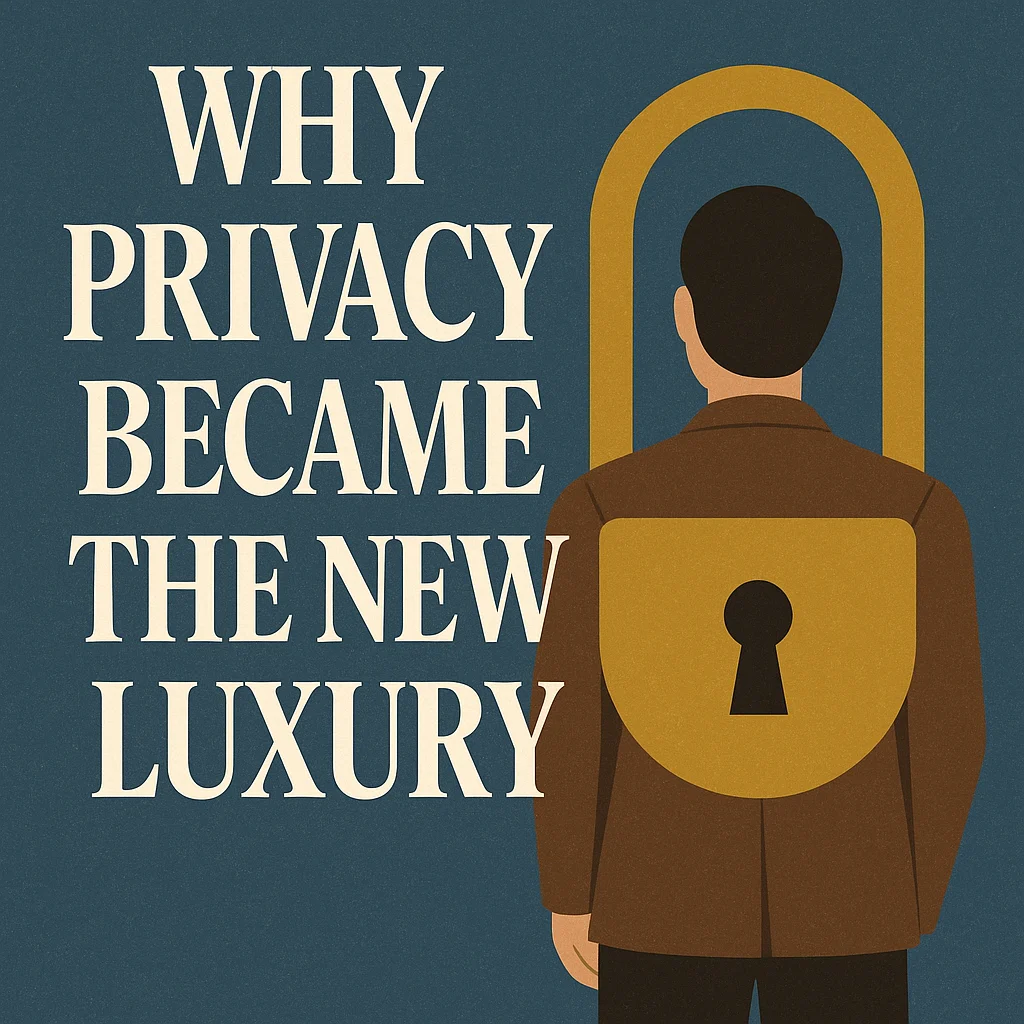
People did not actively consider privacy for the majority of human history. Houses were close to one another, communities were small, and people frequently shared their everyday lives with their family and neighbors. People's limited privacy was derived from distance, walls, or other people's judgment. However, everything changed in the twenty-first century. Privacy is now a scarce resource rather than the default given smartphones, social media, surveillance cameras, and a world that is always connected by the internet.
The concept of privacy has become somewhat of a luxury in this new digital economy. It can only be fully enjoyed by those who have the time, resources, and awareness to preserve it. This blog examines the reasons behind privacy's rise to prominence, the ways in which technology has changed our relationship with it, and the implications for human freedom going forward.
1. The Historical Context of Privacy
The modern concept of privacy is relatively new. Privacy in the past was more about physical space, such as land ownership, private rooms, or family secrets. Privacy was elevated as a component of personal autonomy during the Enlightenment by concepts of individual rights and freedoms. By the 20th century, many nations had laws protecting privacy as a right against overbearing governments.
However, this equilibrium was altered by the emergence of digital technology. Today, maintaining privacy necessitates fighting algorithms, corporate data brokers, and widespread surveillance systems, whereas in the past it meant simply shutting the curtains or locking a drawer.
2. The Digital Erosion of Privacy
At first, the internet was thought to be a place of freedom and openness. Rather, it developed into a market where the most valuable commodity was data.
-
Surveillance capitalism: Businesses that track user behavior and sell targeted ads, such as Google, Meta, and innumerable apps, earn billions of dollars.
-
Smart devices as spies: Numerous devices, such as fitness trackers and smart speakers, gather personal information about our daily activities.
-
Social media oversharing: Users are encouraged by platforms to exchange privacy for digital validation, likes, and visibility.
As a result, our choices, whereabouts, interactions, and even biological cues are continuously tracked.
3. Why Privacy Is Now a Luxury
Not everyone can afford the cost of privacy—whether financial, technological, or social. Here’s why:
-
Paid privacy tools: VPNs, premium browsers, ad-free apps, and encrypted messaging services are all expensive.
-
Time investment: It takes work to manage digital footprints, change settings, and understand privacy policies.
-
Privilege of choice: Affluent people can purchase privacy-protecting devices, pay for gated communities, or choose not to use social media. Those with lower incomes frequently can't.
This means that, in reality, privacy is a status symbol rather than a universal right, similar to fine dining, private education, or opulent travel.
4. The Irony of Social Media and Luxury Privacy
Ironically, a lot of people pay for privacy-protecting services while simultaneously flaunting their wealth and lives online. For instance, celebrities use private security and encrypted communication to share carefully chosen photos on Instagram. They view privacy as controlled rather than unassailable.
This paradox applies to regular people as well: many sacrifice privacy for convenience but then yearn for "digital detoxes" or getaways to locations without functioning phones. Privacy is desirable because it is scarce, like a way to avoid constant exposure.
5. Privacy as Status Symbol
In the same way luxury goods signal wealth, privacy is becoming a symbol of sophistication. Consider:
-
Exclusive communities: To keep outsiders out, wealthy neighborhoods employ guards, surveillance, and gated access.
-
Private digital spaces: Invite-only social networks and encrypted chat groups are viewed as elite havens away from public spaces.
-
Off-grid living: The ultimate luxury for some people is to own land in isolated locations and cut off from technology altogether.
Owning privacy means owning control in a world where almost everything is visible.
6. The Mental Health Dimension
Privacy is closely related to mental health and goes beyond data protection. Pressure is created by ongoing surveillance, whether it comes from peers, corporations, or governments.
-
Performance anxiety: We feel like we're constantly "on stage" thanks to social media.
-
Loss of autonomy: People feel helpless to control their identities when they lack privacy.
-
The value of solitude: These days, genuine moments of being unnoticed, offline, and unaffected by scrutiny are uncommon and healing.
In essence, those who can afford to detach themselves—by shutting off electronics, taking untracking trips, or setting up private retreats—are purchasing mental clarity.
7. Governments, Power, and the Illusion of Safety
Another important factor in the privacy-as-luxury equation is states. Governments gather vast amounts of data under the guise of security. Face recognition software, biometric IDs, and surveillance cameras are becoming more and more commonplace worldwide.
The wealthy frequently use private networks, legal teams, or foreign travel as a means of self-defense. In contrast, ordinary citizens are forced to divulge information in order to obtain essential services. Class and privilege start to stratify privacy.
8. Can Privacy Be Reclaimed as a Right?
Is it possible to restore access to privacy if it has become a luxury? A number of motions imply that it is.
-
Privacy-first technology: Tools that prioritize security and little tracking include Signal, ProtonMail, and DuckDuckGo.
-
Regulation: The goal of laws like the EU's GDPR is to redefine privacy as a right rather than a privilege.
-
Cultural awareness: People are demanding accountability from businesses as they become more aware of the risks associated with excessive exposure.
The catch is that tools and laws are only effective if people are aware of them and apply them. Once more, that calls for resources, including money, time, and education.
9. The Future of Privacy as Value
Privacy might become even more scarce as technology develops further. The proliferation of biometric data collection, AI-powered surveillance, and predictive algorithms raises the possibility that complete transparency will soon be the standard. Privacy might be the ultimate symbol of power in such a future, rather than just a luxury.
-
Private digital ecosystems: Elites may pay for closed networks and digital anonymity.
-
Biometric-free zones: Like today's upscale resorts, special locations where surveillance is prohibited could develop into premium areas.
-
Privacy as prestige: People may show off their ability to "stay invisible" in a connected world, much like they do with designer brands.
Conclusion
Human life is no longer predicated on privacy. People now have to actively fight for—or purchase—it in the age of surveillance capitalism and perpetual connectivity. While the majority must navigate a world of cameras, data brokers, and unending visibility, the wealthy enjoy private islands, encrypted devices, and exclusive communities.
Because privacy is scarce due to the systems in place, it has become the new luxury, not because it shouldn't be available to everyone. It will take political will, technological advancement, and cultural shift to reclaim it as a universal right.
Until then, one of the most precious luxury of all will be available to those who can physically or digitally vanish: the opportunity to live undetected.



Leave a Reply