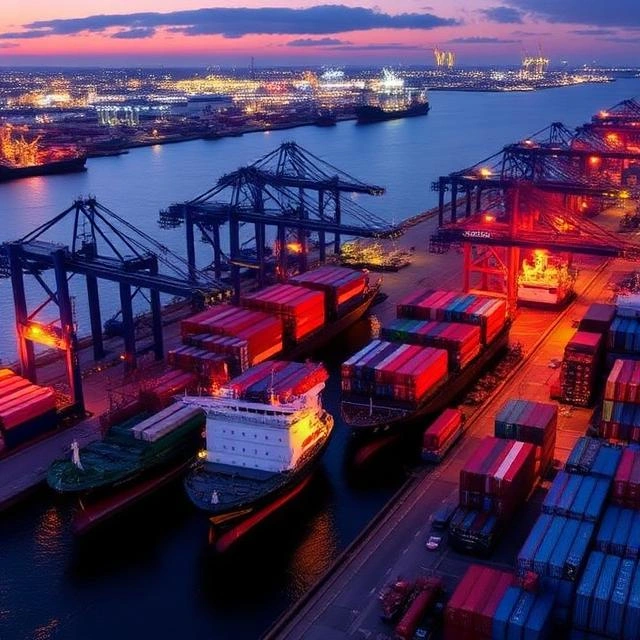
Ports have been important hubs for migration, trade, and cross-cultural interaction for ages. Ports have facilitated economic progress and connected continents, from the earliest maritime empires to contemporary container terminals. However, ports are changing beyond their conventional economic functions in the quickly changing geopolitical context of today. They are developing into strategic power hubs, vital resources that affect international supply chains, military posture, energy security, and political clout.
The increasing significance of ports is a reflection of more general shifts in international rivalry, technology, and globalization. Control over maritime infrastructure has gained significant economic and geopolitical importance as trade volumes rise and supply chains become more intricate.
The Backbone of Global Trade
By volume, about 80% of world trade is carried out by sea. Everything travels via ports and maritime routes, from raw resources to final consumer items. Ports are centers of distribution, logistics, storage, and customs clearance in addition to being places to dock.
The efficiency of shipping has changed thanks to modern containerization. Large ships transport thousands of containers, and ports with sophisticated cranes and automated systems oversee quick unloading and reloading processes.
Because of this, ports now function as:
✔ Critical nodes in global supply chains
✔ Economic engines for surrounding regions
✔ Gateways for imports and exports
✔ Infrastructure hubs supporting manufacturing and commerce
A big port interruption can have a global impact on sectors. The COVID-19 epidemic and other transportation delays showed how port congestion may impact economic growth, product supply, and worldwide inflation.
Strategic Geography and Political Influence
Geography has always shaped power. Ports located near vital sea lanes, chokepoints, or major trade routes hold immense strategic value.
Straits like Gibraltar, Malacca, and Hormuz demonstrate how restricted marine routes can affect international energy flows and commercial shipping. Near these chokepoints, ports frequently acquire geopolitical significance.
on an effort to increase their influence and protect trade routes, nations are investing more and more on port infrastructure overseas. Strategic port ownership or long-term leases can increase political clout or improve diplomatic relations.
The growing geopolitical importance of maritime infrastructure illustrates how economic assets double as instruments of national strategy.
Military Significance and Naval Power
Ports are vital military resources in addition to being commercial centers. Port facilities are essential to naval forces' deployment, upkeep, refueling, and logistics.
As tensions throughout the world change, maritime security has become more important. Access to deep-water ports must be secure for nations with highly developed naval forces.
Key strategic functions of ports include:
✔ Supporting naval operations and fleet mobility
✔ Facilitating humanitarian and disaster response missions
✔ Enabling rapid military deployment
✔ Protecting sea lanes and trade routes
Dual-use ports can be used for both military and civilian applications. When foreign investments give rise to security concerns, this overlap may intensify tensions.
Naval strategy and maritime trade are deeply intertwined, reinforcing the importance of port control in global power dynamics.
Energy and Resource Security
Another reason ports are becoming more important is energy security. Resources including coal, oil, and liquefied natural gas (LNG) are mostly transported by water.
In order to connect producers and consumers across continents, specialized terminals manage energy imports and exports. Any interruption to these terminals might have a big effect on the world's energy markets.
As renewable energy expands, ports are also adapting to handle new forms of cargo, including components for offshore wind farms and battery storage systems.
Control over energy-related port infrastructure strengthens national resilience and economic stability.
The Role of Technology and Smart Ports
Modern ports are increasingly digitized. Automation, artificial intelligence, and data analytics optimize operations and reduce delays.
“Smart ports” use real-time tracking systems, automated cranes, blockchain-based documentation, and predictive analytics to enhance efficiency.
While technological innovation increases competitiveness, cybersecurity dangers are also introduced. Cyberattacks may target ports that are linked to digital networks.
Thus, digital resilience and physical infrastructure are both strategically significant. Port system protection is now considered a national security issue.
Global Investment and Competition
International competition over port development has intensified. Major economies are investing heavily in maritime infrastructure to secure trade networks and economic partnerships.
Finance, building, and long-term management agreements are frequently included in foreign direct investment in ports. Even though these initiatives might strengthen local economies, they occasionally give rise to worries about strategic vulnerability or reliance on debt.
Port investment can influence political relationships. Infrastructure diplomacy has become a tool for expanding global presence.
The race to develop deep-water ports capable of accommodating mega-ships reflects the growing scale of maritime trade.
Economic Clusters and Urban Development
Larger economic zones are frequently sparked by ports. The surrounding regions might become logistics hubs, free trade zones, and industrial parks.
These clusters generate employment and attract investment, transforming coastal cities into economic powerhouses.
Port access has historically contributed to the prosperity of major international cities. Port growth is now more closely integrated with rail systems, highways, and transportation networks in urban planning.
The economic footprint of a port extends far beyond the docks, shaping regional development strategies.
Environmental and Sustainability Challenges
As ports expand, environmental concerns also grow. Maritime shipping contributes to carbon emissions, and port operations can impact local ecosystems.
Nowadays, port development policies place a strong emphasis on sustainability measures. Cleaner fuel regulations, beach preservation, and equipment electrification are among the initiatives.
Green port initiatives aim to balance economic growth with environmental responsibility.
Environmental leadership is a growing component of strategic power. Ports may have a competitive edge if sustainability measures are successfully implemented.
The Impact of Global Crises
The vulnerability of maritime infrastructure has been highlighted by recent global disruptions. Natural catastrophes, pandemics, regional conflicts, and trade disputes can all cause port operations to be disrupted.
Supply chain resilience has become a priority. Governments and corporations seek diversified routes and backup infrastructure to reduce risk.
Ports are therefore central to discussions about economic security and national preparedness.
Control and reliability of maritime gateways directly affect global commerce stability.
The Future of Maritime Power
Ports will probably play an even bigger role in geopolitical strategy in the future. New shipping lanes, growing trade alliances, and emerging Arctic routes brought on by climate change will modify maritime maps.
Technological advancements such as autonomous ships and advanced logistics systems will further transform port operations.
At the same time, geopolitical rivalries may intensify competition over port access and infrastructure ownership.
Strategic port development is no longer just about trade efficiency; it is about securing influence in a multipolar world.
Conclusion
From being merely trading posts, ports have developed into vital hubs that have an impact on international politics, economy, and security. They are crucial for energy security, supply chains, naval operations, and technological innovation.
Control over maritime infrastructure grows in value as geopolitical conflicts change and globalization intensifies. Ports serve as hubs where national security and economic aspirations meet, as well as where trade meets strategy.




Leave a Reply