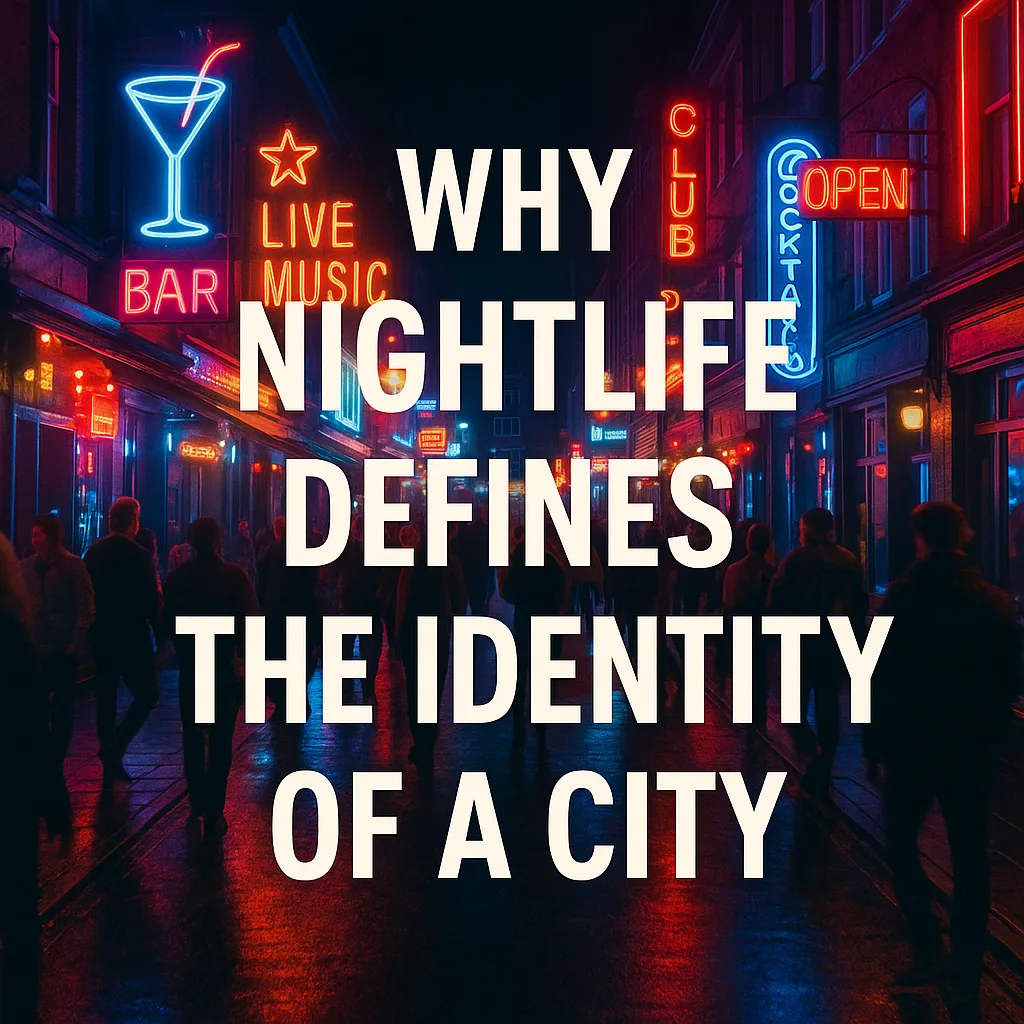
A city's skyline, cultural landmarks, or perhaps its culinary scene come to mind when you think of it. However, nightlife is another aspect that frequently embodies its actual spirit. A city's nightlife determines how it expresses itself after the sun sets, whether it's through neon-lit streets in Tokyo, flamenco bars in Madrid, underground clubs in Berlin, or jazz lounges in New Orleans.
Nightlife is more than just entertainment; it's a synthesis of culture, history, economy, and identity. It's the beat of the streets, the lifeblood of neighborhoods, and frequently the enduring memory that tourists take with them. Let's examine why nightlife has always played a significant role in how people perceive, interact with, and remember cities.
1. Nightlife as a Mirror of Culture
Cities are living organisms, and nightlife reveals their cultural DNA.
-
Music as Identity: Berlin's techno is a statement of freedom and post-wall creativity, not just music. Similarly, Havana's salsa clubs uphold centuries of Afro-Cuban customs, while Nashville's country bars recount the tale of American folk roots.
-
Food and Drink: Food is more than just nourishment; it's a social, cultural, and communal legacy, as demonstrated by night markets in Taipei and Bangkok.
-
Local Traditions: Spain's culture, which emphasizes socializing, leisure, and late meals, is reflected in its nightlife, which frequently lasts until dawn. Nordic nightlife, on the other hand, strikes a balance between music scenes that are fueled by long, dark winters and cozy pub culture.
Not only are people having fun when they enter a city's nightlife, but they are also entering a narrative that has been developing for centuries.
2. Nightlife and Community
Nightlife at its best is about making connections. After dark, a busy city center offers areas for people to congregate, socialize, and create new experiences.
-
Inclusivity and Belonging: Nightlife can provide marginalized groups with safe spaces. LGBTQ+ nightlife, for instance, has historically contributed to the development of community and identity in locations like New York's Stonewall Inn and San Francisco's Castro District.
-
Shared Identity: By transforming strangers into communities, nightlife enhances a sense of belonging. Consider locals conversing in local bars or fans joining together to sing at a late-night performance.
-
Generational Bridges: Traditions are frequently passed down through nightlife. A father may take his child to a jazz club that he and his own father used to frequent. These ties between generations become ingrained in a city's collective memory.
3. Nightlife as an Economic Engine
Beyond culture, nightlife is big business. In some cities, it is an economic backbone.
-
Tourism: The nightlife scenes in Rio de Janeiro, Ibiza, and Las Vegas draw millions of tourists annually. Bars, clubs, entertainment, and late-night dining are all expensive for tourists.
-
Employment: Large networks of workers are supported by the nightlife industries, which include DJs, bartenders, and stage technicians.
-
Urban Growth: A city's nightlife can revitalize certain areas. Once-forgotten neighborhoods are being revitalized by abandoned warehouses that have developed into cultural hotspots, akin to Berlin's club scene.
Fun and money go hand in hand, as evidenced by studies conducted in places like London that show the nighttime economy generates billions of dollars every year.
4. Nightlife as Rebellion and Expression
While cities have historically had a "daytime" identity based on institutions, laws, and order, nightlife frequently symbolizes the opposite: freedom, experimentation, and rebellion.
-
The Jazz Age: Jazz clubs in Harlem, New York, became emblems of artistic rebellion, freedom of expression, and cultural renewal in the 1920s.
-
Punk and Counterculture: Punk, a movement that questioned authority and reinterpreted music, emerged from London's nightlife in the 1970s and 1980s.
-
Techno in Berlin: Disused buildings were converted into clubs where young people used dance and music to express their liberation following the fall of the Berlin Wall.
Nightlife is often where revolutions begin—not with speeches, but with sound, dance, and collective energy.
5. The Emotional Identity of Cities After Dark
Cities have a different feel at night in addition to a different appearance. At night, the same streets that are dotted with offices during the day transform into playgrounds of light, sound, and human connection.
-
Romance and Mystery: Even though Paris is known as the City of Light, its romantic identity is equally linked to jazz performances in dimly lit bars, candlelit cafés, and evening walks along the Seine.
-
Energy and Freedom: Times Square, Broadway performances, and after-hours dining establishments are the main sources of New York's reputation as "the city that never sleeps."
-
Spiritual Connection: In certain cultures, nightlife encompasses more than just entertainment; social and religious rites are frequently combined in midnight markets, temple ceremonies, and night festivals.
6. Challenges of Nightlife
Of course, nightlife isn’t without issues. Its identity-defining role also brings challenges.
-
Safety: Cities may be vulnerable to violence, unsafe drinking, or crime as a result of nightlife. Cities must strike a balance between security and vibrancy.
-
Noise and Neighbors: Nightlife and residential needs occasionally collide as cities expand. In cities like New York and London, gentrification has forced the closure of well-known clubs.
-
Exclusivity: Nightlife can occasionally become overly commercial, alienating local populations and transforming areas into tourist destinations.
But even these challenges highlight the importance of nightlife—it matters enough to spark debates, policies, and protests.
7. The Future of Nightlife in Cities
With globalization, technology, and even pandemics shaping human behavior, nightlife is evolving.
-
Hybrid Spaces: Cafés that double as cocktail lounges at night and co-working spaces during the day are growing in popularity.
-
Virtual Nightlife: During the pandemic, virtual reality clubs and online concerts arose, establishing digital nightlife identities.
-
Sustainability: There is a growing trend of green nightlife, which includes clubs that use renewable energy, reduce waste, and support local artists.
-
Inclusive Experiences: With a growing emphasis on inclusivity, contemporary nightlife is establishing venues that are open to all ages, genders, and communities.
The future will redefine nightlife, but its role as a city’s cultural heartbeat won’t change.
Conclusion
A city's nightlife defines its character because it shows what its residents do when they are not bound by work, responsibilities, or everyday routines. It is the intersection of the economy, culture, community, and rebellion. Without a vibrant nightlife, a city lacks rhythm.
You aren't merely taking in the sights and sounds of a city when you stroll through it at night, whether it's the vibrant lights of Tokyo, the samba rhythms of Rio, or the peaceful bustle of a night market in Chiang Mai. You're feeling the essence of that location. One drink, one song, and one late-night memory at a time, nightlife is how cities tell their stories to the world.



Leave a Reply