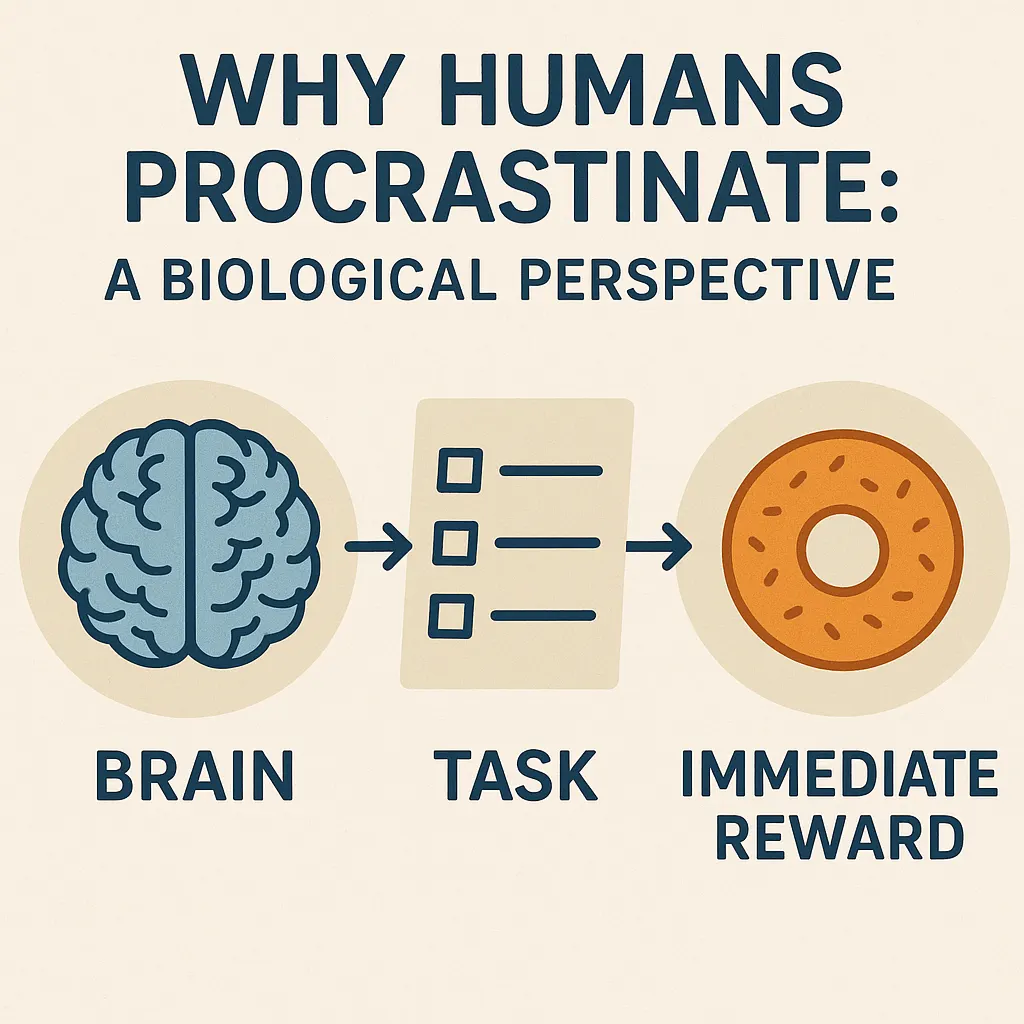
Why Humans Procrastinate: A Biological Perspective
Everyone procrastinates: CEOs put off decisions, employees put off projects, and students put off homework. Sometimes we select something else even though we know a task is necessary. Why does this occur?
Laziness or a lack of willpower are not the causes of procrastination. Procrastination is linked to how our brains process stress, reward, and fear, according to biological study. In contemporary life, it's a survival strategy that sometimes goes awry.
We must comprehend the brain in order to fully comprehend procrastination.
Procrastination: A Built-in Survival Mechanism
Decisions were made by early humans based on rewards and urgent threats. The brain developed a preference for:
- Safety
- Comfort
- Quick dopamine rewards
Studying or filing taxes are examples of long-term tasks that don't yield immediate rewards. The brain frequently selects:
- Instant relief (scrolling social media)
- Immediate pleasure (watching TV)
- Avoiding discomfort (delaying work)
Procrastination shields us from suffering in the modern environment, but it slows down development.
Two Brain Systems Competing
A conflict between two main brain regions frequently results in procrastination:
|
Brain Region
|
Function
|
Role in Procrastination
|
|---|---|---|
|
Prefrontal Cortex
|
Logic, planning, long-term goals
|
Wants you to complete the task
|
|
Limbic System
|
Emotions, instinct, pleasure
|
Avoids discomfort → procrastination
|
The Prefrontal Cortex is slow and rational.
The Limbic System is fast and emotional.
🧠 When the emotional brain wins, procrastination happens.
Dopamine Makes Distraction Too Rewarding
Dopamine drives motivation. It is released when we:
- Eat something tasty
- Receive likes online
- Watch entertaining videos
- Play games
Difficult tasks cause the brain to go elsewhere for a quicker boost since they produce less dopamine in the present.
This leads to:
- Clicking YouTube instead of working
- Starting “just 5 minutes” of scrolling
- Choosing comfortable distractions
The brain seeks pleasure now, not results later.
The Fear Factor: Amygdala & Stress Avoidance
Fear reactions are managed by the amygdala. When a task feels:
- Too hard
- Too big
- Too uncertain
- Likely to fail
It triggers:
- Anxiety
- Overthinking
- Task avoidance
We refer to this as Fear Response Procrastination.
Common triggers include:
- Perfectionism
- Fear of judgment
- High expectations
- Pressure to perform
The brain selects safety, which appears to be doing nothing, over confronting risk.
Time Perception: The Present Bias
Humans naturally prefer:
- Immediate rewards
- over
- Delayed benefits
This is known as Present Bias.We overstate the task's current suffering and underestimate its future significance.
That’s why people say:
- “I’ll start tomorrow.”
- “Future me will handle it.”
But future you is still you — with the same brain biology.
Biology Struggles With Abstract Deadlines
The brain developed for survival tasks, including as weather risks, fires, and hunting.
Not for:
- School assignments
- Email replies
- Financial planning
Modern responsibilities are abstract and long-term → the brain treats them as non-urgent threats.
Motivation is weak in the absence of urgency.
Stress Converts Work Into a Threat
When stress levels rise too high:
- Cortisol (stress hormone) increases
- The brain shuts down motivation
- Survival mode activates
Although they are mentally overburdened, people frequently believe they are sluggish.
Signs of stress-based procrastination:
- Emotional paralysis
- Exhaustion
- Difficulty starting even small tasks
- Suddenly “needing” a break
Procrastination can be self-protection.
Executive Dysfunction: When Planning Becomes Hard
The Prefrontal Cortex manages:
- Planning
- Focus
- Task initiation
When it struggles, we face executive dysfunction.
This is common in people with:
- ADHD
- Anxiety
- Depression
- Trauma history
- Sleep deprivation
It’s not a motivation problem — it’s a neurological challenge.
Why Deadlines Suddenly Motivate Us
Many people say they think best under pressure.
That’s because:
- Urgency increases adrenaline
- Fear of failure becomes stronger than fear of starting
- Survival mode kicks the Prefrontal Cortex into action
At last, the task is perceived by the brain as an actual threat rather than a remote one.
This explains why "last-minute rush" seems inspiring yet has negative effects on stress.
Brain Rewards Small Wins
A common reason for procrastination is that the brain views a task as:
- Too big
- Too unclear
- Too overwhelming
However, the brain releases dopamine when it perceives progress.
Breaking tasks into micro-steps helps because:
- Each small completion feels rewarding
- The brain builds momentum
- Anxiety reduces
- Confidence increases
Motivation grows after starting — not before.
Sleep, Diet & Energy Influence Task Initiation
A tired or poorly nourished brain struggles with:
- Decision-making
- Focus
- Emotional regulation
Leading to procrastination.
Biological triggers for delay:
- Lack of sleep
- Dehydration
- Poor nutrition
- Sedentary lifestyle
Sometimes the cure isn’t “motivation”…
It’s better physical care.
Procrastination Isn’t Always Bad
Procrastination can have beneficial biological effects.
- Incubation → Letting ideas develop subconsciously
- Emotion management → Avoiding burnout
- Task prioritization → Delaying low-value work
Humans need mental vacations since we are not robots.
Only when the delay becomes chronic does harm occur.
How to Work With Your Brain — Not Against It
Here are some scientifically proven strategies to cut down on procrastination:
Strategies that support the brain:
- Break work into small steps
- Set micro-deadlines for each stage
- Use timers (Pomodoro technique)
- Reward progress frequently
- Remove nearby distractions
- Start with only 2 minutes of work
- Focus on done > perfect
- Prioritize rest, sleep, and hydration
- Turn large tasks into clear checklists
The brain responds better when tasks feel:
- Easier
- Faster
- Less emotionally threatening
Reframing Tasks Reduces Fear
Procrastination is often caused by negative connotations rather than the actual task.
Shift thinking from:
- “This must be perfect”
- to
- “This just needs to be done”
or
- “This is scary”
- to
- “This is progress for future me”
When emotions calm down, action becomes possible.
Conclusion: Procrastination Is a Brain Battle
Because of the way our minds are wired, humans tend to put things off.
- Seek pleasure
- Avoid fear
- Escape discomfort
- Prioritize short-term survival
It's not a personal shortcoming; procrastination is biology.
Knowing the science behind it benefits us:
- Replace shame with strategy
- Reduce stress triggers
- Reward effort
- Work smarter with our brains
We don't put things off because we're weak —
Because we are human, we put things off.




Leave a Reply