Introduction
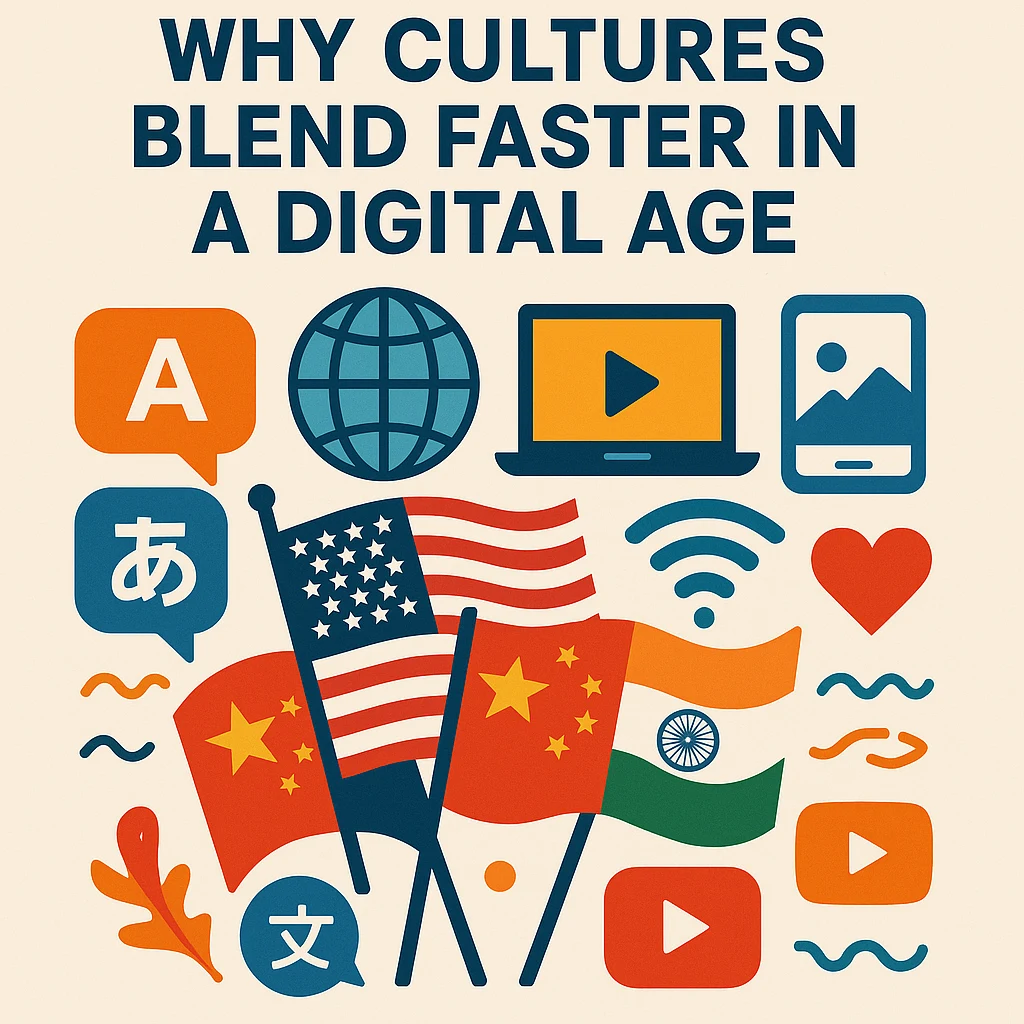
Cultures evolved comparatively independently for the majority of human history. For centuries, traditions, languages, and beliefs were kept apart by mountains, seas, deserts, and extreme distances. Slow cultural exchange occurred as a result of migrations, conquests, or trade routes. However, this reality has changed in the digital age.
Teenagers in Brazil can now order Japanese sushi for lunch, watch a Turkish drama on Netflix, wear sneakers made in the United States, and listen to K-pop from South Korea—all in the same day. Interactions between cultures that used to take centuries are now happening instantly.
However, why is cultural blending occurring so quickly in the digital age? What effects does this have on human connection, creativity, and identity?
1. The Internet as a Cultural Highway
The largest platform for cross-cultural exchange in the world today is the internet. In contrast to past trade routes that only carried goods, the internet instantly spreads art, values, and ideas.
-
Social media platforms like Instagram, TikTok, and X allow trends to cross borders overnight.
-
Streaming services expose global audiences to movies, series, and music in multiple languages.
-
Online forums and communities connect people with niche interests, regardless of geography.
Cultures now mix through screens, where exposure is continuous and instantaneous, rather than waiting for physical contact.
2. Language Barriers Are Breaking Down
One of the main obstacles to cultural blending in the past was language. Today, digital tools are dismantling that barrier.
-
Google Translate and AI translators allow real-time communication across dozens of languages.
-
Subtitling and dubbing services make foreign films and series globally accessible.
-
Even memes—a digital cultural shorthand—often bypass language with visuals, making them universally shareable.
Bilingualism is no longer necessary for cultural exchange as language barriers disappear. Anyone can take part.
3. The Rise of Global Pop Culture
The digital age has birthed a truly global pop culture.
-
K-pop and Korean dramas have captured audiences worldwide thanks to YouTube and Netflix.
-
Anime from Japan has become mainstream entertainment across continents.
-
Hollywood blockbusters, once dominant, now share space with Bollywood films, Spanish-language hits, and African Afrobeats.
With various traditions influencing one another to produce hybrid genres and worldwide trends, cultural production has transcended national boundaries.
4. Social Media Influencers as Cultural Ambassadors
Influencers have a special function in quickening the process of cultural blending. Their content, which includes dances, recipes, fashion finds, and travel vlogs, frequently exposes viewers to aspects of other cultures.
-
A food vlogger in New York might make Ethiopian injera go viral.
-
A dance challenge from Nigeria can reach millions of people across Europe and Asia in days.
-
Makeup tutorials featuring Indian bridal looks can inspire beauty trends worldwide.
Influencers accelerate cultural adoption by establishing direct connections with common people, in contrast to more conventional cultural ambassadors like politicians or academics.
5. Migration and Diasporas in the Digital Age
Although international migration is not new, digital technologies increase the visibility and connectivity of diaspora communities. Instead of abandoning their culture, immigrants spread it throughout the world.
-
Immigrants share food traditions, holidays, and customs on TikTok, turning them into global trends.
-
Diaspora artists blend their heritage with their host country’s culture, creating new music, art, and fashion.
-
While adjusting to new cultural environments, migrants can keep in touch with their home country through apps like WeChat and WhatsApp.
Digital platforms ensure cultural identity is preserved while also reshaping global culture.
6. The Power of Memes and Virality
In the digital age, memes are arguably the most intriguing illustration of cultural blending. They are cultural units that spread quickly, such as small jokes, pictures, or allusions.
-
A meme born in one country can be remixed across dozens of cultures within hours.
-
Humor, symbols, and shared references create a global “inside joke” culture.
-
Memes also blend visual elements from multiple traditions, creating hybrid expressions that are uniquely digital.
In ways not seen in any other era, this ongoing remixing speeds up cultural convergence.
7. Digital Consumerism and Hybrid Culture
Brands and corporations also play a role in accelerating cultural blending.
-
Fast fashion companies bring global street styles to mainstream markets almost instantly.
-
Food delivery apps make cuisines from around the world available in most cities.
-
Tech companies like Apple or Samsung set global design standards that merge cultural aesthetics into universal products.
The digital marketplace actively creates hybrid cultural experiences rather than merely reflecting them.
8. Challenges of Cultural Blending in the Digital Age
While cultural blending enriches societies, it also brings challenges:
-
Cultural appropriation: Elements of a culture can be taken out of context or exploited without respect for their origins.
-
Homogenization: Global culture risks flattening differences, creating a “one-size-fits-all” digital identity.
-
Information bubbles:Certain cultures may be amplified while others are silenced by algorithms, resulting in unequal representation.
It is still crucial to strike a balance between respect for cultural authenticity and openness to cross-cultural interaction.
9. Identity in a Blended World
As cultures blend faster, individual and collective identities are shifting.
-
Young people often see themselves as “global citizens” shaped by multiple cultural influences.
-
People may embrace their traditional heritage while simultaneously being a part of online global subcultures, resulting in hybrid identities.
-
Even local traditions evolve—festivals, fashion, and language adapt to digital-age sensibilities.
For people who are attempting to maintain cultural distinctiveness, this fluid sense of identity can be both empowering and confusing.
10. The Future of Cultural Exchange
Looking ahead, cultural blending will only accelerate as technology evolves.
-
Virtual reality could allow people to experience cultural events and spaces without traveling.
-
Artificial intelligence may create hybrid art, music, and stories blending multiple cultural traditions.
-
Global online communities will continue to shape trends faster than governments or institutions can regulate them.
Cultural diversity is not eliminated by the digital age; rather, it expands the ways in which cultures can interact, blend, and reinvent themselves.
Conclusion
Although cultural blending has always occurred, it is happening at a never-before-seen rate now. The world is now a cultural mosaic due to the digital age, where concepts, customs, and artwork can instantly transcend national boundaries. Humanity is going through the fastest and most dynamic cultural fusion in history, from K-pop and memes to hybrid cuisines and digital festivals.
The question now is not whether cultures will mix, but rather how societies will adjust, striking a balance between tradition and change, innovation and preservation, and openness and identity.
While cultural boundaries may not be eliminated by the digital age, they are unquestionably more permeable than they have ever been. Blending cultures is the norm rather than the exception in this globalized world.

Leave a Reply