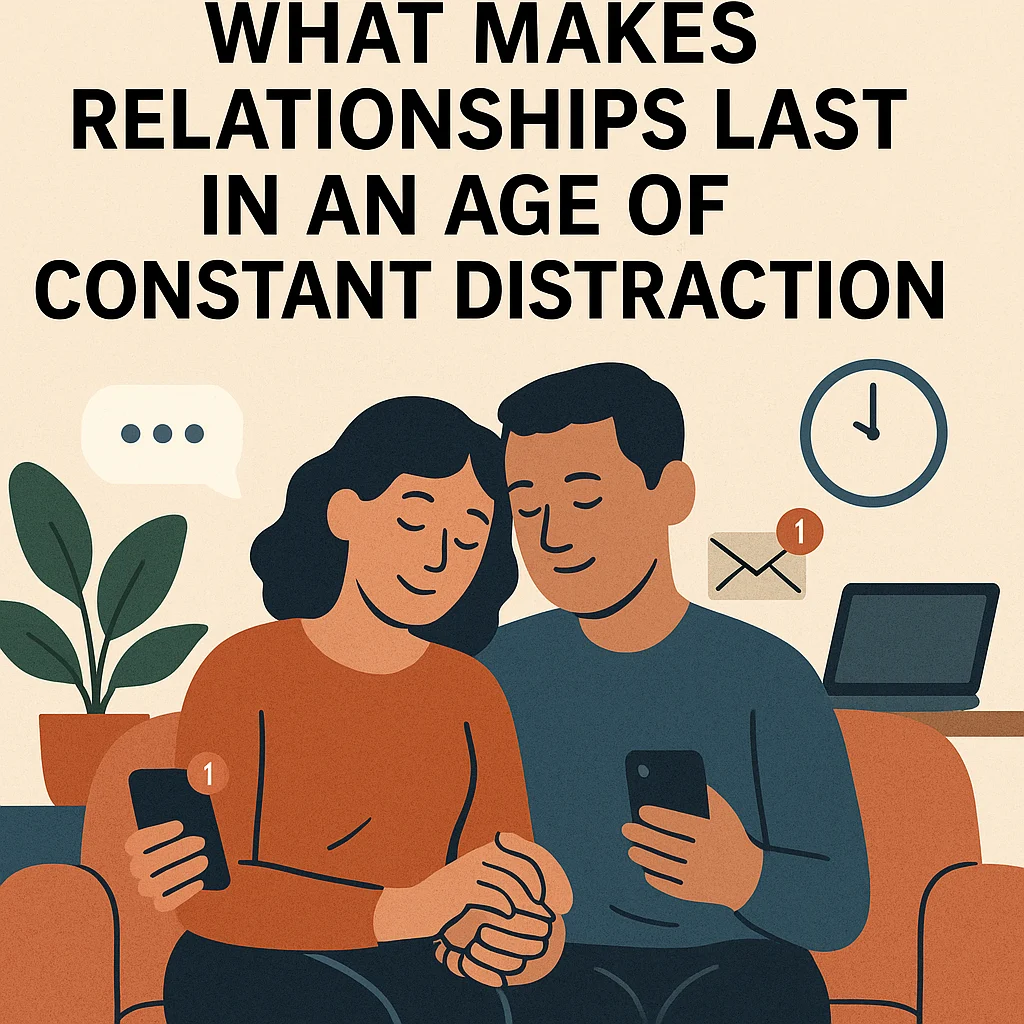
Keeping a solid relationship has never been more difficult—or more crucial—in a time when social media feeds, incessant notifications, and work emails follow us everywhere. Distractions are now ingrained in everyday life rather than being sporadic disruptions. Contemporary couples encounter challenges that were unimaginable to earlier generations, such as the subtly alluring lure of a smartphone during dinner or the strain of professional obligations. Some relationships, however, not only endure but flourish in spite of the mayhem.
What, then, sustains relationships in a time of perpetual distraction? Both conscious adjustments to contemporary realities and enduring human needs hold the key to the solution.
1. The Power of Presence
Presence is arguably the best gift you can give your significant other today. It is extremely rare and valuable to give someone your whole attention in a world full of distractions. Being present involves more than just being in the same room; it also involves paying attention, keeping eye contact, and fighting the impulse to check your phone in the middle of a conversation.
Relationship satisfaction is consistently higher for partners who feel "seen" and "heard," according to research. It only requires the straightforward, regular act of providing undivided attention—no grandiose gestures are required.
Practical Step: Establish designated times or areas where phones are not allowed. Make a commitment, for instance, to avoid using electronics at the dinner table or while you're winding down before bed.
2. Shared Values Over Shared Distractions
Many times, compatibility is confused with sharing interests in hobbies or TV shows. However, genuine compatibility is based on shared values, which serve as a basis for overcoming obstacles and a guide for making decisions.
During stressful times, values like honesty, respect, and family orientation serve as pillars. Couples become more resilient to outside influences when they put their shared values ahead of transient diversions.
Example: Even though a couple has different interests—one loves to read, the other loves to play video games—they can still work through their differences amicably if they both value honest communication and respect for one another.
3. Communication That Goes Beyond the Surface
Conversations about logistics, such as who is taking the dog for a walk, picking up groceries, or paying bills, can easily veer off topic. Long-lasting relationships, however, go deeper. They create a forum for talking about aspirations, anxieties, objectives, and even insecurities.
Surface-level interactions predominate in a distracted society. A deeper emotional bond is maintained by couples who make time for in-depth conversations. Frequent check-ins can have a significant impact:
-
Weekly deep talks: Dedicate an hour to reflect on how both partners are feeling.
-
Curiosity: Pose open-ended inquiries such as "What have you been thinking about recently?" or "What exciting thing are you anticipating?"
Such practices create a bridge between daily life and deeper intimacy.
4. Quality Time vs. Quantity of Time
Physically being together is no longer sufficient. Even though they share a home, many couples spend their evenings scrolling through their phones in different virtual worlds. Nowadays, the quality of time spent together is far more important than the amount.
A half-engaged day can be less effective than a 30-minute uninterrupted conversation. Couples strengthen the connection that keeps them rooted in the midst of outside chaos when they purposefully plan their time together.
Ideas for Quality Time:
-
Cook a new recipe together.
-
Go for a walk without phones.
-
Try learning a skill as a team—like painting, dancing, or a language.
5. The Role of Trust in a Hyperconnected World
Since there are so many options for connecting online, trust becomes an essential component of enduring partnerships. Social media and messaging apps cause boundaries to become blurred, which makes it easy for insecurities to spread.
Strong couples establish trust by being open and courteous about their online conduct in addition to avoiding betrayal. Misunderstandings can be avoided by talking about the limits of online interactions.
For instance: Unnecessary arguments can be avoided by agreeing on each partner's feelings regarding sharing private moments online or maintaining contact with former partners.
6. Managing Conflict in Healthy Ways
Distractions shorten attention spans and patience, which increases the likelihood of conflict. Minor annoyances, such as feeling ignored when using a phone, can quickly become more serious.
Long-lasting couples learn how to handle arguments without letting them get out of control. They fight fairly, refrain from insults, and concentrate on finding a solution rather than "winning." Crucially, they avoid allowing distractions to impede their ability to resolve conflicts. For instance, sending texts during a contentious debate conveys disinterest and incites animosity.
Practical Tool: the technique known as "pause and breathe." Decide to take a five-minute break before continuing when disagreements get heated. This stops rash remarks from doing long-term harm.
7. Creating Rituals of Connection
Rituals—small but significant routines that deepen connection—are essential to healthy relationships. In a distracted setting, these rituals serve as anchors. Intimacy can be developed over time through small, frequent actions; large gestures are not necessary.
Examples of relationship rituals:
-
A good morning text or note.
-
A shared bedtime routine.
-
A weekly “date night” tradition.
-
Celebrating small wins together, like finishing a project or surviving a tough week.
These recurring customs serve as a reminder to couples that their relationship is unaffected by the chaos of the outside world.
8. Balancing Individual Space and Togetherness
Long-lasting partnerships respect the paradox of intimacy: intimacy flourishes when partners are free to be who they are. Constant connectivity can be mistaken for intimacy in this age of distraction. However, respecting individuality as much as togetherness is the foundation of true intimacy.
Healthy couples support one another's pursuit of interests, friendships, and personal development outside of the partnership. They realize that encouraging individuality enhances rather than jeopardizes the partnership.
9. Emotional Resilience: Weathering Storms Together
Any relationship can be strained by life's obstacles, whether they be monetary difficulties, professional demands, or familial responsibilities. The constant distraction that comes with living in today's hyperconnected world only makes stress worse.
In the eyes of enduring couples, they are a team, facing the world together. By helping one another through difficult times and redefining failures as group difficulties rather than personal burdens, they build resilience.
When partners consistently show up for each other during difficulties, they build an unshakable foundation.
10. Choosing Each Other Every Day
The fact that long-lasting relationships don't "just happen" is arguably the most profound truth about them. Passion may be the starting point of love, but decision is what keeps it going. Long-lasting couples choose one another every day in a world full of competing demands and distractions.
When scrolling would be more convenient, they opt to listen. They decide to settle disputes rather than allowing animosity to grow. Instead of letting their relationship wane, they decide to keep it strong.
This daily act of choosing is what transforms relationships from fragile to enduring.
Conclusion: Love in the Age of Distraction
Today's relationships face particular difficulties. The never-ending demands of modern life and the incessant buzz of notifications threaten to divert us from the things that really count. However, these same difficulties also offer a chance: couples can create enduring and profoundly satisfying relationships by deliberately emphasizing communication, presence, trust, and rituals of connection.
Intentional effort, not chance or perfect compatibility, is what sustains relationships. Giving your partner attention could be the most radical act of love in a time when it's the most valuable resource.




Leave a Reply