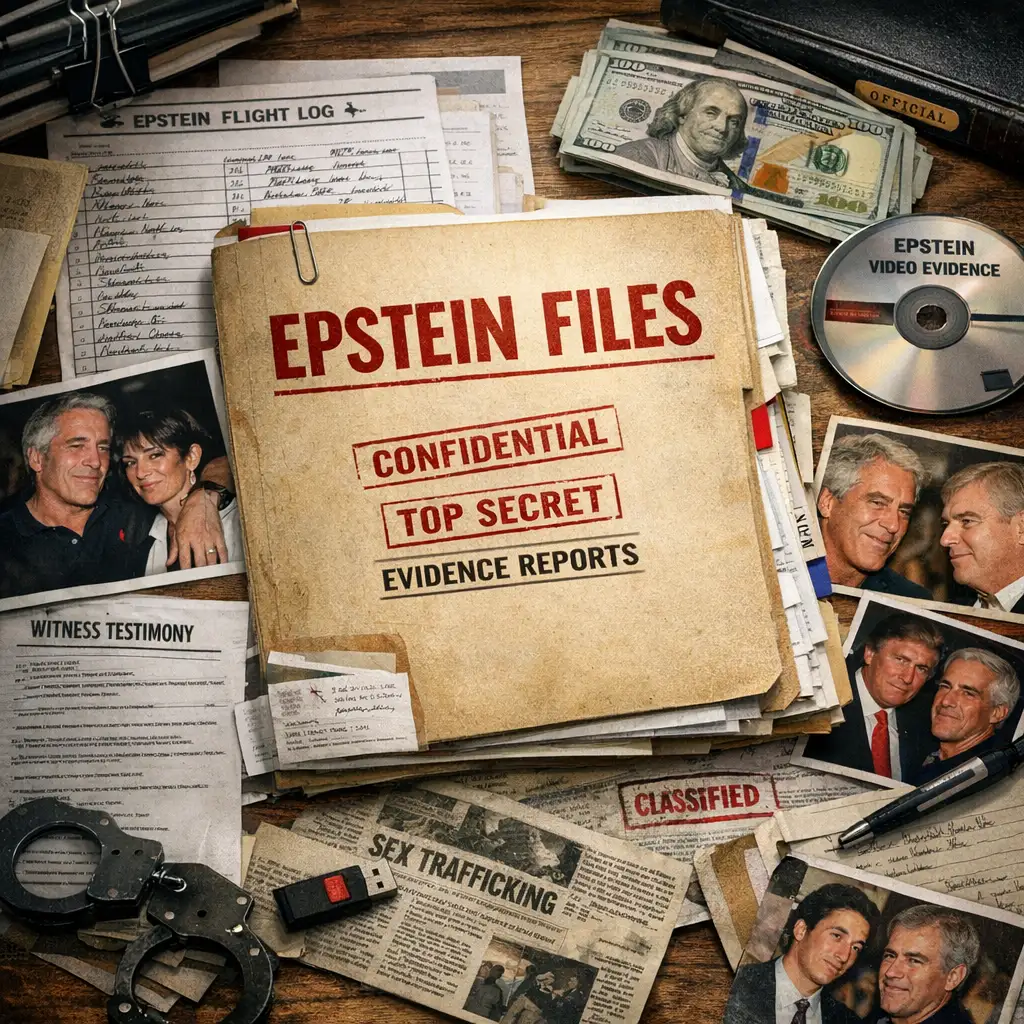
The Shadow Over the Powerful: Understanding the "Epstein Files"
Few words in the digital age have generated as much conjecture, conspiracy theories, and sincere public indignation as "The Epstein Files." These texts, which are frequently discussed in passing online or thoroughly examined by legal professionals, constitute one of the most important moral and legal reckonings of the twenty-first century.
However, what is a "Epstein File" exactly? Is it a collection of dry judicial testimony or is it a criminal's hidden ledger? We must look past the tabloid headlines and into the core of the American legal system to appreciate the significance of these documents.
Defining the "Files"
In general, the phrase "Epstein Files" refers to thousands of pages of court records, including police reports, emails, depositions, and flight logs, that come from different lawsuits involving the late financier Jeffrey Epstein.
Interestingly, the majority of the "new" material that has been made public in recent years originates from a civil defamation case that victim Virginia Giuffre brought against Epstein's longtime friend Ghislaine Maxwell in 2015. Even though the case was resolved years ago, the documents were kept under wraps until news outlets and legal advocates worked together to force their slow release.
1. The Origin: Giuffre v. Maxwell
The Giuffre v. Maxwell case served as the impetus for the most current "files" to be made public. There was a lengthy "discovery" phase because this was a civil action. Lawyers collect digital communications, conduct depositions (under oath) with witnesses, and gather evidence during discovery.
In order to preserve the privacy of those who had not yet been publicly connected to the case, many of the identities in these records were "John Does" or "Jane Does" for years. Judges started ordering the "unsealing" of these names, though, when the legal threshold for privacy shifted. This resulted in the now-famous "Epstein List" moments.
2. What Is Actually in the Documents?
Though a real black book did exist and was released years ago, the "files" are not a single "black book" of co-conspirators, despite what the public believes. Rather, the files include:
-
Depositions: transcripts of victim, employee, and associate interviews. These frequently include graphic details about the trafficking ring's operations.
-
Flight Logs: Records of who traveled on Epstein’s private jet, famously nicknamed the "Lolita Express."
-
Police Reports: Early investigations from Palm Beach, Florida, dating back to 2005.
-
Email Correspondence: Exchanges between Epstein, Maxwell, and their circle of high-net-worth contacts.
The Distinction Between Mention and Guilt
The context is one of the most important elements of the Epstein Files. There is no criminal associated with being named in the files. These documents consist of:
-
Victims who are seeking justice.
-
Witnesses who may have seen something but were not involved.
-
Service workers (pilots, housekeepers, chefs) who were simply doing their jobs.
-
Associates who socialized with Epstein but may not have known about his illicit activities.
-
Alleged Co-conspirators who are accused of participating in or facilitating the abuse.
3. The "Black Book" vs. The Court Files
The court-ordered disclosed materials are easily mistaken for Epstein's "Little Black Book." Epstein's employees kept a private directory called The Black Book, which had the contact details of hundreds of politicians, corporate titans, and celebrities. Epstein had a very extensive network of influential "friends," as the Black Book demonstrates, but the court documents are much more damning since they provide sworn testimony about particular incidents and actions.
4. Why Do They Matter Today?
Ghislaine Maxwell is presently serving a 20-year prison sentence, and Jeffrey Epstein passed away in a jail cell in 2019. Why, then, are we still discussing "the files"?
Public Accountability
The files cast doubt on the notion that the rich can get away with breaking the law. Epstein courted favor with the elite and silenced victims for decades using his wealth. These documents' dissemination is an example of "sunlight as a disinfectant."
Identifying the "Enablers"
The infrastructure of abuse is at the center of the current probe, not only Epstein. Numerous victims contend that Epstein was unable to run a worldwide trafficking network by himself. The documents offer hints as to who covered the expenses, who offered legal defense, and who turned a blind eye.
5. The Role of the Media and the "List"
The publication of around 1,000 pages of documents in early 2024 sparked a media frenzy. Numerous "lists" of names were shared on social media. It's vital to approach these lists with judgment.
Many of the identities in the files, including Donald Trump, Prince Andrew, and Bill Clinton, were already well-known. Their inclusion in the records frequently had to do with old news or depositions in which victims were asked if they had ever seen these people at Epstein's houses. Even if the responses were frequently "no" or "I don't recall," their names are nonetheless recorded in the transcripts.
6. The Long Road to Transparency
Because the court must weigh the public's right to know against non-parties' right to privacy, the unsealing procedure takes a while. Whenever a "John Doe" is exposed, that person is entitled to appeal the ruling on the grounds that their reputation would be unjustly damaged.
It is because of this "legal tug-of-war" that we receive "data dumps" every few months instead of everything at once. It is a thorough, individual screening procedure.
7. The Human Cost
A personal narrative lies behind each page of these files. Although the media concentrates on the "big names," the survivors' testimonials are the most significant aspects of the Epstein Files. The narrative of what transpired on Little St. James Island and in Epstein's house in New York cannot be changed or altered since these documents act as a permanent record of their experiences.
Conclusion
The Epstein Files are a testament to a great injustice and the ensuing, arduous effort to right it, not merely a compilation of scandalous secrets. They serve as a reminder that the most heinous acts can be concealed by influence and power, but they also demonstrate how the truth can eventually come to light thanks to the tenacity of survivors and the strictness of the legal system.
The objective is still the same when additional records are made public: a complete accounting of the facts and a strong statement that no one is genuinely "untouchable," regardless of their position.




Leave a Reply