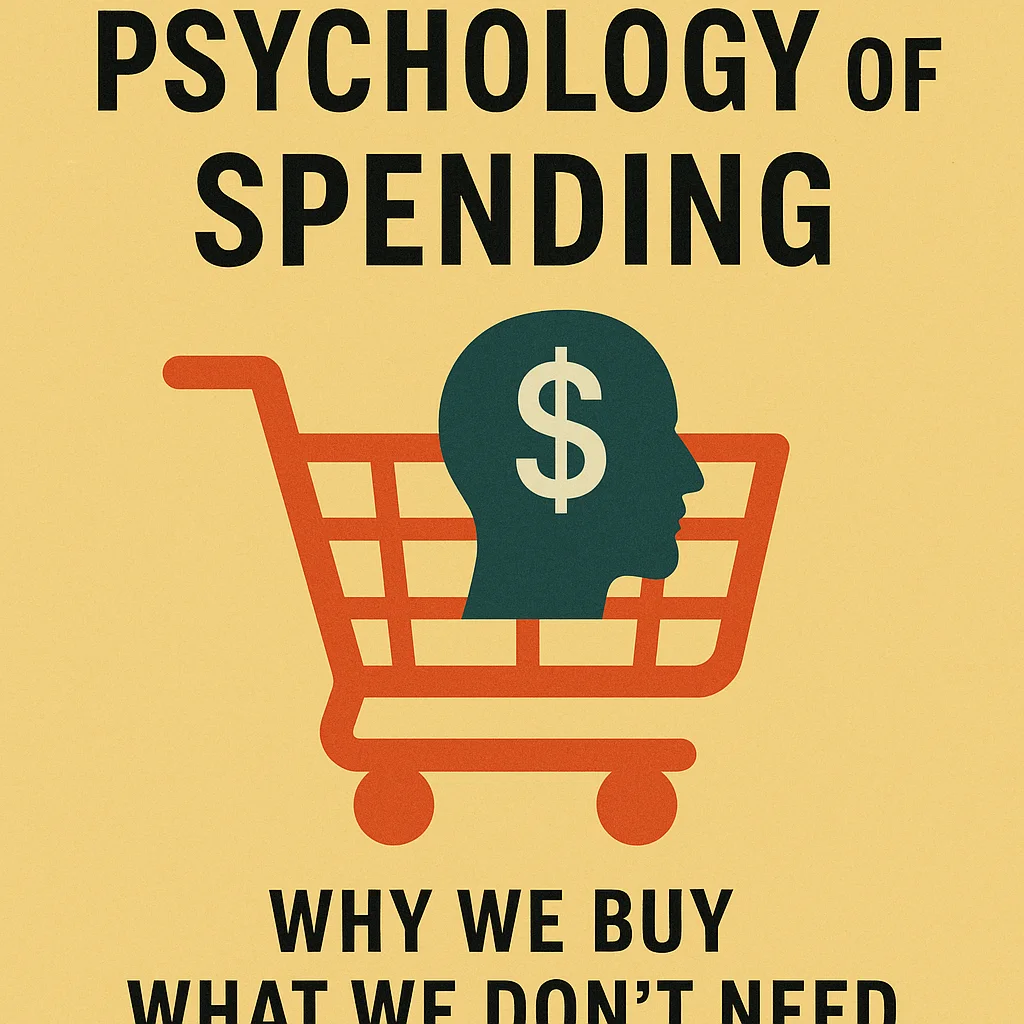
We've all experienced it: You enter a toothpaste store and leave with two bags of snacks, three candles, and a device you were unaware existed. Or perhaps you just "browse" in your favorite shopping app and five minutes later find your cart stuffed with items you hadn't even considered.
Why do we spend money on things we don’t need?
Knowing the psychology of spending can help us regain control over our finances and decisions in a world where consumer culture rules. This blog examines how to become more conscious of our financial habits as well as the emotional, psychological, and social factors that contribute to impulsive or needless purchases.
The Brain’s Role in Spending
The reward system in the brain, especially the nucleus accumbens, is activated when money is spent. Dopamine is a "feel-good" chemical that is released in your brain when you anticipate or make a purchase.
This dopamine hit:
-
Creates pleasure and excitement
-
Reinforces spending as a source of happiness
-
Encourages repeated behavior
The anticipation of a purchase actually causes a greater dopamine rush than actually holding the item, according to studies.
That’s why you may lose interest in something right after buying it—the joy came from wanting, not having.
Emotional Spending: Filling a Void
Shopping is a common way for people to deal with challenging emotions. We call this retail therapy.
Common emotional triggers include:
-
Stress
-
Boredom
-
Loneliness
-
Low self-esteem
-
Anxiety or depression
Shopping can temporarily divert attention or improve mood. However, emotional spending frequently results in a vicious cycle of regret, guilt, and financial strain.
Example: You "treat yourself" by buying new clothes because you're lonely. You feel better for a while. However, you feel worse than before when the credit card bill arrives.
The Influence of Social Comparison
Social media has amplified a key psychological driver: comparison.
We are inundated with carefully chosen photos of opulent lifestyles, travel, fashion, and consumer goods from platforms like Instagram and TikTok. FOMO, or the fear of missing out, is triggered when people show off their purchases.
As humans, we instinctively want to:
-
Fit in with the group
-
Appear successful
-
Keep up with our peers
Often referred to as "keeping up with the Joneses," this phenomenon pushes us to spend money on unnecessary items in order to preserve a particular image.
The Power of Marketing Psychology
Marketers are masters at influencing consumer behavior through psychological concepts. They employ the following strategies:
1. Scarcity and Urgency
Phrases that evoke our fear of missing out include "Only 3 left!" and "Flash sale ends in 2 hours." Things that are scarce appear more valuable than they actually are.
2. Anchoring
A jacket that was originally priced at ₹10,000 has been reduced to ₹4,000. Even though ₹4,000 is still more than you had budgeted for, it still seems like a good deal.
This tactic, known as price anchoring, is based on comparing the old and new prices rather than how much you think the item is worth.
3. Decoy Pricing
A large coffee costs ₹180, while a medium costs ₹150. Even if you don't want the large, you're more likely to go with it. To make the large appear like a better deal, the medium serves as a decoy.
4. Free Shipping Thresholds
You put ₹800 worth of items in your cart, but in order to receive free shipping, you must spend ₹1,000. To save ₹50 on shipping, you add something you don't need.
5. Personalized Ads
Online algorithms monitor your activity and display hyper-targeted advertisements according to your location, browsing history, and even your emotional state. Although the product seems to have found you, it's actually a psychological tactic to boost impulsive purchases.
Lifestyle Creep: Spending More as You Earn More
As your income grows, so do your expenses. This is called lifestyle inflation or lifestyle creep.
Example:
-
When you earned ₹30,000/month, you lived on a budget.
-
When you earned ₹70,000/month, you upgraded to a nicer apartment, dined out more, and bought premium brands.
Considering that you're earning more, it seems reasonable. However, more spending frequently doesn't translate into more happiness. Rather, it postpones financial objectives like investing or saving.
Why Ownership Doesn’t Equal Happiness
We frequently think that purchasing items will make us happy for a long time. However, studies reveal that material belongings only bring temporary fulfillment.
The novelty fades. Hedonic adaptation is the propensity to revert to a baseline state of happiness in spite of favorable (or unfavorable) circumstances.
What tends to bring longer-term satisfaction?
-
Experiences (travel, hobbies, events)
-
Relationships
-
Personal growth
-
Giving to others
Yet we keep chasing happiness through purchases because the high is immediate—even if it’s fleeting.
Cognitive Biases That Trick Us
1. The Sunk Cost Fallacy
Despite purchasing a gym membership, you never use it. Because "you've already spent so much," you keep renewing. You continue to invest in things that no longer benefit you because of this bias.
2. Confirmation Bias
You want to buy a new phone, so you look for reviews that confirm your decision. Unfavorable evaluations? You disregard them.
3. Present Bias
We put short-term enjoyment ahead of long-term benefit. We overspend today and disregard debt or savings for the future because of this.
Cultural Conditioning: The Consumer Identity
From childhood, we’re taught to associate spending with success:
-
Birthdays? Gifts.
-
Celebrations? Shopping sprees.
-
Achievements? Expensive rewards.
We tie spending to identity and self-worth:
-
"I wear designer, therefore I am successful."
-
"I upgrade often, so I must be moving forward in life."
This pervasive cultural conditioning perpetuates compulsive spending as the standard.
How to Break the Cycle
The good news? Once you understand why you overspend, you can take steps to change your habits.
1. Practice Conscious Spending
Ask yourself:
-
Do I need this?
-
Will I still want it in 48 hours?
-
Does this align with my goals?
postpone satisfaction. Before checking out, add items to your cart and give it a day or two.
2. Track Your Triggers
Notice when and why you spend:
-
After a bad day?
-
When you’re bored?
-
During certain hours or while scrolling online?
Recognizing emotional or situational patterns helps interrupt them.
3. Unsubscribe and Declutter
-
Unsubscribe from promotional emails.
-
Delete shopping apps from your phone.
-
Clear out clutter—it reminds you of past impulsive buys and helps reset your mindset.
4. Set Financial Goals
Your money has purpose when you have clear objectives (such as emergency savings or a vacation fund). Saying "no" to impulsive purchases is simpler when you're saying "yes" to something more significant.
5. Invest in Experiences
Change your perspective to one of "experiences" rather than "things." Experiences are more memorable and valuable than things, according to numerous studies.
6. Use Cash or Prepaid Methods
Using UPI or swiping cards is painless. You can slow down and make spending seem more "real" by using cash or a card with a spending limit.
Final Thoughts: Awareness Is Your Superpower
Spending isn't always a bad thing. Money is a tool that can offer opportunity, happiness, and security. We lose control over our finances and well-being, however, when psychological traps or unconscious habits take over.
Knowing the motivations behind your purchases empowers you to make wiser decisions. You don't have to give up shopping entirely or become a minimalist. However, you can make purchases that enhance rather than deplete your life by coordinating your spending with your values, objectives, and emotional needs.
The next time you’re tempted to buy something you don’t need, pause and ask:
“What am I really looking for?”



Leave a Reply