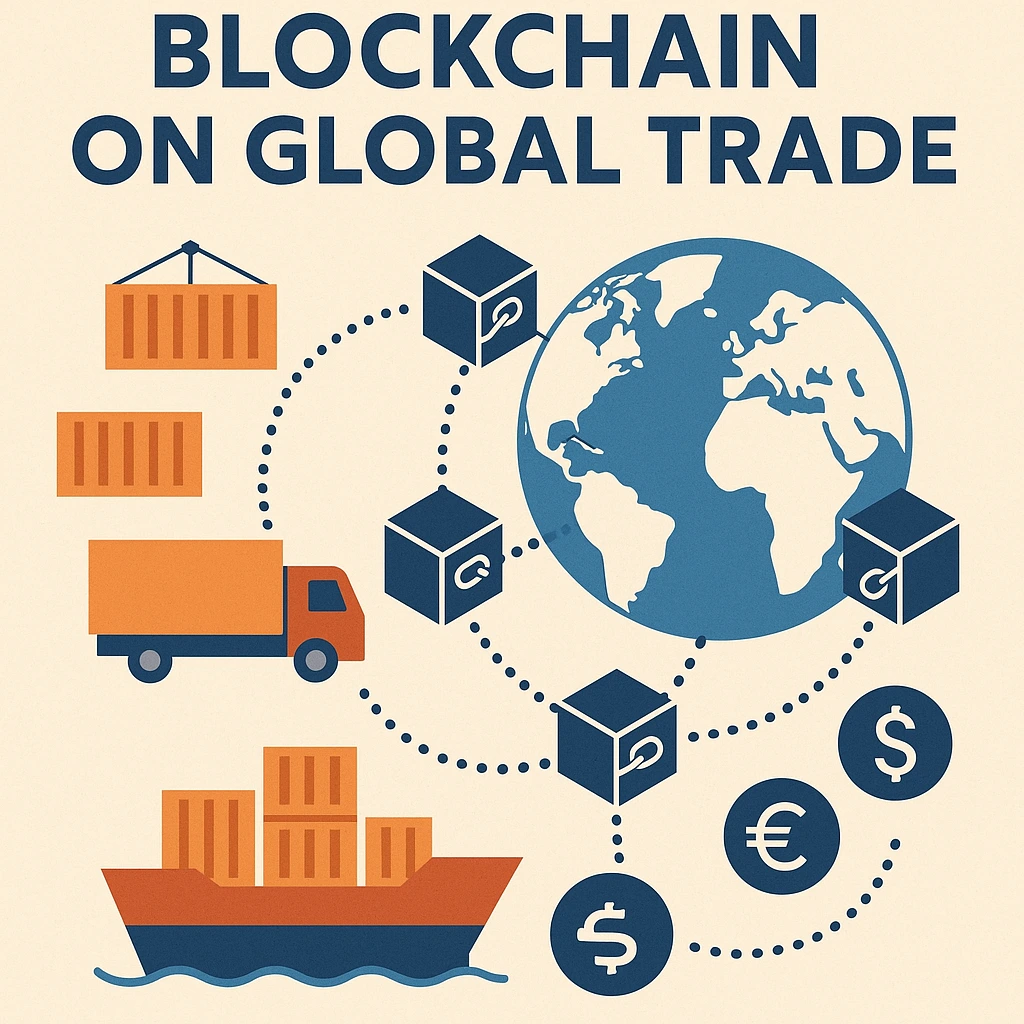
Introduction: A New Digital Infrastructure for Global Trade
The foundation of the global economy is international trade, which transports goods valued at trillions of dollars annually. However, the global commerce system is infamously slow, costly, and complicated despite its size and significance. For a long time, importers, exporters, logistics companies, and financial institutions have been burdened by paper-based procedures, opaque supply chains, fraud concerns, and ineffective middlemen.
As the basis for cryptocurrencies, blockchain technology is becoming more and more recognized as a potent remedy for these fundamental issues. Blockchain promises to simplify procedures that haven't changed in decades by providing decentralized, transparent, and unchangeable record-keeping.
This blog examines how blockchain is changing international trade, which industries stand to gain the most, and what international trade might look like in a world driven by blockchain.
1. The Core Problem: Global Trade Is Slow and Fragmented
Prior to comprehending the blockchain revolution, it's critical to recognize the urgent need for innovation in international trade.
1.1 Paperwork and Manual Processes
Bills of lading, certifications, customs documentation, and letters of credit are still used in about 80% of international commerce transactions. These documents frequently need to be couriered, which lengthens processing times and raises the possibility of mistakes or loss.
1.2 Lack of Transparency Across Supply Chains
Dozens of stakeholders are involved in global supply chains, from obtaining raw materials to manufacturing and delivery. Product tracking is challenging because fraud is frequent due to data silos and inconsistencies.
1.3 High Cost of Intermediaries
Verification of transactions involves shipping brokers, banks, customs officials, and insurance companies. This results in:
- Increased transaction costs
- Delays in processing
- High administrative burden
1.4 Trade Finance Gaps
Small and medium-sized enterprises (SMEs) frequently have trouble obtaining trade financing because of:
-
Risk concerns
-
Lack of documentation credibility
-
Slow verification processes
Blockchain offers a digital infrastructure to fix these long-standing problems.
2. How Blockchain Solves Global Trade Challenges
Blockchain’s impact comes from four major properties:
2.1 Transparency and Traceability
Blockchain generates a shared, unchangeable ledger of each transaction. This enables real-time access to identical data for all participants in the supply chain. Stakeholders are able to:
-
Trace product origins
-
Verify certifications instantly
-
Prevent counterfeit goods
-
Monitor shipping status
Blockchain offers previously unheard-of transparency to sectors like electronics, luxury goods, and pharmaceuticals that suffer from counterfeit goods.
2.2 Immutable Records That Reduce Fraud
A blockchain's entries are all encrypted and cannot be altered without network consent. This significantly lowers dangers such as:
- Document forgery
- Duplicate invoices
- Tampered certifications
Trust between international partners increases as fraud becomes detectable and almost hard to hide.
2.3 Smart Contracts: Automation for Efficiency
Self-executing agreements written straight into code are known as smart contracts. When certain requirements are satisfied, they automatically enforce terms, such as:
-
Releasing payment once goods reach a port
-
Triggering insurance claims when sensors detect damage
-
Approving customs clearance when documents are verified
This automation reduces:
-
Human error
-
Administrative time
-
Intermediary fees
2.4 Faster, Cheaper Cross-Border Payments
Traditional international payments rely on:
-
SWIFT
-
Correspondent banking
-
Multiple currency conversions
These can take days. Blockchain allows near-instant settlement through:
-
Stablecoins
-
Tokenized assets
-
Central bank digital currencies (CBDCs)
-
Permissioned blockchain networks
This reduces both time and cost, especially for high-volume or high-value trade.
3. Blockchain in Action: Real-World Applications in Global Trade
Let's examine the systems and sectors that are now undergoing change.
3.1 Supply Chain Management
Blockchain is used by big businesses like Walmart, Maersk, FedEx, IBM, and Nestlé to track products from point of origin to point of destination.
Benefits include:
-
Tracking food contamination outbreaks instantly
-
Ensuring ethical sourcing of materials
-
Reducing time for tracing shipments
-
Lowering fraud and theft
For instance, Walmart used blockchain to cut the time it took to track the origins of mangos from seven days to just 2.2 seconds.
3.2 Cross-Border Payments and Settlements
Blockchain payment networks reduce reliance on banks and allow:
-
Faster settlement
-
Lower transaction fees
-
Transparent tracking
-
Reduced currency risks
Ripple, Stellar, and CBDC pilots are leading this transformation.
3.3 Trade Finance Innovation
Blockchain is closing the SME trade finance gap by offering:
-
Verified digital identities
-
Transparent invoice records
-
Automated credit scoring models
-
Tokenized trade assets
Blockchain is already being used by websites like Marco Polo and we.trade to verify invoices and reduce borrowing risks.
3.4 Shipping and Logistics
Paperwork delays and misunderstandings are notorious in the shipping industry. Blockchain platforms such as TradeLens (Maersk & IBM) offered:
-
Unified digital records
-
Real-time container tracking
-
Reduced customs delays
-
Automated document exchange
The success of TradeLens' technology demonstrated the potential of blockchain, despite the company's closure owing to problems with market acceptance.
3.5 Customs Clearance and Border Control
Blockchain-enabled customs networks are being tested by governments and can:
-
Verify documents instantly
-
Track cargo digitally
-
Reduce smuggling and corruption
-
Improve compliance
Leading nations in blockchain-driven trade modernization include Singapore, Dubai, and Australia.
4. How Blockchain Reduces Costs Across the Entire Supply Chain
Saving money is one of the main reasons companies use blockchain. Blockchain lowers expenses by:
4.1 Less Fraud and Counterfeiting
This is especially impactful in:
-
Pharmaceuticals
-
Food
-
Electronics
-
Luxury goods
4.2 Reduced Intermediary Fees
Smart contracts automate:
-
Escrow services
-
Compliance checks
-
Payment processes
Saving businesses millions annually.
4.3 Lower Administrative Burden
Digitizing documents eliminates:
-
Manual data entry
-
Courier services
-
Redundant verification steps
4.4 Faster Transactions
For companies of all sizes, cutting trade cycle time improves cash flow efficiency.
5. Challenges Preventing Blockchain from Fully Transforming Global Trade
Despite its potential, blockchain adoption faces barriers.
5.1 Lack of Global Standards
Compatibility problems arise because different nations and businesses utilize different blockchain networks.
5.2 Regulatory Uncertainty
Many regions lack clear legal frameworks for:
-
Smart contracts
-
Tokenized assets
-
Digital documents
5.3 High Initial Costs
Investment and technological know-how are needed to build blockchain infrastructure.
5.4 Reluctance to Change
Trade systems date back many years. Some stakeholders oppose modernization because they profit from the current inefficiencies.
6. The Future of Blockchain in Global Trade
Looking ahead, blockchain could reshape global trade in powerful ways.
6.1 Tokenization of Trade Assets
Digital tokens could be used to represent tangible items and financial instruments, allowing:
-
Faster settlement
-
Automated ownership transfer
-
Fractional investment in supply chains
6.2 Fully Digital Trade Corridors
Blockchain-powered trade corridors are being built by nations like Singapore and the United Arab Emirates that enable:
-
Instant customs approvals
-
Paperless shipping
-
Seamless inter-agency data exchange
6.3 Integration with AI and IoT
AI + Blockchain + IoT will enable:
-
Predictive supply chain management
-
Automated compliance
-
Real-time risk analysis
6.4 Global Recognition of Digital Documents
Global adoption will quicken as more governments authorize blockchain-based trade documentation.
Conclusion: Blockchain Is Building the Future of Global Trade
Blockchain is an improvement to the very infrastructure that drives global trade, not merely a new technology. Blockchain has the potential to facilitate international trade by increasing transparency, cutting costs, and automating procedures.
-
Faster
-
More secure
-
More accessible
-
More efficient
There are still obstacles to overcome, but the momentum is clear. The world will become closer to a completely digital, linked, and reliable global commerce ecosystem as more nations and businesses use blockchain technology.
Blockchain is already here, subtly changing the world economy one block at a time, but it is not the trade of the future.




Leave a Reply