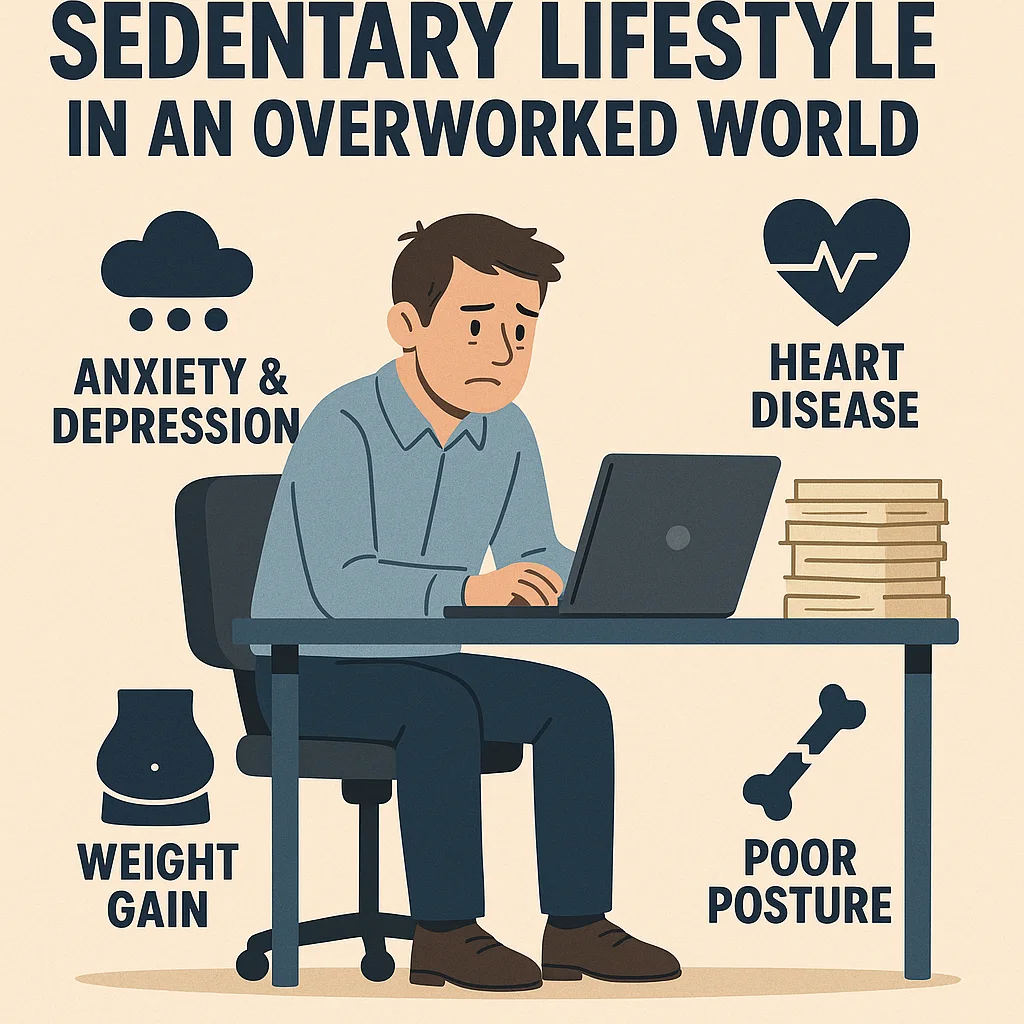
Millions of people spend most of their days sitting, whether at desks, in cars, or in front of screens, in today's hectic and overworked world. Sitting may appear innocuous at first, even soothing, in contrast to strenuous work or physical strain. However, one of the most serious health issues of our day is concealed beneath this "normal" routine: a sedentary lifestyle.
It goes beyond simply gaining weight or having bad posture. Sedentary living has significant negative effects on one's physical, mental, social, and even financial well-being. The risks accumulate gradually and frequently go unnoticed until they materialize as severe symptoms like mental exhaustion, chronic illness, and a decline in quality of life.
It goes beyond simply gaining weight or having bad posture. Sedentary living has significant negative effects on one's physical, mental, social, and even financial well-being. The risks accumulate gradually and frequently go unnoticed until they materialize as severe symptoms like mental exhaustion, chronic illness, and a decline in quality of life.
The Sedentary Epidemic
While modern workplace culture and technology have greatly reduced the need for physical activity, they have also brought about incredible convenience. The World Health Organization states that physical inactivity is the fourth most important risk factor for mortality worldwide, accounting for millions of deaths annually.
Think about a typical day:
-
Wake up and commute by car or public transport.
-
Sit at a desk for 8–10 hours.
-
Come home exhausted and unwind by watching Netflix or scrolling social media.
It's a pattern that keeps happening, forming bad habits that gradually harm our health. This is a systemic problem that is intricately linked to contemporary technology, urban planning, and workplace culture.
Physical Costs of a Sedentary Lifestyle
1. Cardiovascular Disease
High blood pressure, elevated cholesterol, and poor circulation are all associated with prolonged sitting. The risks of extended periods of inactivity cannot be completely mitigated by even frequent exercise. Sedentary lifestyles are a major contributing factor to heart disease, which continues to be one of the world's leading causes of death.
2. Musculoskeletal Issues
Long periods of sitting, particularly when done with bad posture, can cause weak core muscles, stiff shoulders, and back pain. These issues develop into degenerative spinal disorders, slipped discs, or chronic pain over time.
3. Weight Gain and Metabolic Syndrome
The body stores fat more easily when metabolism is slowed by inactivity. Insulin resistance, type 2 diabetes, and obesity are all exacerbated by this. A serious health risk is "hidden fat" around organs, which can affect even those who are not obviously overweight.
4. Reduced Longevity
Regardless of whether they exercise occasionally or not, studies consistently demonstrate that sedentary people have a shorter lifespan. Years of healthy living are literally eroded by prolonged sitting.
Mental and Emotional Costs
1. Increased Anxiety and Depression
Endorphins, which are nature's natural mood enhancers, are released when you exercise. The stress of long work hours coupled with inactivity frequently results in increased anxiety, irritability, and depression.
2. Burnout from Overwork
Mental overwork frequently coexists with sedentary jobs. Your body is understimulated while your brain is continuously stimulated when you spend your entire day in front of a screen. Fatigue, trouble concentrating, and emotional exhaustion are the results of this imbalance.
3. Decline in Cognitive Health
Sedentary lifestyles may be associated with slower cognitive processing, worse memory, and even a higher chance of developing dementia in later life, according to studies. Sharp thinking requires blood flow to the brain, which is stimulated by movement.
Social and Lifestyle Costs
1. Shrinking Social Connections
There is frequently little time for meaningful social interaction when one is overworking at a desk. People may substitute digital interactions for in-person interactions, which can lead to feelings of loneliness.
2. Reduced Productivity in the Long Run
Ironically, research indicates that physical inactivity actually lowers creativity, problem-solving skills, and sustained productivity, even though excessive work and sitting may feel "productive."
3. Strained Work-Life Balance
Many people are sedentary even after work hours due to work leaking into their personal lives through laptops and smartphones, which leaves little energy for exercise, hobbies, or family time.
The Economic Costs
Sedentary lifestyles carry a heavy price not only for individuals but also for societies:
-
Healthcare Costs: Global healthcare systems are heavily burdened by the rising rates of heart disease, diabetes, and obesity.
-
Lost Productivity: Employees with health problems related to sedentary behavior are more likely to take sick days or work fewer hours.
-
Employer Costs: Absenteeism, lower employee engagement, and healthcare benefits are ways that businesses incur costs.
Essentially, what appears to be long hours and hard work frequently ends up costing more in the long run, both monetarily and in terms of human welfare.
Why Overwork Makes It Worse
Overwork is glorified in modern culture. Long workdays, the need to be "on," and hustle culture all contribute to environments where mobility is viewed as a luxury. Workers may even experience guilt if they prioritize their physical health or take walking breaks.
This creates a toxic cycle:
-
Work stress keeps people glued to their desks.
-
Sedentary habits degrade health and energy.
-
Reduced energy leads to more reliance on caffeine and stimulants to “push through.”
-
The cycle repeats until burnout or illness forces a reset.
Individual tactics as well as cultural changes in our perspectives on work and health are needed to break this cycle.
Practical Ways to Break Free
1. Micro-Movements During the Day
-
Take a short walk every hour.
-
Use stairs instead of elevators.
-
Stretch at your desk.
-
Stand during phone calls or virtual meetings.
2. Rethink Your Workspace
-
Invest in a standing desk or adjustable workstation.
-
Use ergonomic chairs to support posture.
-
Position screens at eye level to avoid neck strain.
3. Redefine Productivity
Recognize that productivity is about results rather than hours spent at a desk. You might be more focused and accomplish more in less time if you take a 15-minute walk.
4. Prioritize Exercise as Non-Negotiable
Exercise should be treated like an uncancelable meeting. Certain sedentary effects can be reversed with just 20 to 30 minutes of vigorous exercise per day.
5. Challenge Hustle Culture
Organizations and leaders need to promote wellness programs, normalize breaks, and acknowledge that healthy workers are essential for long-term productivity.
A Healthier Vision of Success
The hidden costs of a sedentary lifestyle serve as a reminder that working longer or harder isn't the only way to succeed. Living a balanced, healthy life that enables us to make a significant contribution without compromising our wellbeing is the definition of true success.
We make room for creativity, vitality, and resilience when we put movement, balance, and health first. Both people and societies are supported by that kind of foundation.
Final Thoughts
It is simple—almost inevitable—to develop sedentary habits in the modern world. However, the cost is too great to overlook. There are numerous hidden costs associated with excessive sitting, ranging from mental exhaustion and decreased productivity to chronic illness and shortened lifespan.
The good news? The trend can be reversed with modest, regular adjustments. We can live longer, healthier, and more satisfying lives by incorporating movement into our daily routines, redefining productivity, and combating toxic workplace cultures.
It's not necessary for the overworked world to be sedentary. The decision starts with you: will you invest in your future health now or will you wait for the hidden costs to mount?




Leave a Reply