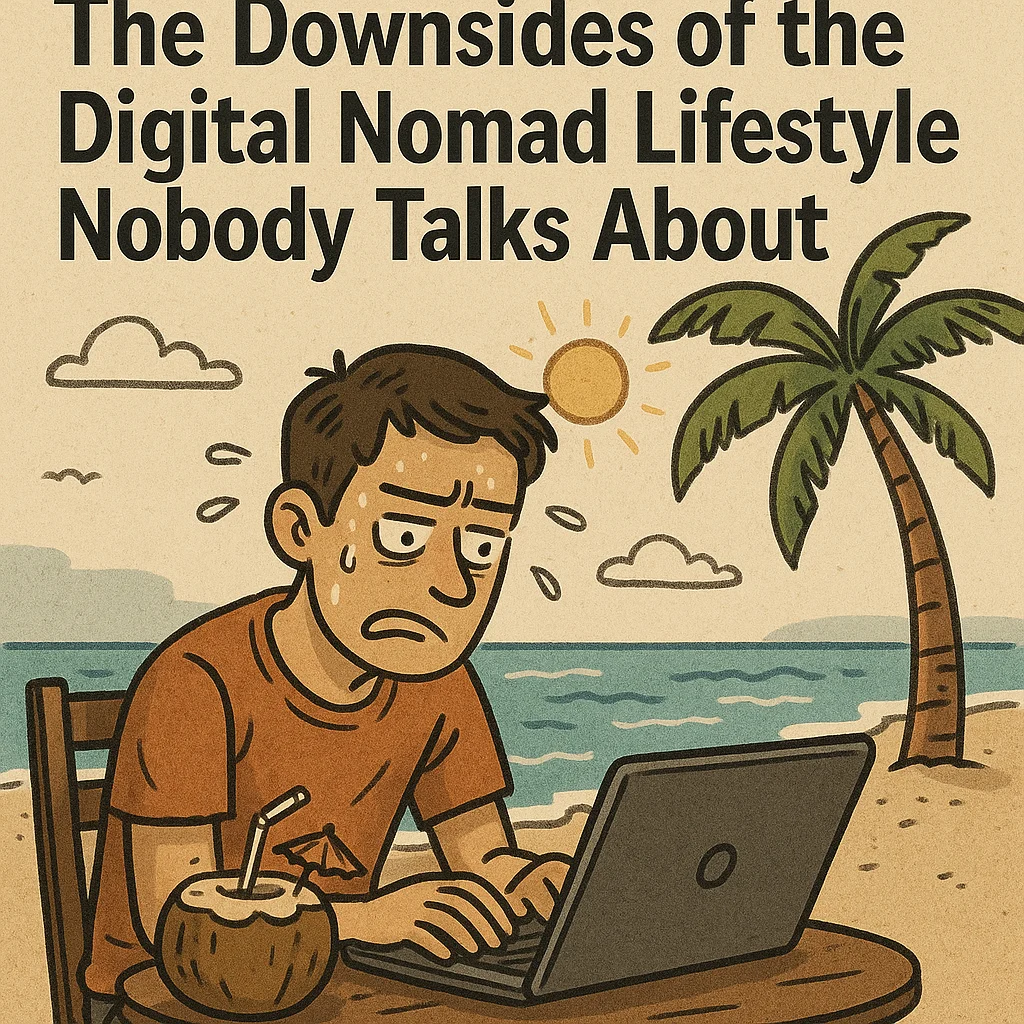
Instagram-worthy beaches, laptops open next to coconut drinks, and captions promising "freedom" and "financial independence" are all examples of how the digital nomad lifestyle is frequently glamorized on social media. However, there is a far more nuanced reality hidden behind the filtered posts. The advantages of flexibility and location independence are undeniable, but the digital nomad lifestyle has serious drawbacks that are frequently overlooked.
Understanding the difficulties associated with this lifestyle is crucial, regardless of whether you're thinking about becoming a digital nomad or are already traveling and feeling disillusioned. Let's examine the main drawbacks that are rarely discussed and how to deal with them.
1. Loneliness and Isolation
Social isolation is one of the most underappreciated problems that digital nomads encounter. It's very hard to establish meaningful, long-lasting relationships when you're always on the move. Interactions are frequently brief, even if you meet people at hostels or co-working spaces.
Why It Matters:
People are drawn to connection. Over time, the absence of dependable family, friends, or a support network can negatively impact your mental well-being. Even though there are many people around you, you might feel emotionally isolated.
How to Cope:
-
Stay longer in one place to form real connections.
-
Join digital nomad communities or local meetup groups.
-
Schedule regular video calls with friends and family back home.
2. Unstable Income and Financial Stress
Many digital nomads face financial insecurity, despite the common misconception that they all earn passive income while relaxing on the beach. Remote workers may experience issues with exchange rates or a lack of benefits, while freelancers may deal with irregular client work.
Why It Matters:
Stress, restricted mobility, and even the need to give up the lifestyle entirely can result from financial uncertainty. It becomes challenging to cover your travel, lodging, and essential living costs when you don't have a reliable source of income.
How to Cope:
-
Build a financial cushion before starting your nomad journey.
-
Diversify your income streams (e.g., freelance work, passive income, part-time gigs).
-
Track spending carefully and budget according to local economies.
3. Time Zone Headaches and Productivity Issues
It may seem perfect to live in Bali and work for a U.S. company, but that is only true if you have to attend Zoom meetings at two in the morning. Many digital nomads don't realize how much their sleep and mental clarity can suffer from irregular or inconvenient work schedules.
Why It Matters:
Sleep deprivation and irregular schedules can eventually affect your health and productivity. Problems with time zones also make it more difficult to work well with clients and teams.
How to Cope:
-
Choose destinations aligned with your client or employer's time zone.
-
Set clear boundaries on availability.
-
Use asynchronous tools like Loom or Notion for communication.
4. Lack of Routine and Structure
For someone who thrives on routine, the allure of freedom can quickly turn into a curse. It's hard to form healthy habits when your days are unpredictable and you're always adjusting to new situations.
Why It Matters:
Without structure, it's simple to revert to burnout, procrastination, or general discontentment patterns. You may discover that you are either working too much or too little compared to a traditional job.
How to Cope:
-
Create daily rituals, even while traveling.
-
Set goals for each week and stick to them.
-
Plan your work hours just like you would in a regular job.
5. Visa Issues and Bureaucracy
Managing residency requirements, work permits, and tourist visas can be a logistical nightmare. Heavy fines or even deportation may follow overstaying a visa or a failure to comprehend local laws.
Why It Matters:
Not being in control of your legal situation causes needless stress and can unpredictably throw your plans off course.
How to Cope:
-
Research visa policies well in advance for each country.
-
Consider countries offering digital nomad visas (e.g., Portugal, Estonia, Barbados).
-
Work with immigration consultants when necessary.
6. Healthcare and Insurance Gaps
Healthcare becomes complex when you're always on the go. What if you need emergency surgery in a nation where you don't speak the language or become ill in a remote village?
Why It Matters:
You are exposed to both financial and medical risk if you do not have adequate insurance or are not familiar with the local health systems.
How to Cope:
-
Invest in international health insurance designed for nomads (e.g., SafetyWing, World Nomads).
-
Keep digital copies of all important medical records.
-
Learn basic medical terms in the local language.
7. Burnout from Constant Travel
Ironically, burnout can result from the very independence and adventure that draw people to digital nomadism. Booking flights, locating Wi-Fi, and acclimating to new cultures are just a few of the tiresome logistics of frequent travel.
Why It Matters:
Your creativity, productivity, and enjoyment of life are all negatively impacted by burnout. It might even result in giving up the nomadic lifestyle completely.
How to Cope:
-
Slow travel is key. Spend several weeks or months in one place.
-
Take regular breaks—not just from work, but from moving.
-
Don’t feel pressured to see every tourist spot. Rest is productive too.
8. Difficulty Building a Career Long-Term
Some digital nomads find it difficult to establish a scalable or promoteable career without the assistance of a traditional network or employer, even though many of them are successful freelancers or business owners.
Why It Matters:
Long-term professional development frequently hinges on visibility, teamwork, and mentoring—all of which are more difficult to obtain remotely.
How to Cope:
-
Regularly update your portfolio and LinkedIn with your projects.
-
Attend remote networking events and virtual conferences.
-
Stay in touch with former colleagues and industry contacts.
9. Cultural Disconnect and Language Barriers
Every nation has its own traditions, traditions, and unwritten laws. Due to linguistic or cultural barriers, digital nomads may inadvertently offend locals or find it difficult to integrate.
Why It Matters:
It can feel superficial and even frustrating to be cut off from the culture you're living in.
How to Cope:
-
Learn the basics of the local language.
-
Spend time understanding and respecting local customs.
-
Avoid living in expat-only bubbles.
Final Thoughts
Beyond surfboards and sunsets, the digital nomad lifestyle also involves stress, loneliness, and significant logistical difficulties. While none of these drawbacks are insurmountable, you must be prepared to deal with them. The good news? You can create a nomad lifestyle that suits you, not just the 'Gram, if you are prepared and mindful.
Be deliberate about your objectives, establish mechanisms to promote your well-being, and reinterpret success according to your own standards rather than heedlessly pursuing freedom. The true adventure lies in that.



Leave a Reply