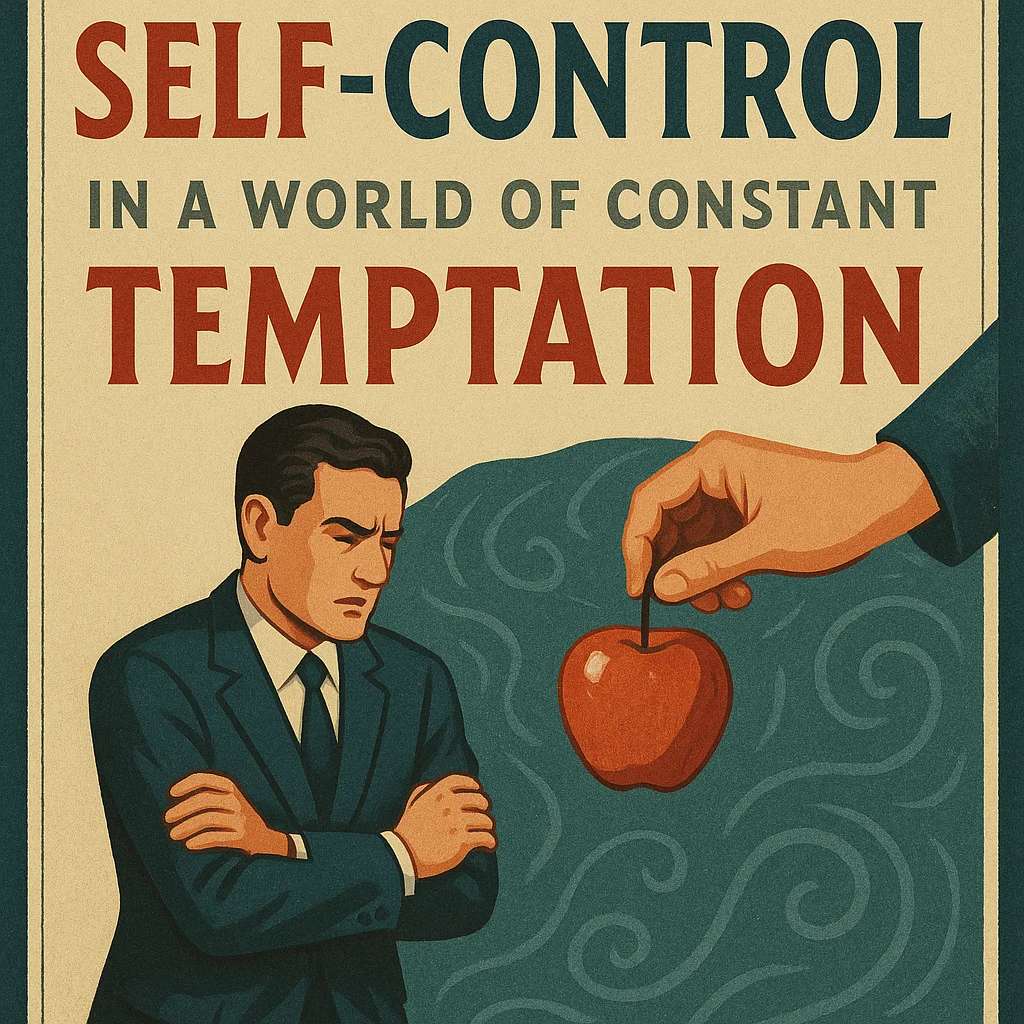
Temptation abounds in the fast-paced, hyperconnected world of today. It can be found in your phone's buzzing notifications, the never-ending barrage of tailored advertisements, Netflix's "one more episode" button, and the late-night craving that can be satisfied with just one food delivery app. Our surroundings are designed to attract attention, arouse desire, and maintain our interest—often at the price of our long-term health.
Self-control has always been a virtue, the capacity to forgo immediate gratification in favor of long-term objectives. However, it's a survival skill in our contemporary world, not just a personal virtue. Without it, we run the risk of losing sight of our deeper values and larger aspirations as we are carried away by impulsivity, distraction, and overindulgence.
This article explains the importance of self-control, how it is undermined by constant temptation, and doable strategies for developing self-control without leading a reclusive life.
Why Self-Control Is So Hard in the Modern World
There was little temptation for the majority of human history. There was little entertainment, sweet foods were scarce, and work-related distractions frequently put one's life in danger. However, the situation has changed in the digital age—temptation is cheap, plentiful, and catered to our personal vulnerabilities.
Some key reasons why resisting temptation feels harder now:
1. We’re Wired for Instant Gratification
Because taking advantage of opportunities in the moment was essential to our survival in the wild, our brains evolved to prioritize instant gratification. These days, when we can instantly stream a movie, order dessert, or shop online, that same wiring works against us.
2. Technology Magnifies Temptation
Persuasive technology—algorithms that adjust to our preferences and keep us interested—is used in the design of social media platforms, streaming services, and e-commerce websites.
3. Decision Fatigue Weakens Willpower
We make hundreds of small decisions every day. Our mental energy is depleted by the evening, which makes it more difficult to resist an impulsive buy or an extra piece of cake.
4. Social Norms Encourage Overindulgence
Saying "no" to indulgence can be interpreted as a rejection of community in many cultures. Peer pressure frequently pushes us to participate in activities like going out for drinks with friends, binge-watching the newest show, or shopping during sales.
Why Self-Control Matters for a Good Life
The goal of self-control is not to completely deny pleasure. It's about making decisions based on your long-term principles rather than your whims. It impacts almost every aspect of life:
-
Health: Choosing nutritious food and regular exercise over convenience and comfort.
-
Finances: Saving and investing instead of succumbing to impulse spending.
-
Relationships: Responding thoughtfully rather than reacting emotionally.
-
Productivity: Prioritizing meaningful work over constant distraction.
People who have better self-control accomplish more, experience less stress, and have better relationships, according to numerous studies. To put it briefly, one of the most effective strategies to increase life satisfaction is to learn self-control.
The Subtle Ways Temptation Eats at Self-Control
We frequently assume that temptation is evident—a rich dessert, a visually appealing advertisement, or a time-wasting app. However, temptations can occasionally be subtle and pass for "productive" or "necessary."
-
The fake productivity trap: Switching between tasks or apps all the time creates the appearance of work without any actual progress.
-
The comfort zone pull: Even when routines and familiar habits are no longer beneficial to us, it is easier to stick with them than to make changes.
-
The ‘harmless’ indulgence: Telling ourselves “just this once” too often turns into a habit.
Recognizing these subtle traps is the first step in avoiding them.
Building the Discipline of Self-Control
The good news is that, like muscles, self-control is a skill that can be developed. Here's how to cultivate the self-control necessary to prosper in a world full of temptation.
1. Clarify Your Values and Goals
It's much more difficult to avoid temptation if you don't know what you really want out of life. Spend some time defining your long-term objectives, such as improved health, deeper relationships, or financial independence, and then put them in writing. Consider whether temptation is moving you closer to your objectives or further away from them.
2. Reduce Exposure to Temptation
Willpower is limited. The less you rely on it, the better. Reshape your environment to make good choices easier:
-
Delete apps that waste your time.
-
Keep unhealthy snacks out of the house.
-
Unsubscribe from marketing emails that trigger spending.
If the temptation isn’t within reach, you don’t have to fight it.
3. Practice Delayed Gratification
A simple yet effective habit is to wait when you want to give in. The intensity of the craving can be diminished in as little as ten minutes. Usually, the desire subsides and you are once again in charge of your decision.
4. Use Implementation Intentions
Set “if–then” plans to handle tempting situations.
-
“If I feel like scrolling Instagram, then I’ll read 5 pages of my book first.”
-
“If I want to order fast food, then I’ll make a healthy snack.”
This turns self-control into an automatic response rather than a draining willpower battle.
5. Train Self-Control in Small Ways
Don’t wait for big challenges to test your discipline. Practice on small, everyday choices:
-
Take the stairs instead of the elevator.
-
Leave your phone in another room during meals.
-
Skip sugar in your coffee for a week.
Small wins build mental strength for bigger battles.
6. Be Compassionate With Yourself
Progress is sabotaged by perfectionism. Sometimes you will make mistakes. Consider why you gave in and how you can modify your surroundings or approach rather than criticizing yourself. Self-compassion keeps you inspired to give it another go.
7. Balance Self-Control With Enjoyment
Self-control is about enjoying life consciously, not about saying "no" to everything enjoyable. Plan your indulgences to be deliberate rather than impulsive. Have a set "TV night" or a designated cheat meal, for instance, rather than sporadic binges.
Self-Control in Different Areas of Life
1. Digital Distraction
Temptation: Constant notifications, endless scrolling.
Solution: Turn off non-essential notifications, use website blockers, and set daily limits on social media apps.
2. Food and Health
Temptation: Junk food, skipping workouts.
Solution: Meal-prep healthy snacks, keep workout gear visible, and make exercise part of your morning routine.
3. Money and Spending
Temptation: Flash sales, impulse purchases.
Solution: Observe the 24-hour rule and refrain from purchasing non-essential items for a day. To find out where your money is actually going, keep track of your expenditures.
4. Relationships and Communication
Temptation: Reacting emotionally, gossiping.
Solution: Ask clarifying questions, take a moment before answering, and prefer in-person discussions to text debates.
Why This Is a Lifelong Practice
Self-control is a continuous process rather than something you "achieve" and then forget about. New temptations will always arise in life as technology advances and your situation shifts. The secret is to create routines, mental toughness, and systems that help you stay true to your principles.
Final Thoughts
Self-control is a superpower in a world that is set up to take advantage of your impulsive behavior. It means being able to choose what really works for you instead of being at the mercy of your desires. It does not imply denying pleasure or leading a life devoid of joy.
One decision at a time, self-control is developed. You build your self-confidence and willpower each time you fight a temptation and behave in a way that advances your long-term objectives. And that confidence—the knowledge that you can depend on your own self-control—may be your greatest strength in surviving in the contemporary world.




Leave a Reply