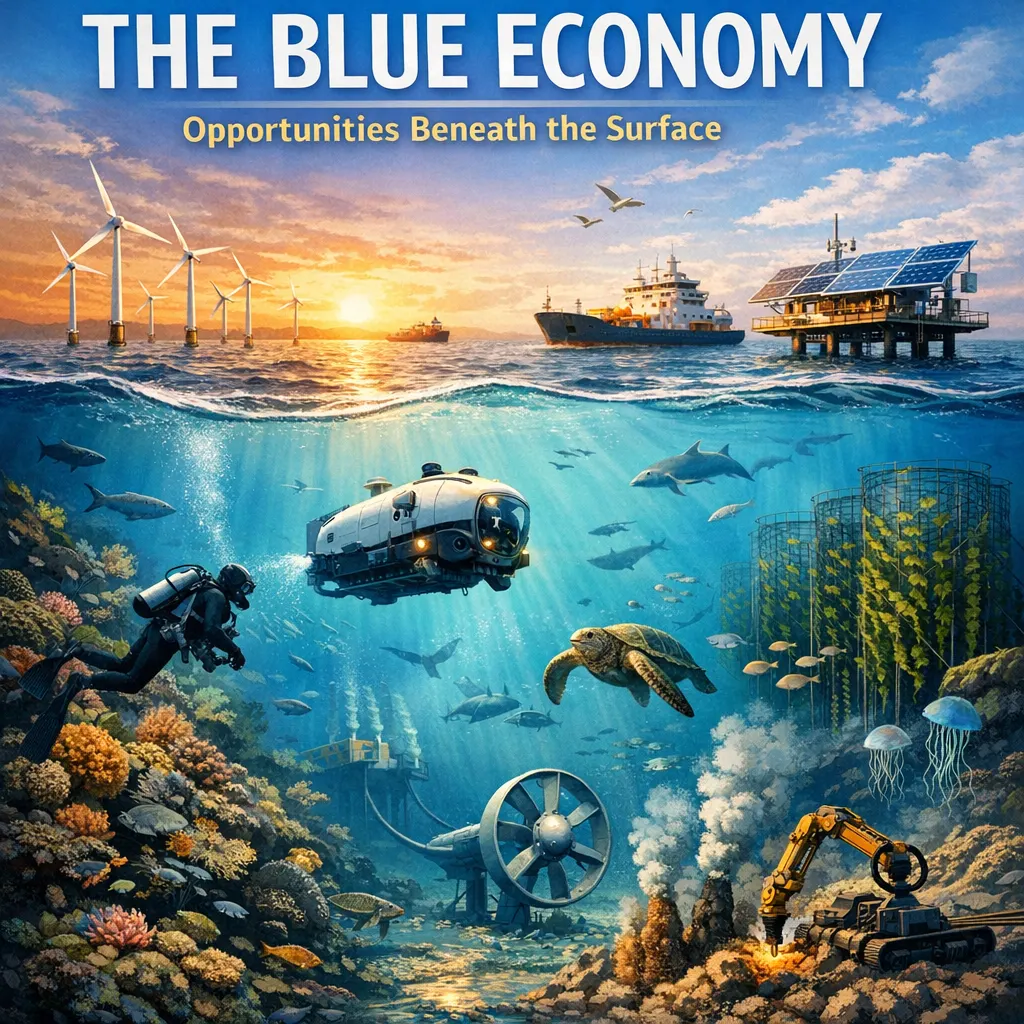
Although the oceans make up over 70% of the planet's surface, much of their economic potential is yet untapped. Historically, the main perception of the oceans has been as shipping routes and fishing grounds. However, a more expansive idea known as the "Blue Economy" is becoming more and more popular among investors, legislators, and environmentalists. This concept acknowledges oceans as potent catalysts for innovation, economic transformation, and sustainable growth.
The sustainable use of ocean resources for ecosystem health, economic growth, and better livelihoods is known as the "Blue Economy." In contrast to conventional exploitation methods, it aims to strike a balance between preservation and profit. The importance of opportunities beneath the ocean's surface in long-term development strategies is growing as global issues including food shortages, climate change, and energy demand increase.
Understanding the Blue Economy Concept
The Blue Economy is not just about shipping and fishing. It covers a broad spectrum of ocean-based industries, including biotechnology, tourism, aquaculture, maritime transportation, renewable energy, and seabed resources. Sustainability—economic growth that does not harm marine ecosystems—is the guiding concept.
This strategy represents a change in perspective. Oceans are no longer seen as boundless resources, but rather as fragile and intertwined with biodiversity, climate systems, and international trade.
The core pillars of the Blue Economy include:
✔ Sustainable marine resource management
✔ Innovation in ocean-based industries
✔ Climate resilience and adaptation
✔ Protection of marine biodiversity
The Blue Economy seeks to guarantee that ocean resources will continue to benefit future generations by incorporating environmental preservation into economic development.
Fisheries and Aquaculture: Feeding a Growing Population
Fisheries is one of the Blue Economy's most well-established foundations. Fishing is the primary source of income for millions of people, especially in coastal and island countries. A significant source of protein for billions of people globally is fish.
Marine ecosystems are threatened by habitat destruction and overfishing, though. For this reason, sustainable fisheries management is essential. A sustainable ocean economy must have policies like marine protected zones, fishing limitations, and enhanced monitoring tools.
Fish farming, or aquaculture, has more room for expansion. It can satisfy the growing demand for seafood worldwide while easing the strain on wild fish stocks if it is managed properly.
Aquaculture is becoming a more productive and sustainable sector thanks to technological developments in environmental monitoring, disease prevention, and feed efficiency.
Renewable Energy from the Sea
The potential for renewable energy in the oceans is huge. The number of offshore wind farms is growing quickly, especially in Asia and Europe. Offshore wind energy is a dependable clean energy source because of the strong and steady ocean winds.
Tidal and wave energy devices are being developed to capture the water's natural movement in addition to wind. These energy sources have the potential to make a substantial contribution to decarbonization efforts and are predictable.
Marine renewable energy presents multiple benefits:
✔ Reduction in carbon emissions
✔ Diversification of energy supply
✔ Job creation in coastal regions
✔ Increased energy security
Investment in ocean-based renewables supports global climate goals while stimulating economic growth.
Marine Biotechnology and Pharmaceuticals
A large portion of the remarkable biodiversity seen in the ocean is still unknown. Because of their distinct biochemical characteristics, marine species may lead to innovations in industrial, cosmetic, and medical fields.
Research on marine biotechnology looks at substances made from bacteria, algae, and deep-sea organisms. New antibiotics, cancer therapies, and bio-based materials could result from these discoveries.
Innovation is the key to marine biotechnology's economic worth. Investing in R&D allows nations to support ocean conservation while generating high-value enterprises.
Sustainable Tourism and Coastal Development
One of the main drivers of the Blue Economy is coastal tourism. Millions of tourists visit beaches, coral reefs, and marine life every year.
However, delicate ecosystems may suffer from uncontrolled tourism. Eco-friendly tourism methods seek to strike a balance between environmental protection and financial gains.
Initiatives for marine conservation, garbage management, and eco-friendly infrastructure promote local people while preserving natural resources.
When designed responsibly, tourism generates employment and stimulates regional development without compromising ecological integrity.
Shipping, Ports, and Maritime Trade
Maritime commerce continues to be a vital component of the world economy. The transportation of products across continents is made easier by modern ports and shipping lanes.
The sector is changing as a result of initiatives to lower shipping emissions. To lessen their influence on the environment, cleaner fuels, energy-efficient ships, and computerized optimization systems are being implemented.
Sustainable maritime logistics strengthen global supply chains while contributing to climate goals.
The integration of green technologies into shipping operations aligns economic efficiency with environmental responsibility.
Deep-Sea Resources and Emerging Opportunities
Beyond conventional industries, rare elements and valuable minerals found on the ocean floor are necessary for contemporary technologies. While there are financial benefits to seabed resource exploration, there are also legal and environmental issues.
Careful governance is required to ensure that resource extraction does not cause irreversible ecological damage.
Deep-sea mining is one of the emerging businesses that the Blue Economy framework considers, emphasizing responsible growth and prudence.
Climate Change and Ocean Resilience
The ocean is essential in controlling the climate of the planet. By absorbing a lot of heat and carbon dioxide, it contributes to the stabilization of world temperatures.
However, rising sea levels, ocean acidification, and warming waters threaten marine ecosystems and coastal communities.
Both environmental stability and economic security are supported by investments in coral reef conservation, mangrove restoration, and coastal resiliency infrastructure.
Climate adaptation strategies are integral to long-term Blue Economy planning.
Governance and International Cooperation
Oceans are shared resources, which complicates governance. To efficiently manage marine resources, regional collaborations and international agreements are crucial.
Collaboration ensures that economic benefits are distributed equitably while protecting biodiversity.
Policy frameworks must address issues such as illegal fishing, pollution, and maritime security.
Strong governance strengthens investor confidence and promotes sustainable growth.
The Economic Promise Ahead
The Blue Economy has the potential to sustain millions of jobs and add trillions of dollars to the world's GDP. Coastal locations have a lot to gain, especially in developing nations.
Success will be determined by strategic planning, sustainability, and innovation. To responsibly unlock ocean prospects, governments, the commercial sector, and communities must collaborate.
The transition toward a sustainable ocean economy is not only an environmental necessity but also an economic opportunity.
Conclusion
The Blue Economy embodies a revolutionary idea for the waters of the planet. It provides a route to sustainable prosperity by striking a balance between environmental stewardship and economic development.
Opportunities abound beneath the ocean's surface, ranging from biotechnology and marine trade to renewable energy and fisheries. However, they necessitate cautious handling, creativity, and global collaboration.
The oceans might have some of the most promising answers to the world's growing problems. The way that economic growth, environmental resilience, and human well-being develop in the ensuing decades will depend on how successfully their potential is used.




Leave a Reply