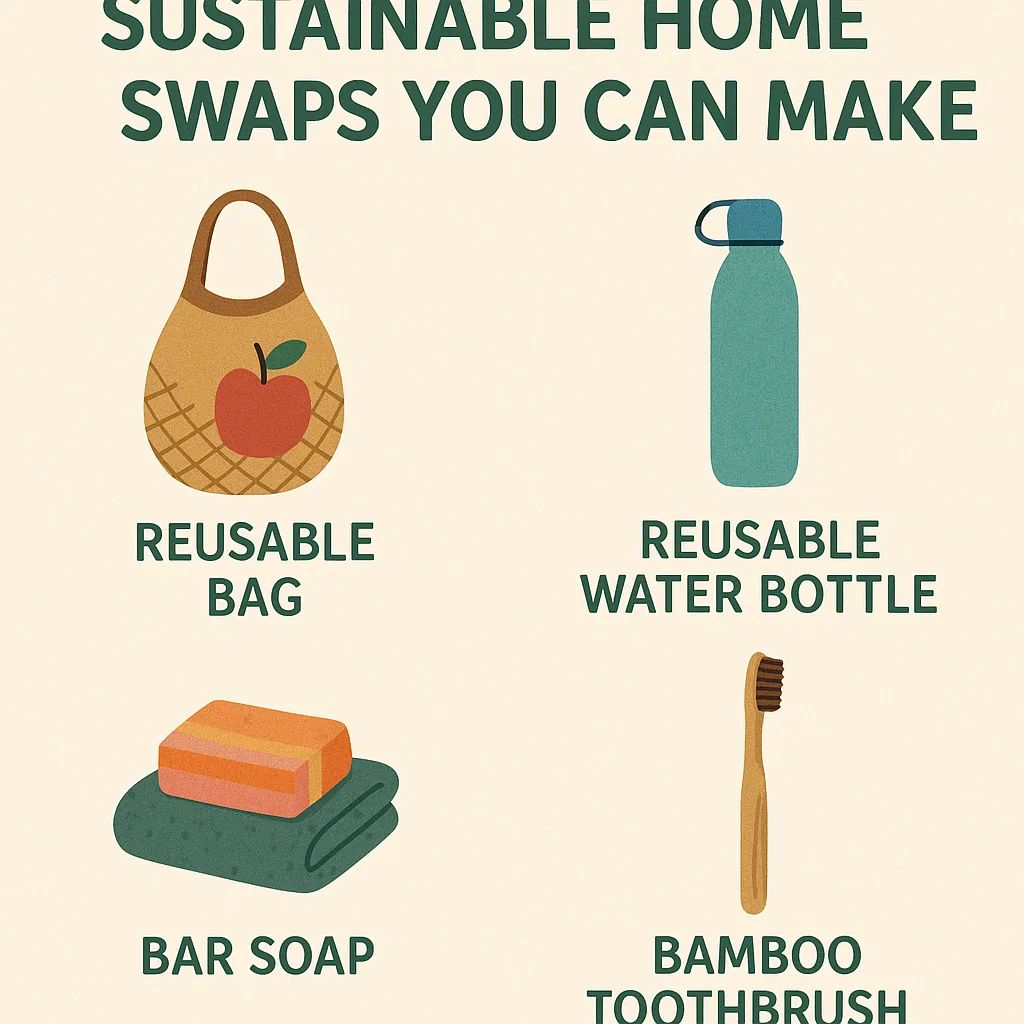
The drive for sustainability is not merely a fad; it is an absolute necessity. We are unaware of the greater impact of our daily decisions in light of climate change, overflowing landfills, and growing energy consumption. However, adopting a more environmentally conscious way of life does not require you to live off the grid or give up all of your contemporary conveniences.
It starts at home. And even small changes can have big ripple effects.
This blog will discuss easy, doable, and efficient sustainable home improvements that you can start making right now without going over budget or sacrificing convenience.
Why Sustainable Swaps Matter
Before diving into the tips, let’s talk about why these swaps are important.
-
Waste Reduction: Over 1,600 pounds of waste are produced annually by the typical household. A lot of things are non-recyclable or disposable.
-
Energy Use: Approximately 20% of greenhouse gas emissions worldwide come from residential buildings.
-
Resource Scarcity: The production of every product we use requires raw materials, energy, and water.
-
Personal Health: Numerous non-sustainable products, particularly plastics and cleaning supplies, contain dangerous chemicals that are detrimental to our health.
Making conscious choices in the home can significantly reduce your carbon footprint and even save you money in the long run.
Kitchen Swaps
The kitchen is a great place to start your sustainability journey. Here are some easy yet impactful swaps:
1. Plastic Wrap → Beeswax Wraps
Beeswax wraps can be composted, washed, and reused. They don't wind up in a landfill, but they mold to bowls and food items similarly to plastic wrap.
2. Paper Towels → Reusable Cloths
Over time, hundreds of paper towel rolls can be replaced with a single investment of cotton or microfiber cloths.
3. Single-Use Sponges → Compostable or Silicone Sponges
Conventional sponges are bacterially contaminated and contain plastic. Longer-lasting and environmentally safe are silicone or compostable versions.
4. Plastic Food Containers → Glass or Stainless Steel
Chemicals can seep out of plastic containers as they deteriorate. Steel or glass is completely recyclable, stronger, and safer.
5. Disposable Coffee Pods → Reusable Coffee Filters
To cut down on waste, use reusable pods filled with your preferred ground coffee if you use a Keurig or a similar device.
Bathroom Swaps
Bathrooms are hotspots for plastic waste and harmful chemicals. Here's how to green your routine:
6. Plastic Bottled Shampoo → Shampoo Bars
Shampoo bars don't come in plastic bottles and have a longer shelf life. They frequently contain fewer dangerous ingredients.
7. Disposable Razors → Safety Razor
Disposable plastic safety razors are no longer necessary thanks to stainless-steel models that use recyclable blades.
8. Toilet Paper → Bamboo or Recycled Toilet Paper
Deforestation is exacerbated by conventional toilet paper. Bamboo needs less water and grows more quickly.
9. Conventional Toothpaste → Toothpaste Tablets
Toothpaste tablets come in recyclable or compostable packaging and are just as effective as tubes.
10. Synthetic Loofah → Natural Loofah or Washcloth
Plastic loofahs don’t biodegrade. A natural loofah or a simple cotton washcloth works just as well and composts easily.
Laundry & Cleaning Swaps
The environment doesn't have to pay for cleaning. These substitutions cut down on packaging waste and toxins.
11. Liquid Detergent → Laundry Sheets or Powder in Cardboard
Because of their small size, many laundry sheets are plastic-free and emit less carbon dioxide during shipping.
12. Dryer Sheets → Wool Dryer Balls
Reusable wool dryer balls last for more than 1,000 loads, soften fabric, and cut down on drying time.
13. Chemical Cleaners → Vinegar, Baking Soda & Essential Oils
Use these ingredients to create your own cleaning spray for a sustainable and non-toxic substitute.
14. Plastic Spray Bottles → Glass Spray Bottles
When making your own cleaners, use glass bottles. They don't leak chemicals and are more resilient.
Home & Decor Swaps
Designing a beautiful home doesn’t have to be wasteful. Consider these mindful choices:
15. New Furniture → Secondhand or Reclaimed Furniture
Online marketplaces and thrift shops provide fashionable alternatives without the environmental expense of new production.
16. New Décor → DIY Upcycled Pieces
Repurpose scrap fabric into pillowcases or old jars into candlesticks. It's eco-friendly, entertaining, and inventive.
17. LED Bulbs Over Incandescents
LED bulbs last 25 times longer and consume up to 80% less energy. The energy-saving switch is obvious.
18. Synthetic Rugs → Natural Fiber Rugs
Select rugs composed of cotton, wool, or jute. They frequently don't contain harmful dyes and are biodegradable.
On-the-Go Swaps
Being sustainable doesn’t stop at home. Equip yourself with reusables for life outside your doorstep:
19. Plastic Water Bottles → Reusable Stainless Steel Bottles
pollution-free hydration. Stainless steel bottles reduce single-use waste and keep beverages hot or cold.
20. Takeout Containers → Bring Your Own Containers
Many restaurants now welcome BYO containers for leftovers or takeaway orders.
21. Plastic Bags → Cloth Totes
Store one in your backpack or vehicle. They replace the need for paper or plastic bags and are more durable and washable.
22. Disposable Cutlery → Travel Utensil Set
Compact and reusable, bamboo or metal travel sets are great for office lunches or picnics.
Energy & Utility Swaps
These swaps reduce energy bills and help the planet:
23. Smart Thermostats
They save energy and money by optimizing heating and cooling schedules according to your habits.
24. Unplug Devices When Not in Use
Standby appliances continue to consume electricity (phantom load). Everything can be easily turned off with a power strip.
25. Install Low-Flow Showerheads
They save water and heating energy by reducing water usage by up to 60% without compromising pressure.
Sustainable Mindset Shifts
Sustainability begins with the mind, not the product. Here are three essential behaviors to develop:
26. Buy Less, Choose Well
Ask yourself if you truly need this before making a purchase. High-quality products generate less waste and last longer.
27. Repair Instead of Replace
To prolong product life, sew your clothing, fix broken appliances, and acquire basic do-it-yourself repair skills.
28. Compost Organic Waste
Methane is released by food waste in landfills. They become nutrient-rich soil for plants or gardens when composted.
Final Thoughts
Being flawless is not the goal of sustainable living. It's about advancement. You're moving closer to a cleaner planet, a healthier home, and a more mindful life by implementing these home swaps.
Begin modestly. Today, choose three to five swaps that seem feasible. Add more as they become second nature. Sustainability is a process, and all changes, no matter how minor, have an impact.
Keep in mind that millions of people making imperfect eco-friendly decisions has a greater impact than a small number of people leading flawless lives.
So take that first step. Your future self (and the planet) will thank you.




Leave a Reply