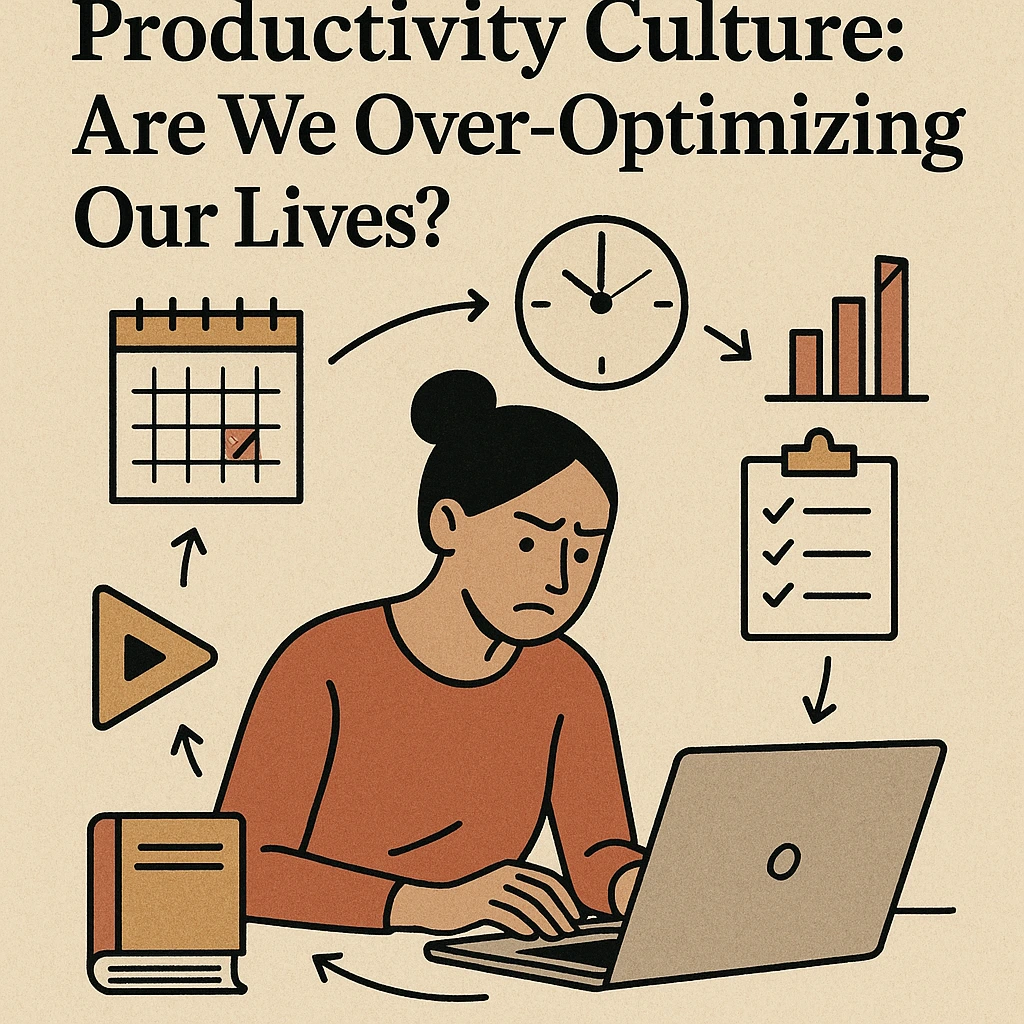
Being productive has evolved from a personal preference to a cultural requirement in our day and age. Productivity is praised wherever you turn. You see social media celebrities showcasing their flawless morning rituals, YouTube videos promising "10x your output," and applications that track every minute of your day.
We all appear to be racing toward a more effective, structured, and optimized form of life.
However, this is the query that no one likes to pose:
Are we truly becoming more productive—or are we just exhausting ourselves trying?
In many respects, productivity culture has evolved from a constructive style of thinking to a quiet pressure that affects how we work, think, and even relax. Additionally, we grow increasingly detached from the real experience of life as we strive for the ideal of maximum efficiency.
The hidden effects of constant optimization, how productivity culture has taken over our lives, and how we may redefine productivity in a more humane way are all covered in this blog.
The Rise of Productivity Culture
The concept of productivity is not new. However, the fixation with productivity—monitoring, refining, and perfecting everything—is a contemporary phenomena. We came here due to a number of factors.
1. Technology Turned Time Into Data
The development of digital tools made work quantifiable. Everything may be turned into metrics, including emails sent, work finished, and hours monitored. Additionally, once something is measured, it may be optimized.
The problem? Humans aren’t meant to function like algorithms.
2. Social Media Turned Productivity Into Content
Productivity became a performance thanks to platforms. Influencers displayed carefully planned routines that gave efficiency a gorgeous appearance. We started contrasting someone else's flawlessly polished "productive day" with our untidy, human lives.
Suddenly, productivity wasn’t just personal—it became public.
3. Hustle Culture Encouraged Overwork
“Wake up earlier.”
“Grind harder.”
“Do more.”
This kind of thinking led individuals to feel that hard work is the only path to success and that relaxation is a sign of laziness. The distinction between self-destruction and dedication was blurred by hustle culture.
When Productivity Becomes Toxic
Productivity is supposed to help us. But it becomes toxic when:
you start measuring your worth by how much you accomplish.
Many people are unaware of the subtle ways that productivity culture permeates their daily routines. These are indicators that things have gotten out of control.
1. You Feel Guilty for Resting
It is impossible to unwind without feeling as though you ought to be doing something "useful." Even downtime becomes into something to plan or defend.
2. You Turn Hobbies Into Tasks
Reading becomes a reading goal.
Running becomes a fitness target.
Drawing becomes a side hustle idea.
Everything must have a purpose. Nothing is allowed to just be fun.
3. You Chase the Perfect Routine
You think your mood, your schedule, and your productivity can all be improved with the correct system, app, or habit stack. However, achieving perfection is a never-ending goal.
4. You Never Feel “Enough”
You always feel like you should do more, regardless of how much you accomplish. Productivity ceases to be a source of empowerment and instead creates pressure.
The Hidden Costs of Over-Optimization
Productivity culture is first inspiring. However, it has long-term negative effects on the mind, body, and emotions.
1. Burnout Becomes a Lifestyle
Exhaustion is only one aspect of burnout; other symptoms include emotional numbness, a lack of drive, and the agonizing sense that you've become lost in your own routines. Your body and mind will eventually push back if you keep pushing.
2. Creativity Fades
Boredom, daydreaming, and quiet times are necessary for creativity. Creativity is stifled when every minute is planned.
3. Life Loses Its Spontaneity
A culture of productivity makes life inflexible. Unexpected joy, messiness, or detours are not allowed. Instead of living in the actual world, you begin to live in your calendar.
4. You Disconnect From Yourself
You pay less attention to your needs the more you maximize your actions. The culture of productivity teaches you to put efficiency ahead of your emotions.
You become a manager of your life—not a participant.
Why Productivity Culture Feels So Addictive
If productivity hurts us, why do we cling to it?
Because it gives us the illusion of control.
Optimizing your day feels like controlling chaos in a complicated, uncertain environment. You feel competent, accountable, and deserving when you cross things off a list.
But it’s a fragile sense of worth—conditional on output.
Productivity culture also taps into deeper fears:
-
The fear of falling behind
-
The fear of being average
-
The fear of disappointing others
-
The fear of confronting your emotions
As long as you keep yourself busy, you don’t have to face those fears.
The Myth of the “Optimized Life”
Self-help culture loves telling us that the perfect routine will fix everything:
Wake up at 5 AM.
Journal.
Meditate.
Workout.
Plan your day.
Eat clean.
Track habits.
In reality, no routine works for everyone. Humans aren't machines.
A highly optimized life may look impressive, but it can come at the cost of authenticity, joy, and mental peace.
The truth is simple:
You don’t need to optimize your life to deserve a good one.
Rethinking Productivity: A More Human Approach
What should we strive for if a total retreat from productivity isn't the goal? A more balanced and conscious approach to production that is healthier and more compassionate.
1. Focus on What Truly Matters
Something is not always meaningful just because it can be measured. Your most significant experiences—love, connection, and tranquility—don't appear on a dashboard.
2. Make Rest Non-Negotiable
Rest isn’t a luxury. It’s a biological necessity.
Let yourself:
-
Do nothing
-
Pause
-
Breathe
-
Recover
Rest should be guilt-free.
3. Embrace Imperfection
Some days will be messy. Some tasks will be unfinished. Some routines will fall apart.
That’s normal. That’s human.
Productivity should support your life—not control it.
4. Let Some Things Be Just For You
Not every hobby needs to be optimized.
Not every moment needs to be productive.
Not every day needs to be efficient.
Some parts of your life should exist purely for joy.
The Rise of Slow Productivity
Slow productivity, which emphasizes accomplishing fewer tasks more effectively and with greater presence, is becoming more and more popular.
Instead of maximizing output, it prioritizes:
-
Deep focus
-
Meaningful work
-
Sustainable energy
-
Mental clarity
-
A sense of flow
Slow productivity teaches us that doing less can actually create more impact.
Final Thoughts: Are We Over-Optimizing Our Lives?
Yes—many of us are.
We have transformed self-improvement into a never-ending competition, productivity into a gauge of value, and optimization into a way of life. However, we've overlooked something crucial in the process:
Life isn’t meant to be optimized.
It’s meant to be lived.
Real productivity is about living a life that feels purposeful, balanced, and vibrant, not about packing more hours into your day.
If you take anything away from this, let it be this:
You don’t need to be perfectly productive to be enough.
Sometimes stopping, breathing, slowing down, and just being is the most constructive thing you can do.



Leave a Reply