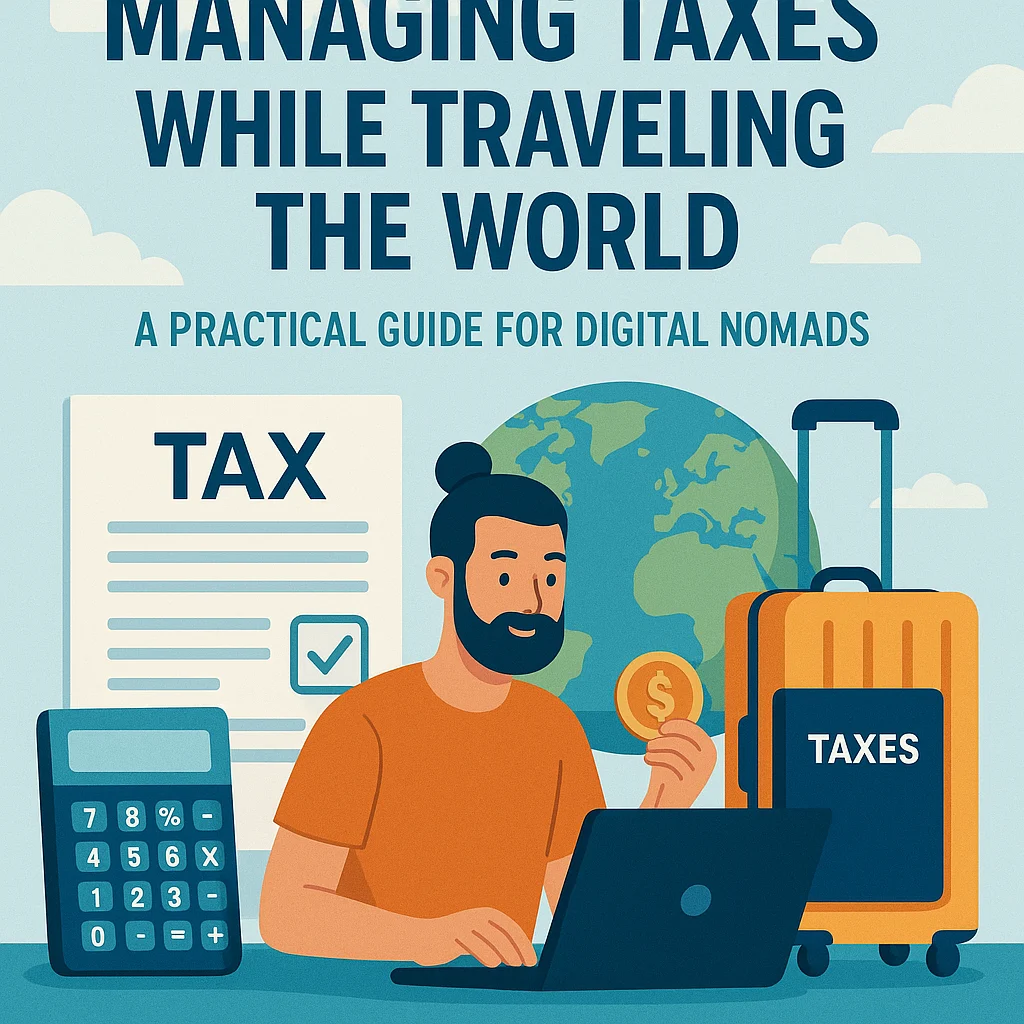
Managing taxes while traveling the world is a challenge that many digital nomads face in a world where remote work and international travel are growing in popularity. Working from a café in Lisbon or a beach in Bali may seem like a romantic idea, but the reality of filing taxes in several different countries can quickly become complicated. Maintaining tax compliance is crucial to avoiding fines and financial difficulties, regardless of whether you work for a multinational corporation, operate a remote business, or freelance.
This blog breaks down the challenges of handling taxes while on the road full-time, providing advice, resources, and best practices to keep you on top of things.
1. Understanding Tax Residency
One of the first things any globetrotter needs to figure out is tax residency. Every country has its own rules, but most base tax residency on either:
-
Time spent in the country (e.g., more than 183 days in a calendar year)
-
Center of economic interest or domicile
It's possible for you to inadvertently become a tax resident in multiple nations. For instance, depending on your length of stay and connections, both Portugal and Thailand may claim you as a resident for tax purposes if you spend part of your year in both countries.
Tip: To demonstrate where you have been and how long you have been there, keep a record of your travel dates and lodgings.
2. Know Your Home Country's Rules
Even if you're abroad, your home country may still require you to file taxes.
-
United States: No matter where they reside, U.S. citizens and permanent residents pay taxes on their worldwide income. You must still file even if you qualify for the Foreign Earned Income Exclusion (FEIE) or the Foreign Tax Credit (FTC).
-
Canada: Both physical presence and relationships like family, property, and bank accounts are taken into account in Canada.
-
UK: Days spent and ties to the UK are factors in the statutory residency test used by the UK.
Neglecting your responsibilities may result in severe fines or legal issues.
3. Use Tax Treaties to Avoid Double Taxation
When you owe taxes in two different countries on the same income, this is known as double taxation. Fortunately, tax treaties are in place in many nations to prevent this. Typically, these agreements:
-
Define which country has taxing rights
-
Allow tax credits for taxes paid to another country
-
Establish rules for residency
Verify whether a country has a tax treaty with your home country before extending your stay there. Some countries provide unilateral relief, such as foreign tax credits, even in the absence of a treaty.
4. Consider Becoming a Tax Non-Resident
To avoid paying taxes in their home country, some digital nomads formally severed their ties with it. Establishing non-residency is the term for this. It's not as simple as simply walking away.
To become a tax non-resident, you typically must:
-
Spend fewer than a set number of days in the country
-
Give up property, health care access, or voter registration
-
Prove that your primary residence and income are abroad
Although becoming a non-resident can lower your tax liability, it may also limit your ability to receive government assistance and benefits.
5. Choose a Tax-Friendly Base
A lot of nomads set up shop in a nation with lax tax laws regarding foreign earnings. Typical options consist of:
-
Portugal: Offers a Non-Habitual Resident (NHR) regime with reduced tax rates
-
Georgia: 1% tax for individual entrepreneurs under certain thresholds
-
Bali, Indonesia: Popular for lifestyle, but tax residency kicks in after 183 days
-
Panama: Territorial tax system—only local income is taxed
-
United Arab Emirates: No income tax and generous visa options
Just make sure your chosen base has clear tax laws, digital nomad visa options, and banking access.
6. Track Income and Expenses Meticulously
Bookkeeping becomes essential when you receive income from several clients or sources worldwide. It must:
-
Calculate net income
-
Claim deductions
-
Prove your income sources for foreign tax credits
-
Report foreign bank accounts or assets (required in the U.S. and other countries)
Use tools like:
-
QuickBooks or Xero for accounting
-
Expensify for receipts
-
Notion or Evernote to organize tax notes and documents
7. Stay Ahead of Tax Deadlines
Countries have different tax deadlines. Missing a deadline can result in fines or restrict your ability to claim exclusions, particularly if you live overseas.
For example:
-
U.S. expats get an automatic two-month extension (June 15), but taxes are still due April 15.
-
Australia’s deadline is October 31 for individuals without a tax agent.
-
The UK’s self-assessment deadline is January 31.
To stay organized, use a tax-specific planner and set reminders on your calendar.
8. Report Foreign Bank Accounts and Assets
To stop tax evasion, many nations, particularly the United States, mandate the reporting of foreign financial accounts.
If you are a U.S. citizen with more than $10,000 in foreign bank accounts, you have to file:
-
FBAR (Foreign Bank Account Report)
-
FATCA Form 8938 if you exceed specific thresholds
Failure to report can result in massive penalties, even if you owe no tax.
9. Hire a Tax Professional Familiar With Expat Taxes
For international travelers, paying taxes is not a do-it-yourself task. Seek out a tax advisor with expertise in international or expat taxes. They are able to:
-
Identify country-specific exclusions or treaties
-
Help you avoid double taxation
-
Make sure you meet reporting requirements
-
Recommend optimal business structures if you're self-employed
This investment pays off in saved time, stress, and possibly money.
10. Use a Cloud-Based Document System
Don't depend on local files or tangible receipts. Use safe tools such as these to store all tax-related documents on the cloud:
-
Google Drive
-
Dropbox
-
OneDrive
Keep scanned invoices, contracts, receipts, tax returns, and passport stamps as evidence of residency or travel, and arrange files by year and nation.
Final Thoughts
Tax management while traveling is not glamorous, but it is completely doable with the correct procedures and planning. Be proactive with documentation and reporting, learn about the laws of your home country, and begin by determining your tax residency. You can travel freely without worrying about receiving a letter from the tax collector if you have a good tax advisor and maintain meticulous records.
There are obligations associated with the freedom of living as a digital nomad. However, you can manage your taxes with careful planning, freeing you up to concentrate on the adventures that lie ahead.




Leave a Reply