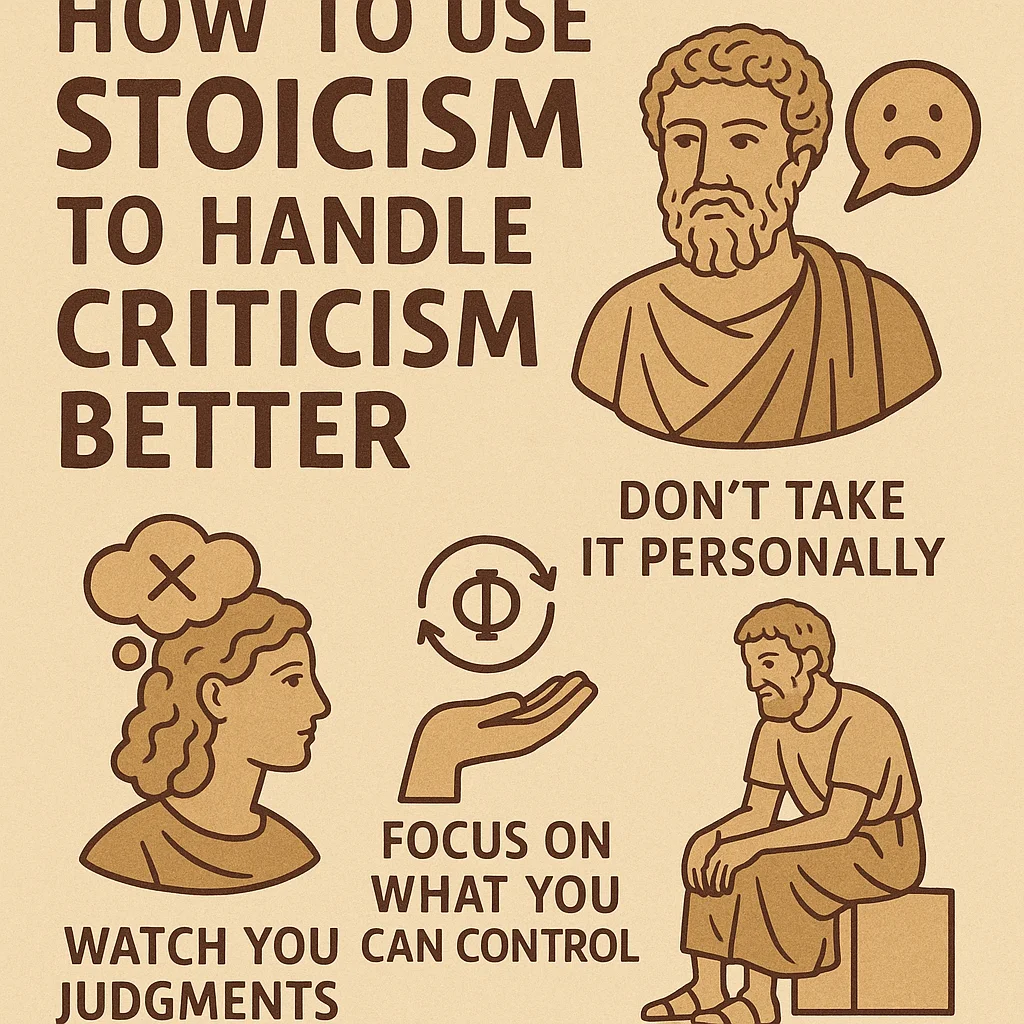
Introduction: Criticism Is Inevitable
People will criticize you whether you interact with them in person or online. Some of it will be positive, fostering your development, while others will be negative, motivated by jealousy, miscommunication, or animosity. Our natural response is frequently to become defensive, irate, or offended. However, we have a choice in how we react, as taught by the Stoics—Marcus Aurelius, Seneca, and Epictetus.
The ancient philosophy of stoicism places a strong emphasis on emotional restraint, logical reasoning, and concentrating only on your controllable circumstances. You have no control over criticism, but you have complete control over how you respond to it. By adopting a Stoic approach, one can transform potentially painful circumstances into chances for fortitude, insight, and development.
1. Separate Fact from Emotion
The first step in a stoic reaction to criticism is to pause. Your mind instantly begins to associate insults, rage, and shame with the words of someone who criticizes you.
Marcus Aurelius wrote:
“You have power over your mind—not outside events. Realize this, and you will find strength.”
The first step is to separate the objective content of the criticism from your emotional reaction. Ask yourself:
-
What exactly did they say?
-
Is it a fact or an opinion?
-
Is there truth in it, regardless of their tone?
You can respond with mental clarity and without emotional turmoil if you can turn criticism into information rather than a personal assault.
2. Focus on What You Can Control
Epictetus famously said:
“It’s not what happens to you, but how you react to it that matters.”
Whether someone speaks negatively about you is beyond your control. Their viewpoint, prejudices, and intentions are beyond your control. However, you have control over:
-
How much you let it affect your mood
-
Whether you respond or stay silent
-
How you use it to improve
A stoic views criticism as an outside force that is meaningless until you give it a purpose. You can avoid the emotional trap of placing too much value on other people's opinions by adopting this mindset.
3. View Criticism as a Teacher
Seneca advised:
“We suffer more often in imagination than in reality.”
A large portion of the hurt caused by criticism is imagined; we often turn a single remark into a narrative about our value. Stoics advise considering criticism as data instead. Learn from the truth if it exists. If it's untrue, disregard it.
Practical Stoic exercise:
-
Write down the criticism.
-
List what’s useful in it (if anything).
-
Ignore the rest without resentment.
This reframing turns criticism into a teacher rather than an enemy.
4. Don’t Take It Personally
In Meditations, Marcus Aurelius reminds himself:
“When someone does you wrong, it is because they believe it right for them to do so.”
The majority of criticism focuses more on the critic than on you. People frequently project their values, frustrations, or insecurities onto other people. Realizing this does not imply that you should ignore any criticism; rather, it allows you to consider it without taking on needless emotional burdens.
Criticism, according to a Stoic, is about behavior rather than identity. If someone says, "You're careless," you can assess the statement without taking it at face value.
5. Practice the Dichotomy of Control in Social Judgment
The Dichotomy of Control—some things are in our control and some are not—was taught by the Stoics. People's opinions about you are definitely in the "not up to us" range.
The disapproval of others is meaningless if your actions are consistent with your beliefs. This mental adjustment enables you to maintain your composure in the face of misunderstandings or disapproval.
Epictetus put it simply:
“If you want to improve, be content to be thought foolish and stupid.”
When you detach your self-worth from public opinion, criticism loses its power to wound.
6. Respond (or Don’t) with Reason, Not Ego
Not every criticism calls for an answer. The most Stoic response is sometimes to remain silent, particularly if the critic is looking for conflict rather than discussion.
When you do respond, keep these Stoic principles in mind:
-
Stick to facts, not emotions
-
Avoid attacking the person; address the point
-
Keep your tone calm and measured
By responding with composure, you signal that your self-control is intact—and that you value truth over ego.
7. Prepare Your Mind in Advance
In the mornings, Marcus Aurelius reminded himself that he would encounter "meddlers, ingrates, the arrogant, deceitful, envious, and unsocial." One of the fundamental Stoic habits is this mental preparation.
You won't be caught off guard by criticism if you accept it as a normal part of life. Prior to presenting your work, posting online, or attending a meeting, remind yourself:
-
Some will misunderstand me
-
Some will disagree
-
That’s part of the process
By normalizing criticism, you remove its sting.
8. Turn Criticism into Fuel for Virtue
According to stoicism, the soul is trained by life's hardships, including criticism. Each time you manage criticism without becoming angry, you work on:
-
Patience (not rushing to defend yourself)
-
Wisdom (distinguishing truth from falsehood)
-
Courage (hearing hard truths without fear)
-
Temperance (keeping your emotions in check)
Seen this way, criticism isn’t an obstacle—it’s a gym for your character.
Practical Stoic Exercises for Handling Criticism
-
Journaling Reflection – Jot down recent criticism along with your feelings about it. Would you have been able to react more composedly?
-
Negative Visualization – Imagine being unfairly criticized beforehand. Imagine the response you would like to give.
-
Role Reversal – Pretend you’re the one giving the criticism. Does it still feel as hurtful?
-
Silence Drill – Next time you’re criticized, don’t defend yourself immediately. Wait 24 hours before deciding whether to respond.
Conclusion: Criticism as a Path to Freedom
Stoicism does not guarantee that criticism will no longer cause pain. However, it equips you with the means to make sure it doesn't rule you. You can become more resilient and free by separating fact from emotion, concentrating on what you can control, and viewing criticism as a teacher rather than an adversary.
There will always be critics in the world, but it is up to you whether or not they disturb your tranquility, as Marcus Aurelius might have said. When you approach criticism in the Stoic manner, you see every comment as a chance to grow in wisdom, regardless of how harsh or kind it is.
If you want, I can also create a companion piece titled “10 Stoic Quotes to Remember When Facing Harsh Criticism” so you have a quick, shareable version for your audience. That could make your blog series even stronger.




Leave a Reply