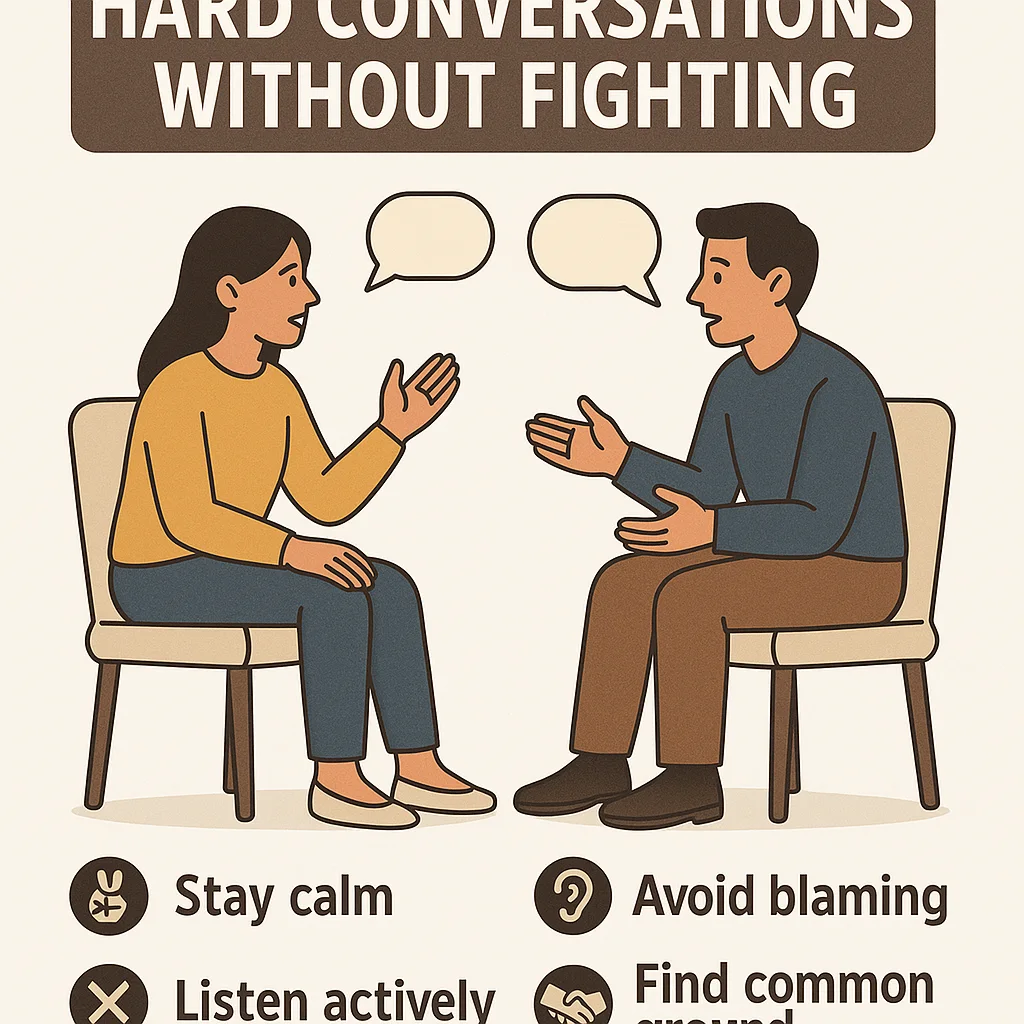
Whether it's confronting a coworker about a missed duty, talking to a partner about boundaries, or telling a friend they hurt your feelings, difficult conversations are unavoidable in life. However, the majority of people steer clear of these conversations out of a fear of conflict, tension, or emotional backlash. When discussions do occur, they frequently degenerate into disputes, finger-pointing, or quiet.
But it doesn't have to be that way.
With the right tools and mindset, you can have hard conversations without fighting—and actually come out the other side with stronger relationships, clearer communication, and deeper trust.
This blog explores how to approach tough talks with empathy, courage, and clarity, so that you can handle them like a pro.
Why We Avoid Difficult Conversations
It's useful to know why we avoid difficult conversations in the first place before discussing how to handle them.
1. Fear of Conflict
Disagreement is often mistaken for animosity. We worry that voicing our opinions will sour the relationship or turn into a fight.
2. Fear of Rejection or Judgment
We become vulnerable when we open up. We fear that the other person will reject our emotions or take offense.
3. Poor Past Experiences
We learn to remain silent in order to "keep the peace" if earlier attempts at resolving conflicts resulted in shouting matches or silent treatment.
4. Lack of Communication Skills
Most of us don't feel prepared to handle high-stakes conversations because we weren't taught how to listen with empathy or articulate ourselves clearly.
What Makes a Conversation “Hard”?
A conversation is considered “hard” when it involves:
-
Emotional stakes (e.g., love, trust, respect)
-
Differing perspectives or values
-
Uncertainty about the outcome
-
Fear of hurting or being hurt
Examples include:
-
Telling your partner you’re unhappy
-
Asking for a raise
-
Apologizing for something you did wrong
-
Confronting a toxic friend
-
Setting boundaries with family
The Goal: Clarity, Not Victory
The goal of a difficult conversation is to connect, comprehend, and work through issues as a team, not to win. You make space for growth and respect for one another when you change your focus from being "right" to being real.
9 Strategies for Navigating Hard Conversations Without Fighting
1. Regulate Your Emotions Before You Speak
Before the conversation begins, try to relax. Your ability to think clearly is shut down by emotional flooding, which occurs when your body is overloaded with stress.
Tips:
-
Breathe deeply for a few minutes
-
Write down what you want to say
-
Practice what you’ll say out loud
-
Go for a walk to settle nerves
Remember: the more calm you are, the better you’ll communicate.
2. Start with Curiosity, Not Accusation
Feeling blamed makes people defensive by nature. Try framing it with curiosity rather than "You never listen to me" at the beginning:
“Can we talk about something that’s been on my mind? I want to understand your side too.”
This signals that you’re not attacking but inviting discussion.
3. Use “I” Statements to Own Your Feelings
“I” statements express your experience without assigning blame.
Instead of:
“You always interrupt me!”
Try:
“I feel frustrated when I’m interrupted because I don’t feel heard.”
The other person will find it easier to hear you without becoming defensive if you take this approach.
4. Focus on Impact, Not Intent
"That wasn't my intention" is a common statement. Impact is more important than intentions.
For example:
“I know you didn’t mean to hurt me, but when you said that in front of our friends, I felt embarrassed.”
Acknowledging the difference creates space for accountability and empathy.
5. Listen More Than You Talk
Active listening, the kind where you're not waiting for a response but are genuinely attempting to understand, is necessary during difficult conversations.
How to do it:
-
Make eye contact
-
Don’t interrupt
-
Paraphrase what they said:
“So what I’m hearing is... is that right?”
This builds trust and makes people more likely to reciprocate.
6. Stay on One Topic at a Time
It's easy to air out years' worth of grievances at once during heated situations. Don't. Limit each discussion to a single topic.
Avoid:
“Well, last month you did the same thing, and don’t forget last year when—”
Do:
“I want to talk specifically about what happened yesterday. Can we focus on that?”
Staying focused keeps the conversation manageable.
7. Validate Their Perspective
Validation doesn’t mean agreeing—it means acknowledging their feelings.
Say things like:
-
“I can see why you’d feel that way.”
-
“That makes sense from your point of view.”
-
“I hadn’t thought of it like that.”
Validation disarms defensiveness and builds emotional safety.
8. Take Breaks When Needed
If emotions are running too high, it’s okay to pause.
Try saying:
“I want us to have a good conversation, but I’m feeling overwhelmed. Can we take a break and come back to this?”
Breaks help prevent escalation and give both parties time to reflect.
9. End with a Plan, Not Just Feelings
Don't let the discussion go unfinished. Establish a clear understanding of what will happen next.
Ask:
-
“What can we both do differently moving forward?”
-
“How can we check in again on this later?”
-
“Do we both feel heard?”
Resolution isn’t just about feeling better—it’s about doing better.
Scripts to Navigate Common Scenarios
🔹 Romantic Relationship Conflict
“I really care about us, and I want to talk about something that’s been bothering me. I’m not trying to blame you—I just want to be honest and work through it together.”
🔹 Setting Boundaries with a Friend
“I’ve been feeling overwhelmed lately, and I realized I need more space. This isn’t about you doing anything wrong—it’s about me taking care of myself.”
🔹 Giving Feedback at Work
“I’ve noticed a pattern in our team handovers that’s been affecting the project timeline. I wanted to bring it up so we can find a better system together.”
Common Mistakes to Avoid
-
Raising your voice – It triggers defensiveness
-
Using “always” or “never” – These absolutes feel like attacks
-
Blaming or name-calling – Shuts down connection
-
Assuming bad intent – Start by assuming they mean well
-
Interrupting or talking over – Makes people feel dismissed
The Benefits of Having Hard Conversations
When handled well, tough talks can actually strengthen relationships. You’ll build:
-
Deeper emotional intimacy
-
Greater respect and trust
-
Improved self-confidence
-
More honest communication
The more you practice, the easier it becomes.
Conclusion: Courage Over Comfort
Although they are uncomfortable, difficult talks are essential. Ignoring them only makes issues worse, resentment worse, and relationships worse.
By approaching tough topics with empathy, calm, and clarity, you can transform what feels like conflict into connection.
Remember: The goal isn’t to win. It’s to understand, be understood, and grow—together.




Leave a Reply