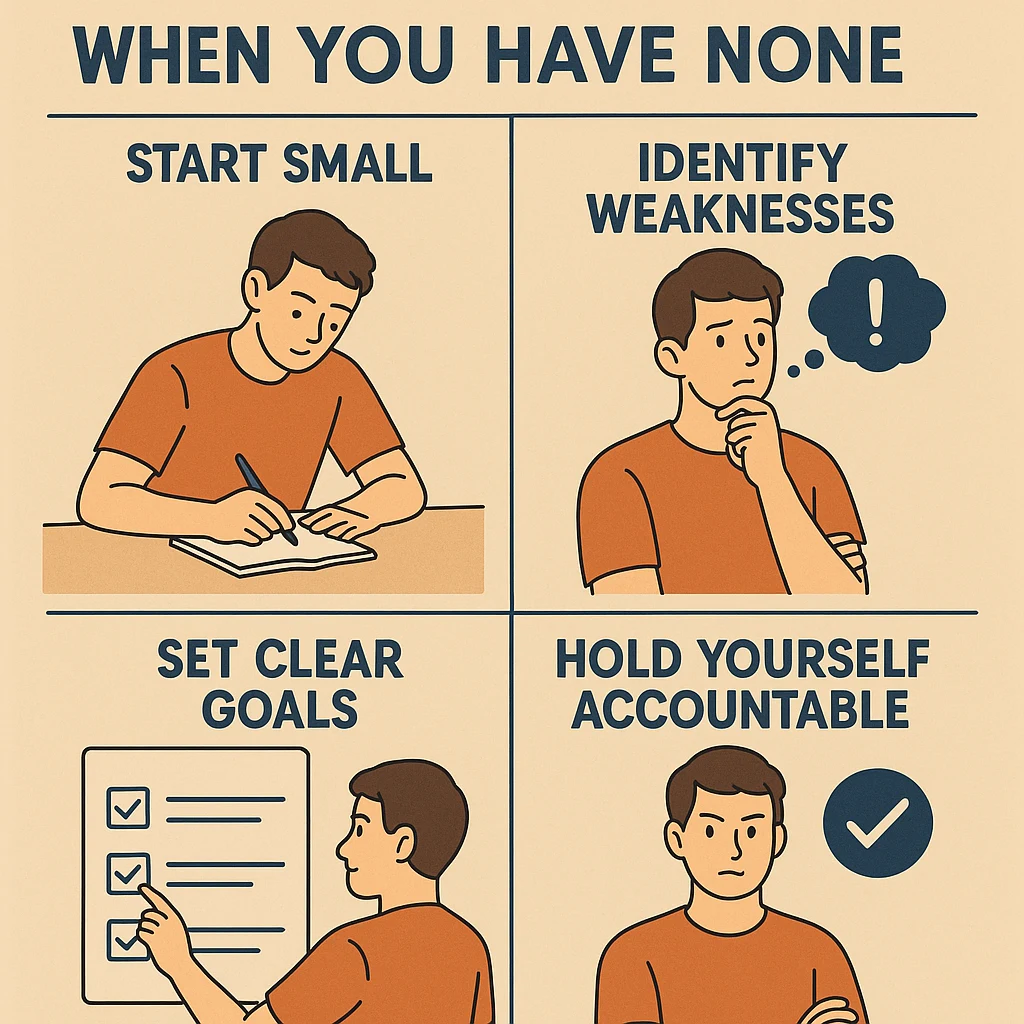
Self-discipline, which only a select few possess naturally, can feel like a superpower. You think, "I could never do that," when you see someone who gets up at five in the morning, works out every day, and never misses a deadline.
But here’s the truth: self-discipline isn’t a personality trait. It’s a skill. And skills can be built.
This guide will teach you how to develop self-discipline from the ground up, even if you don't think you have any willpower. It won't be about military-style routines, motivational tricks, or embarrassment. It will cover science, structure, and universally applicable mindset changes.
What Is Self-Discipline?
Fundamentally, self-discipline is the capacity to restrain your emotions, impulses, and behaviors in order to accomplish long-term objectives.
It’s what helps you:
-
Say no to distractions
-
Stick to routines
-
Finish what you start
-
Delay gratification
Self-discipline isn't about being perfect. It’s about being consistent, even when you don’t feel like it.
Why Most People Struggle With Self-Discipline
You're human, not broken, if you feel like you lack discipline. Seeking pleasure, avoiding pain, and conserving energy are all hardwired into your brain. Although these instincts helped our ancestors survive, they conflict with contemporary objectives like studying, exercising, and rising early.
Some common reasons people lack self-discipline:
-
Overreliance on motivation
-
No clear goals or structure
-
Trying to do too much at once
-
Lack of emotional regulation
-
Negative self-talk and shame cycles
Let’s break these barriers down and show you how to build discipline—even from zero.
Step 1: Start with One Tiny Habit
Discipline starts small. If you try to overhaul your entire life overnight, you’ll burn out fast.
Instead, pick a microhabit that is so effortless that you find it impossible to break. For instance:
-
Make your bed every morning
-
Drink one glass of water after waking
-
Write one sentence in a journal
-
Do 5 pushups a day
Why it works: Little routines help you trust yourself. Each time you follow through, you communicate with your brain:
“I do what I say I’m going to do.”
This trust is the foundation of lasting discipline.
Step 2: Define a Clear “Why”
Purposeless discipline seems like punishment. You must therefore have a well-defined rationale for your actions.
Ask yourself:
-
Why do I want to get fit?
-
Why do I want to read more?
-
Why do I want to wake up earlier?
Your "why" ought to be intimate, sentimental, and connected to who you are. For instance:
“I want to work out so I can live longer and be active with my kids.”
“I want to write daily because I believe I have stories worth telling.”
When the “why” is strong enough, the “how” gets easier.
Step 3: Remove Decision Fatigue
One of the biggest discipline killers? Too many choices.
Your mental energy is depleted with each choice you make. Your willpower is weak by the afternoon, and you are more prone to succumb to procrastination, junk food, and social media.
Solution: Automate, schedule, and simplify.
-
Eat the same breakfast daily
-
Lay out clothes the night before
-
Time-block your calendar
-
Use checklists for routines
You'll have more energy for discipline when it matters if you make fewer decisions every day.
Step 4: Use Environment Design
Your behavior is more influenced by your surroundings than by motivation. You're setting yourself up for failure if you're fighting temptation all the time.
Examples of smart environment design:
-
Put your phone in another room while working
-
Use website blockers like Freedom or Cold Turkey
-
Keep healthy snacks visible and junk food out of sight
-
Create a dedicated workspace for focus
Make good behaviors easy and bad behaviors hard.
Step 5: Embrace Boredom and Discomfort
Being disciplined entails carrying out necessary tasks, even if they are unpleasant or tedious.
Because we live in a time of constant stimulation—notifications, streaming, and endless scrolling—that is difficult. Dopamine is an addiction in our brains.
To build discipline, you have to practice discomfort without reaching for a quick fix.
Try this:
-
Sit quietly for 5 minutes without your phone
-
Take cold showers
-
Delay checking notifications for an hour
-
Read a book instead of watching a show
These minor discomforts teach your brain to become more resilient and to stop chasing after instant satisfaction.
Step 6: Plan for Failure
No matter how disciplined you become, you will slip up.
You’ll miss workouts. Eat junk. Skip routines.
However, how you respond to failure is the issue, not failure itself.
Most people fall into an all-or-nothing trap:
“I missed one day, so I might as well quit.”
Have a "never miss twice" mentality instead. The habit is not destroyed by a single missed workout. A trend begins when two or three are missed.
Resilience is the real superpower—not perfection.
Step 7: Track Your Progress Visibly
People are visual beings. Observing advancements keeps us inspired.
Ways to track discipline:
-
Use a habit tracker (apps like Habitica or paper calendars)
-
Create a “don’t break the chain” streak (Jerry Seinfeld method)
-
Journal your progress weekly
This visual feedback strengthens identity and builds momentum:
“I’m someone who keeps showing up.”
Step 8: Create Consequences and Rewards
When there is a stake, discipline becomes easier.
Try:
-
Accountability partners (check in daily or weekly)
-
Stakes apps (like StickK, where you lose money if you fail)
-
Reward systems (e.g., one episode of a show after a focused work session)
Just be careful that your incentives don't undermine your objectives (for example, don't always reward a workout with a donut).
Step 9: Replace Motivation with Systems
Motivation is fleeting. Systems are reliable.
Create a system that makes discipline automatic rather than relying on your "feeling like it":
-
Wake up → Make bed → Brush teeth → 10-minute walk
-
Open laptop → 5-minute focus timer → Check email afterward
-
After dinner → Set up clothes for tomorrow → Journal one page
Systems remove willpower from the equation.
Step 10: Shift Your Identity
The most powerful form of discipline? Believing:
“This is who I am.”
Identity drives behavior more than rules or rewards.
Instead of saying:
-
“I want to read more.”
Say:
-
“I’m a reader.”
Instead of:
-
“I’m trying to be healthier.”
Say:
-
“I’m the kind of person who takes care of my body.”
When your actions align with your identity, discipline becomes natural—not forced.
Final Thoughts
Being strict, flawless, or punishing oneself are not characteristics of self-discipline. One tiny victory at a time, it's about creating a framework that supports your objectives.
You don’t need to overhaul your life overnight. You just need to show up today—and then again tomorrow.
Discipline is built like a muscle. And right now, you're doing the most important rep: the first one.




Leave a Reply