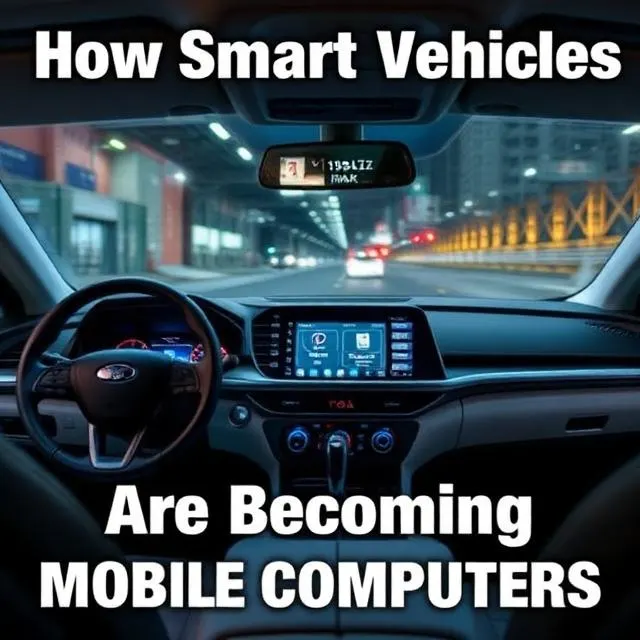
Since its creation more than a century ago, the vehicle has experienced significant developments. What was originally only a mechanical device for moving people from one location to another is now developing into something much more sophisticated. Artificial intelligence, software, internet connectivity, and the ability to process massive amounts of data in real time are all features of modern cars.
Many experts now refer to smart cars as "mobile computers on wheels." The degree to which digital technology has permeated contemporary transportation is reflected in this definition. Vehicles are now more than just machines—they are advanced computing platforms with capabilities like voice assistants, navigation systems, autonomous driving, and over-the-air software updates.
As technology continues to advance, smart vehicles are transforming the driving experience and redefining the future of mobility.
The Shift from Mechanical to Digital
Conventional automobiles mostly relied on mechanical systems that were managed by physical parts. The majority of vehicle functions remained hardware-focused even as electronics were progressively added over time.
Modern smart vehicles are fundamentally different. Software now controls many critical functions, including:
- Engine performance
- Battery management
- Navigation systems
- Safety features
- Driver assistance technologies
- Entertainment systems
Software updates can frequently enhance a car's performance without necessitating any physical changes. Because of this change, cars are now dynamic items that keep changing long after they are bought.
Advanced Computing Power Inside Vehicles
Modern vehicles contain dozens of microprocessors and electronic control units that manage various systems simultaneously.
These onboard computers process information from:
✔ Cameras
✔ Radar sensors
✔ GPS systems
✔ Lidar sensors
✔ Vehicle diagnostics
✔ Driver inputs
Every second, smart vehicles analyze vast amounts of data to make decisions that improve performance, safety, and efficiency.
This computing power enables vehicles to respond quickly to changing road conditions and provide drivers with valuable real-time information.
Artificial Intelligence Is Driving Innovation
Artificial Intelligence (AI) has become one of the most important technologies in smart vehicles.
AI systems help vehicles:
- Recognize road signs
- Detect pedestrians
- Monitor driver behavior
- Predict maintenance needs
- Improve navigation routes
- Support autonomous driving features
Over time, machine learning algorithms enhance their performance by continuously analyzing data. As a result, with repeated use, cars get smarter and more capable.
The integration of AI is helping transform cars from passive transportation tools into intelligent systems that actively assist drivers.
Connected Vehicles and Internet Integration
Connectivity is one of the distinguishing features of contemporary smart cars. Modern automobiles are capable of communicating with mobile devices, cloud services, and even other cars.
Connected vehicles offer features such as:
- Real-time traffic updates
- Remote vehicle monitoring
- Smartphone integration
- Emergency assistance services
- Predictive maintenance alerts
- Navigation optimization
Drivers can often use mobile apps to check battery status, lock or unlock doors, locate their vehicle, or start climate control systems remotely.
This constant connectivity makes vehicles an extension of the digital ecosystem that people use every day.
Over-the-Air Software Updates
Vehicle upgrades used to necessitate trips to dealerships or service facilities. Through over-the-air (OTA) upgrades, smart cars are altering this.
Much like smartphones and computers, modern vehicles can receive software updates remotely.
Benefits of OTA updates include:
✔ New features and capabilities
✔ Improved security
✔ Performance enhancements
✔ Bug fixes
✔ Enhanced user experiences
Over the course of a car's life, manufacturers can make improvements that increase long-term value and make ownership more convenient.
Advanced Driver Assistance Systems
Many smart vehicles already include advanced driver assistance systems (ADAS) that rely heavily on computing technology.
These systems may include:
- Adaptive cruise control
- Lane-keeping assistance
- Automatic emergency braking
- Blind-spot monitoring
- Parking assistance
- Traffic sign recognition
Using sensors and AI-powered analysis, these technologies help improve safety and reduce driver workload.
As computing power increases, these systems are becoming more accurate and capable.
Smart Vehicles and Autonomous Driving
The development of self-driving technology is one of the clearest examples of vehicles becoming mobile computers.
Autonomous vehicles rely on:
- High-performance processors
- Artificial Intelligence
- Real-time mapping
- Sensor fusion systems
- Machine learning algorithms
To comprehend its surroundings and make safe driving decisions, a self-driving car must constantly process massive amounts of data.
Without advanced computing systems, autonomous transportation would not be possible.
Many modern cars now include semi-autonomous features that showcase the capabilities of onboard computing, even if completely autonomous cars are still being developed.
Enhanced Infotainment and Digital Experiences
Drivers today demand more than just transportation. They want capabilities that are similar to those on computers and smartphones in terms of productivity, entertainment, and connectivity.
Smart vehicle infotainment systems now offer:
✔ Voice-controlled assistants
✔ Streaming services
✔ Video conferencing capabilities
✔ Wireless smartphone integration
✔ Personalized user profiles
✔ Digital dashboards
These features create a more enjoyable and connected experience for drivers and passengers.
Future vehicles may even function as mobile offices or entertainment hubs, especially as autonomous driving technology becomes more common.
Predictive Maintenance and Vehicle Health Monitoring
Smart vehicles continuously monitor their own condition using sensors and diagnostic software.
These systems can:
- Detect component wear
- Monitor battery health
- Identify performance issues
- Alert drivers to potential problems
- Schedule maintenance proactively
Predictive maintenance reduces unexpected breakdowns and helps owners address issues before they become costly repairs.
This data-driven approach improves reliability and extends vehicle lifespan.
Cybersecurity Becomes Essential
As vehicles become more connected and software-dependent, cybersecurity is becoming increasingly important.
Smart vehicles must protect:
- Personal information
- Vehicle control systems
- Communication networks
- Software updates
- Connected services
Manufacturers are investing heavily in cybersecurity technologies to ensure vehicles remain secure from digital threats.
In the future, vehicle security may become just as important as traditional mechanical safety.
The Rise of Software-Defined Vehicles
Many industry experts now refer to modern cars as software-defined vehicles.
A significant amount of the operation of a software-defined vehicle is controlled by software, which may be updated continually over the course of the vehicle's life.
Advantages include:
✔ Greater flexibility
✔ Faster innovation
✔ Improved customer experiences
✔ Personalized vehicle features
✔ Continuous performance improvements
This approach allows automakers to deliver new capabilities without redesigning physical hardware.
The Future of Mobile Computing on Wheels
The future of smart vehicles extends beyond today's technology. Upcoming innovations may include:
- Fully autonomous driving
- Vehicle-to-vehicle communication
- AI-powered personal assistants
- Smart city integration
- Advanced augmented reality displays
- Seamless cloud connectivity
In the future, cars might develop into sophisticated digital platforms that can communicate directly with nearby infrastructure, understand user preferences, and optimize travel experiences.
The line between automobiles and computers will continue to blur as transportation becomes more automated and networked.
Conclusion
With the help of software, connection, artificial intelligence, and sophisticated processing systems, smart cars are quickly developing into mobile computers. An advanced digital platform that can handle data, learn from user behavior, and continuously improve through software upgrades has replaced what was formerly a mechanical machine.
Modern cars are revolutionizing how people travel and engage with technology, from sophisticated safety features and predictive maintenance to autonomous driving and cloud connectivity. Smart cars will be essential to developing safer, more effective, and more integrated transportation networks as long as innovation persists.
Moving people from one place to another is only one aspect of transportation in the future; another is developing intelligent mobile environments that seamlessly integrate mobility, communication, and computing.




Leave a Reply