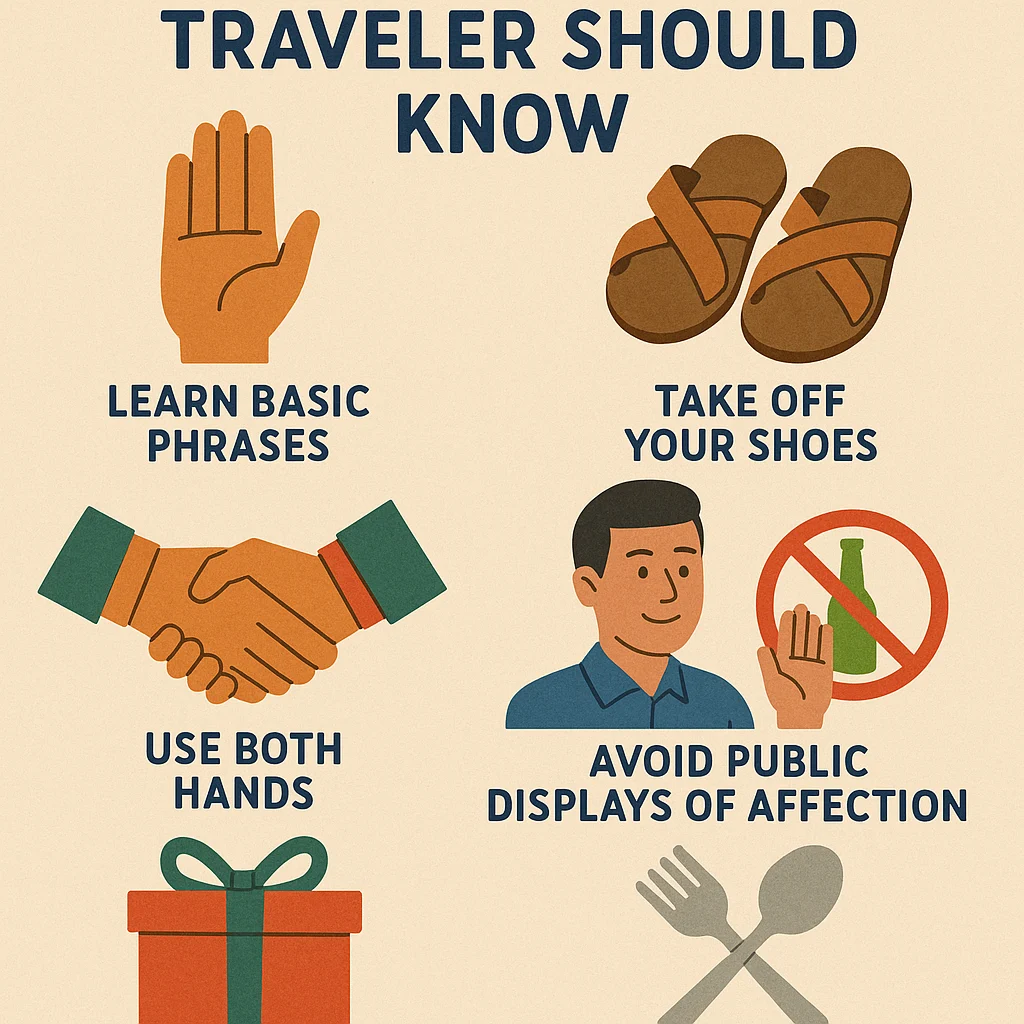
Travel broadens one's horizons, but it also necessitates a critical component: cultural sensitivity. Every culture has its own traditions and expectations, whether you're dining in Italy, drinking tea in Japan, or touring temples in India. Ignoring these can result in uncomfortable circumstances or, worse, inadvertent offense.
That’s why understanding cultural etiquette is not just polite—it’s essential for meaningful travel.
We'll go over important cultural etiquette guidelines in this blog that every tourist should be aware of in order to prevent blunders, promote deference, and strengthen relationships overseas.
Why Cultural Etiquette Matters
Traveling to another country means more than just seeing new sights; it means immersing yourself in the customs, values, and way of life of that nation. In other contexts, actions that appear perfectly acceptable at home may be viewed as impolite or offensive.
For example:
-
Wearing shoes indoors is normal in the U.S. but considered impolite in Japan.
-
Direct eye contact shows confidence in the West, but can be a sign of disrespect in parts of Asia.
-
Tipping is standard in America, but may be rejected in countries like Japan.
Learning and practicing etiquette shows that you:
-
Respect local culture
-
Are willing to adapt
-
Want to be a responsible traveler
General Cultural Etiquette Tips for Any Destination
✅ 1. Research Before You Go
This one can’t be stressed enough. A quick search on:
-
Local greetings
-
Dress codes
-
Eating habits
-
Common taboos
…can save you from major embarrassment and help you blend in better.
Pro tip: Watch travel vlogs or read cultural guides about your destination before packing your bags.
✅ 2. Learn Basic Local Phrases
You don’t need to be fluent, but learning simple words like:
-
Hello
-
Thank you
-
Please
-
Excuse me
-
Goodbye
…goes a long way in showing goodwill. People appreciate the effort, even if your pronunciation isn’t perfect.
✅ 3. Understand the Importance of Body Language
Body language varies widely:
-
Nodding may mean “no” in some cultures like Bulgaria.
-
Touching someone’s head is offensive in many Buddhist countries.
-
Showing the soles of your feet is impolite in many Middle Eastern and Asian cultures.
What’s acceptable at home may be misinterpreted abroad.
✅ 4. Be Mindful of Personal Space
Personal space is considered sacred in nations such as the United States and Canada. Mediterranean or Latin American cultures, on the other hand, are more receptive to physical contact. Pay attention to the social energy around you and try to match it.
Country-Specific Etiquette Tips
Let's examine the ways that etiquette varies globally.
🌏 Japan
-
Remove shoes before entering homes, temples, and traditional restaurants.
-
Don’t tip—it may be seen as rude.
-
Bowing is the standard form of greeting.
-
Be quiet on public transportation; phone calls are discouraged.
-
Handle money with both hands and use a tray when paying in stores.
🇫🇷 France
-
Greet with “Bonjour” during the day, “Bonsoir” in the evening.
-
Use formal titles (Monsieur, Madame) unless invited to use first names.
-
Dining is formal—keep hands on the table but not elbows.
-
Don’t ask for substitutions in restaurants; respect the chef's menu.
🇮🇳 India
-
Dress modestly, especially near temples or rural areas.
-
Remove shoes before entering homes or religious places.
-
Use your right hand for eating, giving, or receiving items; the left is considered unclean.
-
Public displays of affection are frowned upon.
-
It’s polite to greet elders first with “Namaste.”
🇮🇹 Italy
-
Greeting with a cheek kiss (two or even three) is common among friends.
-
Don’t rush meals—dining is a social experience.
-
Avoid ordering a cappuccino after 11 a.m.—it’s considered odd.
-
Respect dress codes when visiting churches or historical sites.
🇹🇭 Thailand
-
The “wai” (a prayer-like gesture) is the traditional greeting.
-
Don’t touch anyone’s head, even children.
-
Monks should not be touched, especially by women.
-
Pointing your feet at someone or sacred objects is disrespectful.
🇧🇷 Brazil
-
Brazilians are expressive; physical touch is normal in conversation.
-
Time is flexible—punctuality is appreciated, but not expected.
-
Personal appearance matters. Dress well even for casual outings.
-
Tipping is included but rounding up is appreciated.
🇨🇳 China
-
Handshakes are common, but firm grips are seen as aggressive.
-
Giving or receiving items with both hands is polite.
-
Avoid gifting clocks or white flowers—they are associated with funerals.
-
Slurping noodles is acceptable—it shows enjoyment!
Dress Code Etiquette
Some general tips:
-
Cover shoulders and knees when visiting religious sites.
-
Avoid flashy outfits in conservative countries.
-
In many Middle Eastern and Asian nations, modesty is highly valued.
When in doubt, observe locals or ask your hotel staff what’s appropriate.
Religious Sensitivities
Respect for religion is non-negotiable in many cultures.
-
Before entering a mosque or temple, always take off your shoes.
-
Unless specifically permitted, avoid taking pictures of people inside places of worship or during prayer.
-
Particularly in countries with conservative religious beliefs like Saudi Arabia, Iran, or Myanmar, dress modestly.
-
In certain places, such as mosques or religious events, abide by the gender-segregation regulations.
Photography Etiquette
-
Before taking pictures of people, always get their consent, especially in rural or indigenous areas.
-
Avoid taking pictures in places that are off-limits, such as airports, military installations, and places of worship.
-
Watch how flash is used in temples and museums.
What to Do If You Make a Mistake
Mistakes happen. If you unintentionally offend someone:
-
Apologize sincerely.
-
Smile—it shows humility and good intention.
-
Learn from it and avoid repeating it.
The majority of locals value visitors who make an effort to respect their culture, even if they don't always succeed.
Final Thoughts
Traveling is about more than just crossing places off a map; it's about making connections, learning about other cultures, and developing as a result of those experiences. And your link to that connection is cultural etiquette.
By taking time to understand and respect the traditions of others, you’ll:
-
Build deeper relationships
-
Avoid uncomfortable situations
-
Represent yourself (and your country) with grace
Keep in mind that you are a visitor to someone else's culture. Travel with humility, talk with dignity, and walk with curiosity.




Leave a Reply