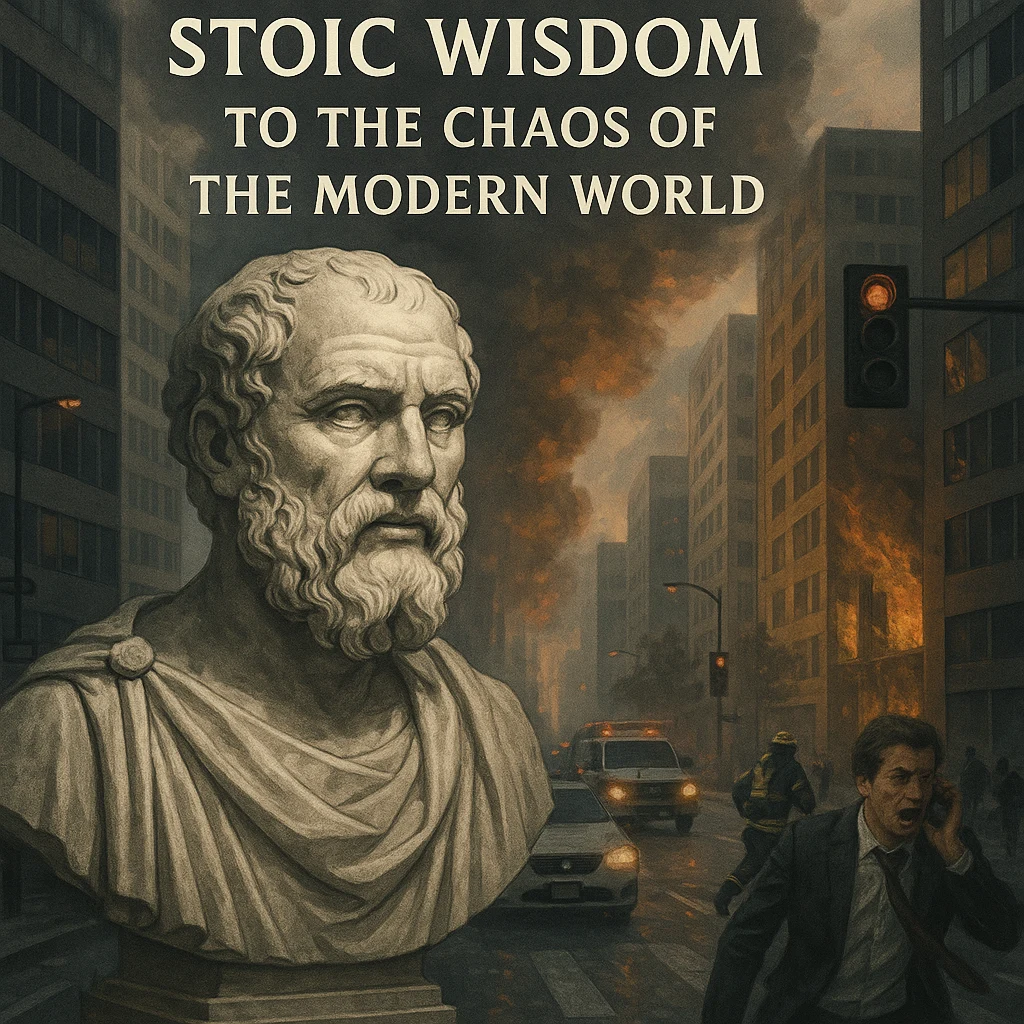
It's simple to become caught up in the whirlwind of diversions, news cycles, social pressures, and incessant digital alerts in a world that seems louder, faster, and more chaotic than ever. These days, mental clarity is becoming more and more uncommon, and stress, burnout, and anxiety seem to be the rule rather than the exception. However, the Stoics—philosophers such as Marcus Aurelius, Seneca, and Epictetus—were already writing more than two millennia ago about how to remain composed, logical, and strong in the face of adversity.
Instead of being a relic from antiquity, stoicism provides a timeless framework for dealing with chaos. We can regain focus, live intentionally, and ground ourselves in the face of uncertainty by putting its tenets into practice.
We'll look at how Stoic wisdom applies to contemporary life in this blog and how you can use it to become more resilient, peaceful, and clear-headed.
The Core of Stoicism: A Quick Refresher
Fundamentally, stoicism teaches that although we have no control over outside circumstances, we do have control over how we react to them. The Stoics held that controlling one's own thoughts, rather than attempting to change the world to suit one's wishes, is the way to freedom and peace.
Their philosophy can be summed up in three core ideas:
-
Focus only on what is within your control.
-
View challenges as opportunities to practice virtue and strength.
-
Pursue wisdom, justice, courage, and temperance as the highest goods.
This may seem straightforward, but it becomes powerful when put into practice, particularly in our hectic, contemporary world.
Chaos in the Modern World: The New “Arena”
The Stoics experienced plagues, slavery, political intrigue, and wars. Our chaos looks different now, but the demands are still the same.
-
Digital overload: Constant notifications, social media pressure, and information fatigue.
-
Uncertainty: Economic shifts, climate change, and global instability.
-
Comparison culture: Measuring self-worth against curated online images of others.
-
Busyness: A culture that glorifies productivity while ignoring balance.
These difficulties weaken our mental fortitude and make us feel reactive rather than purposeful. The Stoic reaction? Focus on the things you can control, such as your thoughts, decisions, and personality.
Applying Stoicism to Daily Life
1. The Dichotomy of Control: Tuning Out the Noise
"Some things are in our control, and others are not," as Epictetus famously stated.
Focusing on things beyond our control can include worrying about market swings, doomscrolling news feeds, and scrolling through social media. Here, the Stoic method is to inquire:
-
Is this within my control?
-
If not, why waste energy on it?
Useful application: Restrict exposure to social media or news cycles that cause anxiety. Spend that time instead on things you can control, like your work, relationships, mindset, and health.
2. Negative Visualization: Preparing for the Unexpected
Premeditatio malorum, or the premeditation of evils, was a practice of the Stoics. They would mentally prepare themselves by imagining potential challenges that might arise, rather than living in fear.
There will always be uncertainty in a chaotic world. You develop resilience by mentally preparing yourself for setbacks. For instance:
-
Imagine losing your job, then ask: How would I respond? What’s my backup plan?
-
Picture a technology failure at work, then think: How would I stay calm and adapt?
Since you have already practiced how to handle chaos, it becomes less terrifying.
3. Voluntary Discomfort: Training for Resilience
Seneca suggested living simply for a while—eating simple meals and sleeping on the floor—to remind yourself that you can get by on less. Nowadays, there are numerous ways that voluntary discomfort can manifest itself:
-
Taking cold showers.
-
Fasting for short periods.
-
Leaving your phone at home for a day.
By strengthening mental resilience, these techniques show yourself that you can tolerate discomfort and still succeed.
4. Mindfulness Through Journaling
Meditations by Marcus Aurelius is basically a Stoic diary. He maintained his composure in the midst of running the Roman Empire by reflecting every day.
In today’s world, journaling can serve the same function:
-
Write about challenges and how you responded.
-
Reflect on what’s within your control.
-
Reinforce virtues you want to cultivate—like patience or courage.
Journaling for just five minutes every day can help you focus your thoughts and cut through distractions.
5. Amor Fati: Loving Your Fate
The Stoics advocated amor fati, or love of fate, as an alternative to fighting chaos. This means accepting life's events as chances to live virtuously rather than passively accepting injustice.
Traffic jams become chances to practice patience.
Difficult coworkers become teachers in self-control.
Unexpected setbacks become lessons in resilience.
When you adopt amor fati, chaos becomes not an enemy, but an ally in your growth.
Stoicism in Work and Productivity
Our contemporary workplace culture prioritizes busyness over clarity, which results in decision fatigue and burnout. This can be overcome with stoic wisdom:
-
Control the controllables: Focus only on the tasks you can influence.
-
Practice single-tasking: Like Stoics, prioritize depth over distraction.
-
Detach from outcomes: Judge yourself not by success or failure, but by effort and virtue.
A Stoic determines their value by whether they behaved honorably, wisely, and with discipline rather than by their outward performance.
Stoicism and Relationships
Chaos is interpersonal as well as external. Relationships frequently increase stress, as evidenced by social media arguments and workplace drama. The Stoics suggested:
-
Don’t take insults personally. "The people who offend you act from ignorance of good and evil," Marcus Aurelius told himself.
-
Lead by example. Be just, calm, and fair, regardless of how others behave.
-
Set boundaries. Steer clear of toxic relationships and overcommitment as part of the Stoic practice of temperance.
Stoic wisdom can help us navigate arguments, deal with online criticism, and maintain our composure in the face of conflict in the modern world.
Modern Stoicism: Practical Daily Routine
Here’s how you might live Stoically in today’s chaotic environment:
-
Morning reflection: Visualize possible challenges and how you’ll face them.
-
Work with intention: Focus on what you can control, practice single-tasking.
-
Midday check-in: Ask, Am I reacting emotionally or acting rationally?
-
Practice voluntary discomfort: Skip a comfort, like caffeine or scrolling.
-
Evening journaling: Reflect on what went well, what you controlled, and where you can improve.
This rhythm cultivates clarity and resilience while shielding you from chaos.
Why Stoicism Matters Now More Than Ever
Distraction and emotional reactivity are two things that the modern world thrives on, and stoicism directly opposes both. Stoicism is about living a purposeful, resilient, and clear life rather than being detached and icy.
In an age of information overload, Stoicism is a filter.
In an era of comparison, Stoicism is grounding.
In a world of uncertainty, Stoicism is stability.
Final Thoughts
There will inevitably be chaos. However, as Marcus Aurelius stated: "You have control over your thoughts, not external circumstances." Acknowledge this, and you will become stronger.
Though it prepares us to face them with grace, ancient Stoic wisdom does not negate the difficulties of the contemporary world. Applying its tenets—living with virtue, being resilient, and concentrating on what you can control—allows you to not only survive the chaos but also become stronger as a result.




Leave a Reply